
Overview
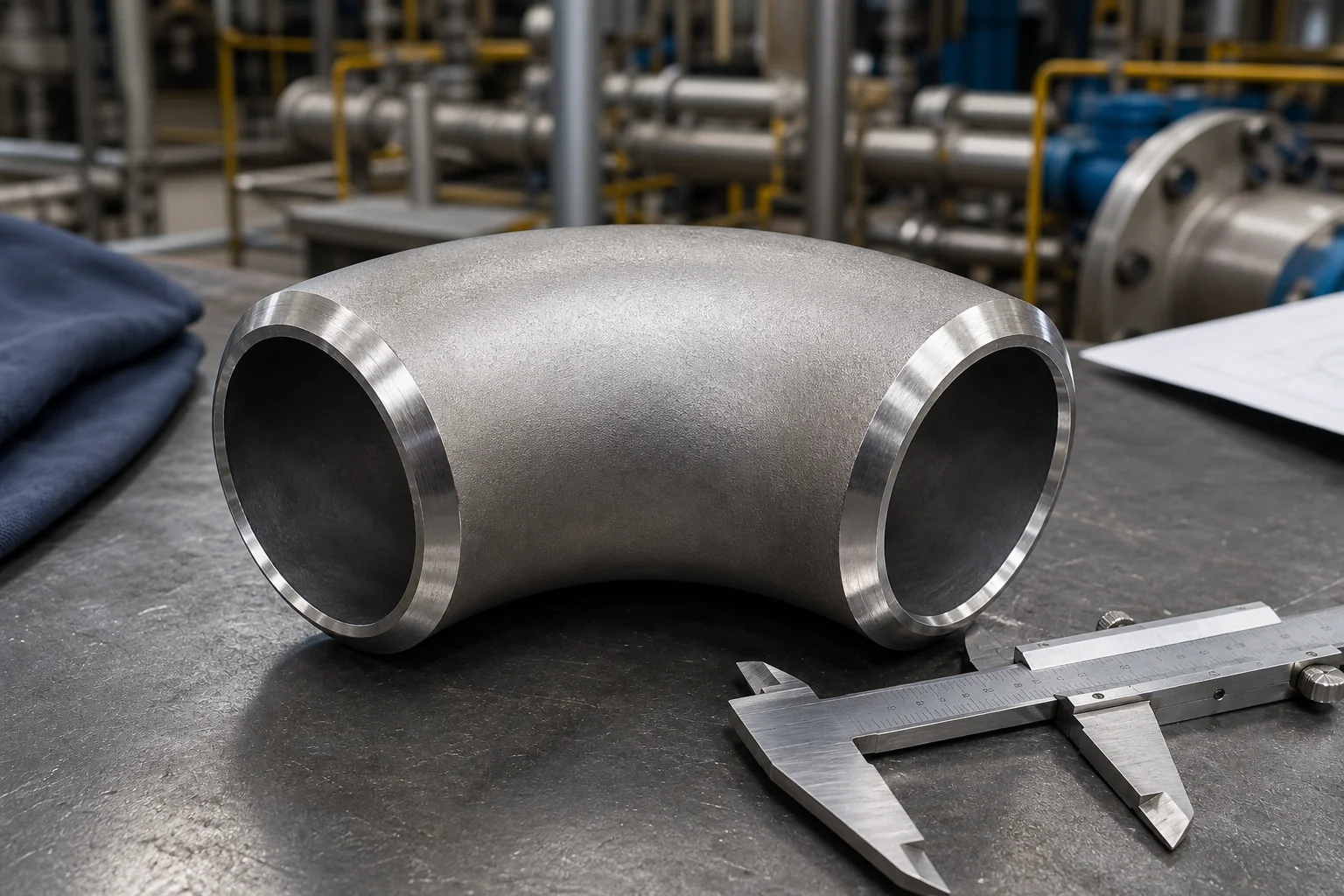
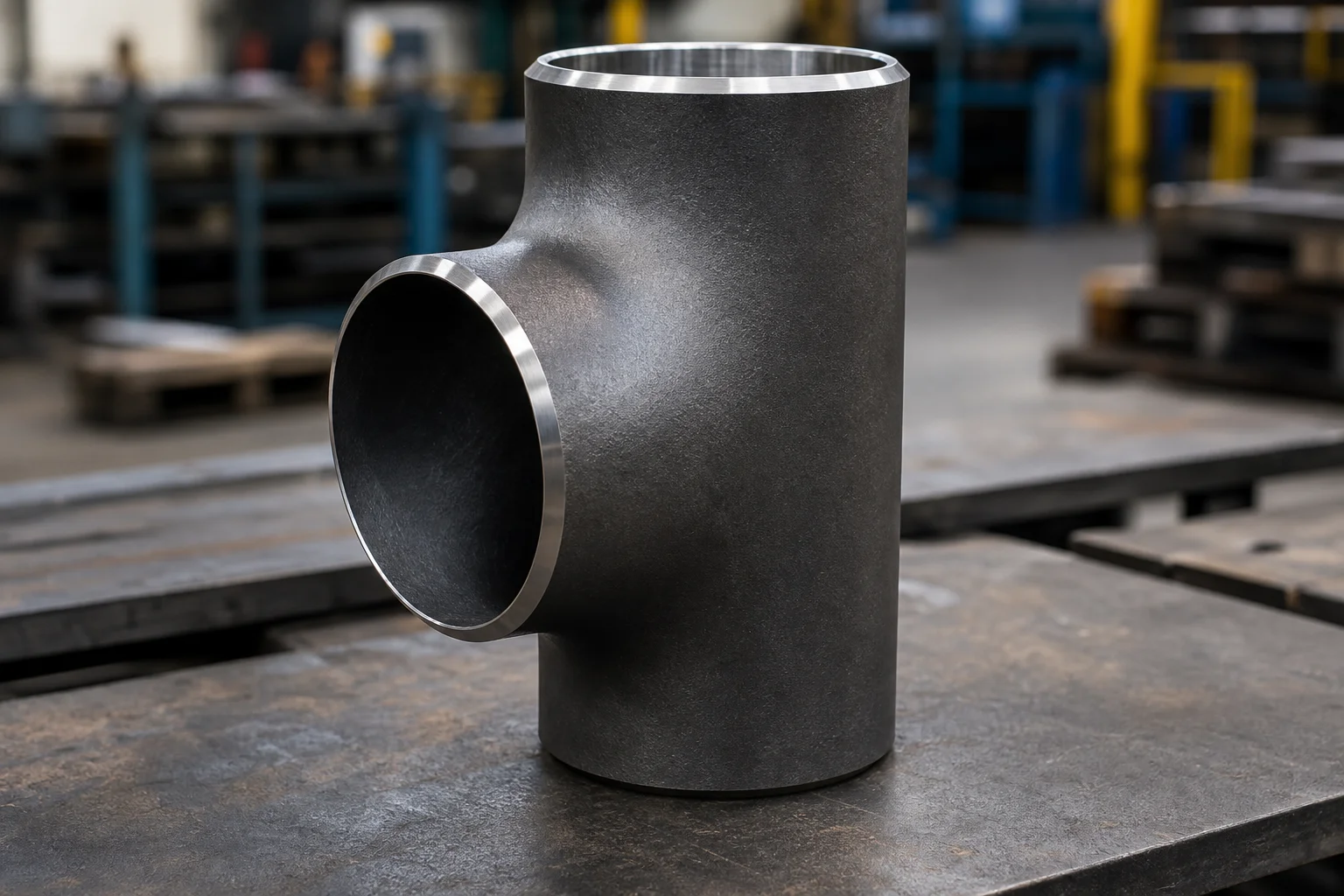
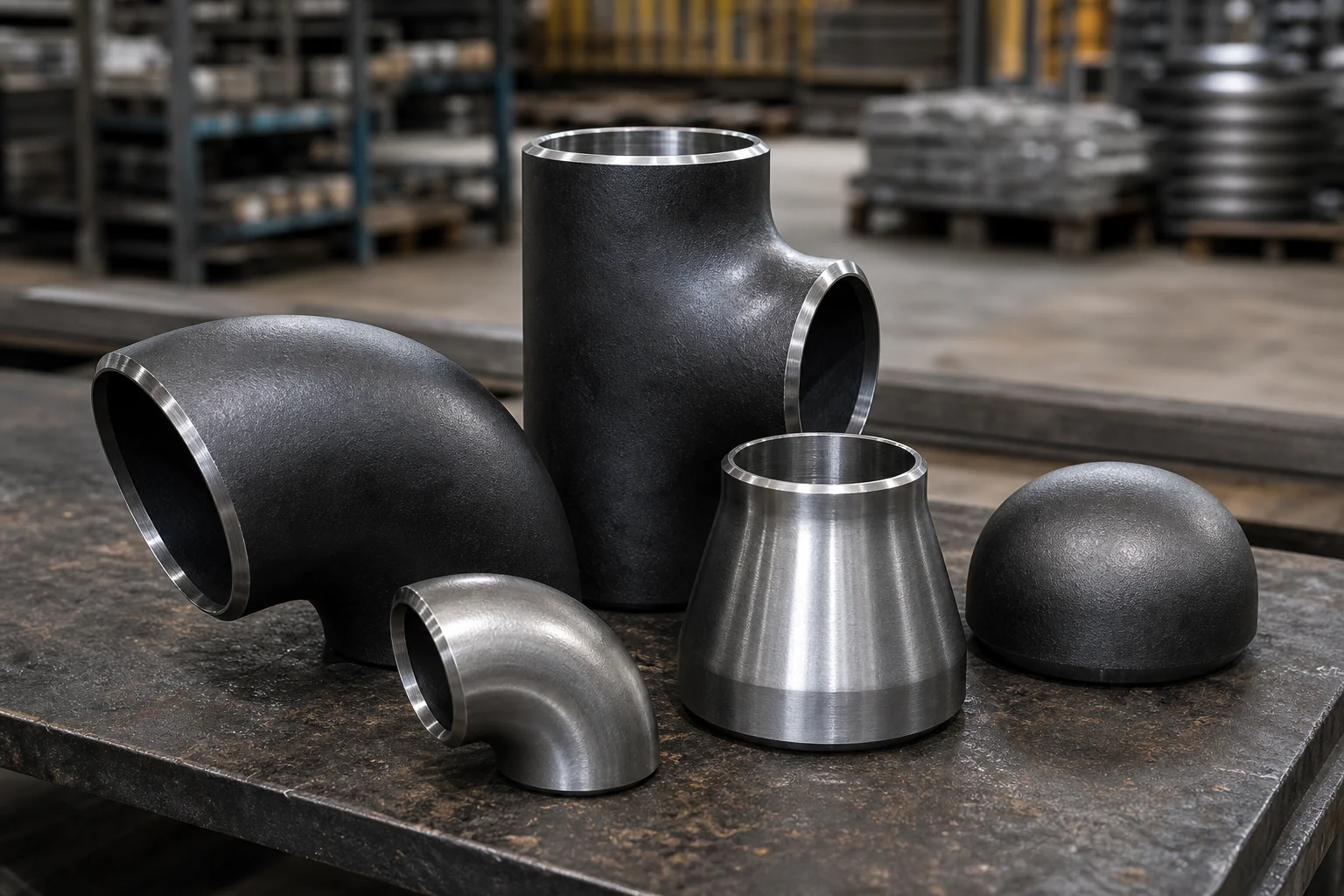
A butt weld fittings manufacturer produces elbows, tees, reducers, caps, crosses, stub ends, and special fittings that are welded directly into a piping system. The most important purchasing variables are fitting type, nominal size, wall thickness, material grade, dimensional standard, end preparation, heat treatment, inspection level, and required documentation. A technically complete inquiry gives the manufacturer enough information to select the correct raw material and forming route before production begins.
Factory-made wrought butt-welding fittings are commonly specified to ASME B16.9. The standard covers dimensions, tolerances, ratings, testing, and markings for fittings from NPS 1/2 through NPS 48. Material specifications are selected separately. Common examples include ASTM A234 WPB for carbon steel, ASTM A403 WP304 or WP316L for austenitic stainless steel, and ASTM A420 WPL6 for low-temperature carbon steel.
Why It Matters for Pipe Components
Butt weld joints create a continuous flow path with no internal threads and minimal local restriction when the fitting bore and pipe wall are correctly matched. This makes butt weld fittings widely used in oil and gas, petrochemical, power, water treatment, shipbuilding, and process piping.
The manufacturer affects more than the outside appearance of a fitting. Forming temperature, wall-thickness control, heat treatment, bevel geometry, dimensional inspection, and material traceability all influence installation and long-term performance. A fitting may carry the correct marking yet still create field problems if its end diameter, out-of-roundness, center-to-end dimension, or bevel does not match the purchase specification.
For project procurement, the supplier must also manage mixed schedules and materials. A single purchase order may include carbon steel elbows, stainless steel reducers, alloy steel tees, and large fabricated fittings. Clear item-level identification and traceability prevent material substitution and installation errors.
Methods, Parameters, or Process
Typical manufacturing routes depend on the product:
| Product | Common forming method | Important controls |
|---|---|---|
| Elbow | Hot pushing, mandrel forming, hot forming, or cold forming | Radius, angle, ovality, wall thinning, bevel alignment |
| Tee | Hydraulic bulging, hot extrusion, or branch forming | Branch height, crotch thickness, center-to-end dimensions |
| Reducer | Press forming, hot forming, or cold forming | Concentricity, eccentric offset, end diameters, wall transition |
| Cap | Press forming or deep drawing | Inside depth, crown profile, minimum wall thickness |
| Stub end | Forming and machining | Lap thickness, fillet radius, facing, overall length |
| Special fitting | Forming, machining, or qualified fabrication | Design basis, weld procedure, NDE, dimensional drawing |
A complete specification should state:
- Product type and angle or configuration.
- NPS or DN for every end.
- Pipe schedule or actual wall thickness.
- Material specification and grade.
- Dimensional standard and edition required by the project.
- Seamless or welded construction when applicable.
- Long-radius or short-radius geometry for elbows.
- Bevel requirements and any internal transition.
- Heat-treatment condition.
- Testing, inspection, marking, coating, and packing requirements.
- Required certificates, such as an EN 10204 3.1 inspection certificate when contractually specified.
The fitting wall must be compatible with the connecting pipe. “Standard wall” is not sufficiently precise for international procurement because it may be interpreted differently. Listing the schedule or nominal wall thickness on every line item reduces errors.
Supplier and Inspection Checklist
- Confirm that the quotation repeats the exact standard, material grade, size, schedule, and quantity.
- Request a dimensional drawing for nonstandard, large-diameter, or special fittings.
- Verify raw-material heat numbers and traceability through forming and heat treatment.
- Review the heat-treatment procedure and furnace records where required.
- Check outside diameter, wall thickness, center-to-end dimensions, angle, ovality, and end squareness.
- Inspect bevel angle, root face, and internal mismatch against the project welding specification.
- Confirm visual inspection for laps, cracks, deep scale, dents, and unacceptable grinding.
- Specify PMI for stainless or alloy steel when material mix-up risk is significant.
- Define NDE requirements before ordering; do not assume every fitting receives the same examination.
- Review marking, paint or passivation, end protection, and packing method.
- Require a material test certificate that matches each heat and item identification.
- For third-party inspection, define hold points before production starts.
Application to Pipe Fittings, Valves, and Flanges
Butt weld fittings connect pipe runs and provide changes in direction, branch flow, diameter, or termination. They also form part of valve and flange assemblies. A weld neck flange, for example, is normally connected to pipe through a butt weld, so the flange bore and end preparation must match the pipe schedule. Reducers are often installed near pumps or control valves, while elbows and tees determine available straight lengths and maintenance access.
The same procurement discipline should apply across fittings, valves, and flanges. Material grade, pressure-temperature design basis, corrosion allowance, end connection, and inspection documents must be compatible. A high-quality fitting cannot correct a mismatched flange bore, an incorrectly selected gasket, or a valve body material that does not meet the line class.
FAQ
What information should be included in a butt weld fitting inquiry?
Include fitting type, size, schedule or wall thickness, material grade, standard, seamless or welded construction, quantity, end preparation, testing, documentation, coating, and packing requirements. Add drawings for special geometries.
Are all butt weld fittings covered by ASME B16.9?
No. ASME B16.9 covers factory-made wrought butt-welding fittings within its scope. Large high-strength pipeline fittings, low-pressure corrosion-resistant fittings, induction bends, and project-specific fabricated items may require other standards or engineering requirements.
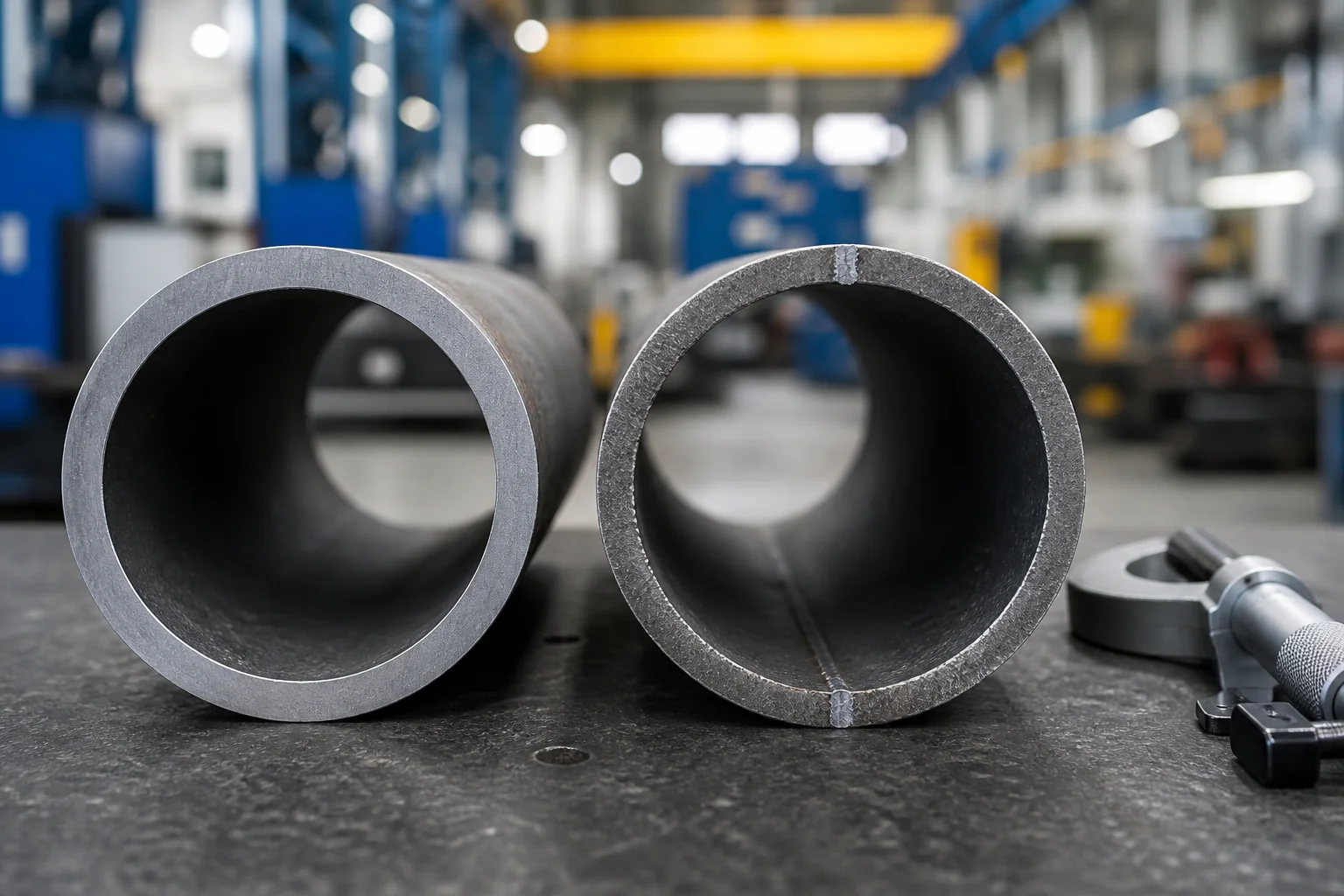
What is the difference between seamless and welded butt weld fittings?
The difference is the starting material or construction route. Suitability depends on the applicable material specification, size, service, and purchaser requirements. Both types must meet the dimensional and material requirements stated in the order.
How should butt weld fittings be inspected before shipment?
Inspection normally includes document review, material traceability, visual examination, dimensional checks, wall-thickness measurement, marking verification, and any specified NDE or PMI. The inspection plan should be agreed before production.
Next Steps
Prepare an itemized inquiry with the standard, material, size, schedule, quantity, inspection level, and delivery requirements. For mixed or special fittings, send the line list and drawings to Nuoan for a technical review before final pricing.
Request a Quote