
Overview
Flanges and pipe fittings are vital in engineering. They connect pipes, valves, and equipment, forming robust piping systems that support the safe transport of fluids and gases across oil, gas, construction, water, and process industries.
Understanding their application helps engineers design efficient and reliable systems. Flanges come in several types for assembly, isolation, and pressure service. Pipe fittings change direction, branch, reduce, or terminate lines. Material choice depends on pressure, temperature, and fluid type, while proper installation and maintenance remain key to system safety.
Why It Matters for Pipe Components
Flanges enable bolted assembly and disassembly for maintenance and repair. Pipe fittings provide routing flexibility so networks can change direction, create branches, or close ends without compromising flow control.
Incorrect type, material, or standard selection can create leaks, stress concentrations, corrosion failures, or fit-up problems with valves and equipment. Clear application knowledge reduces those risks and supports safer operation across industrial piping systems.
Methods, Parameters, or Process
Types of Flanges Used in Engineering
Flange selection depends on pressure, temperature, maintenance access, and connection method.
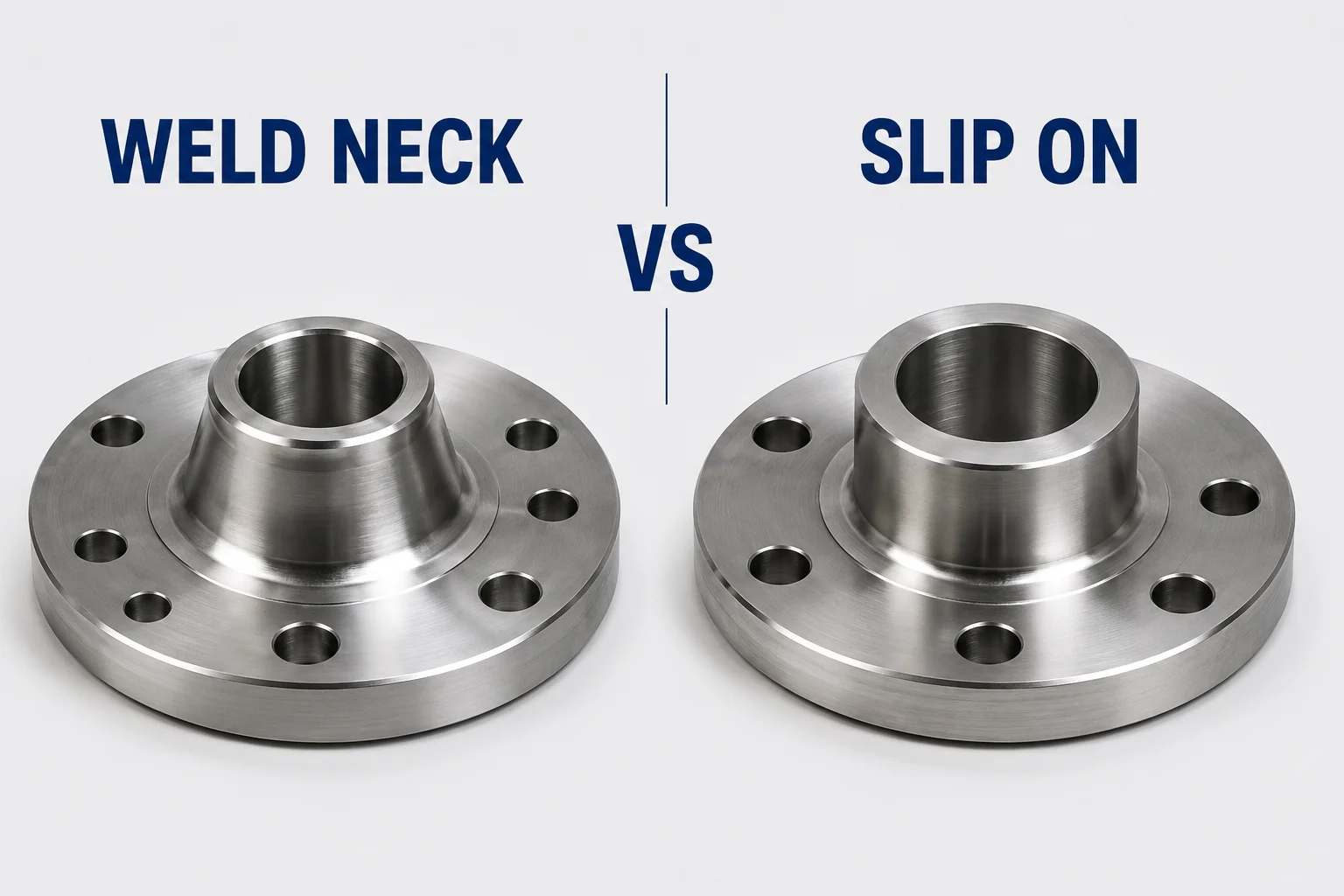
- Weld neck flanges use a tapered hub welded to the pipe and are preferred for high-pressure and high-temperature service.
- Slip-on flanges slide over the pipe and are welded for lower-pressure systems where installation speed and cost matter.
- Socket weld flanges suit small-diameter, high-pressure lines with a strong fillet-welded joint.
- Lap joint flanges work with stub ends when frequent disassembly or inspection is required.
- Threaded flanges screw onto pipe without welding and are typically limited to low-pressure, non-critical service.
- Blind flanges close pipe ends for isolation, testing, or future expansion.
Types of Pipe Fittings and Their Functions
Pipe fittings form the routing geometry of a piping network.
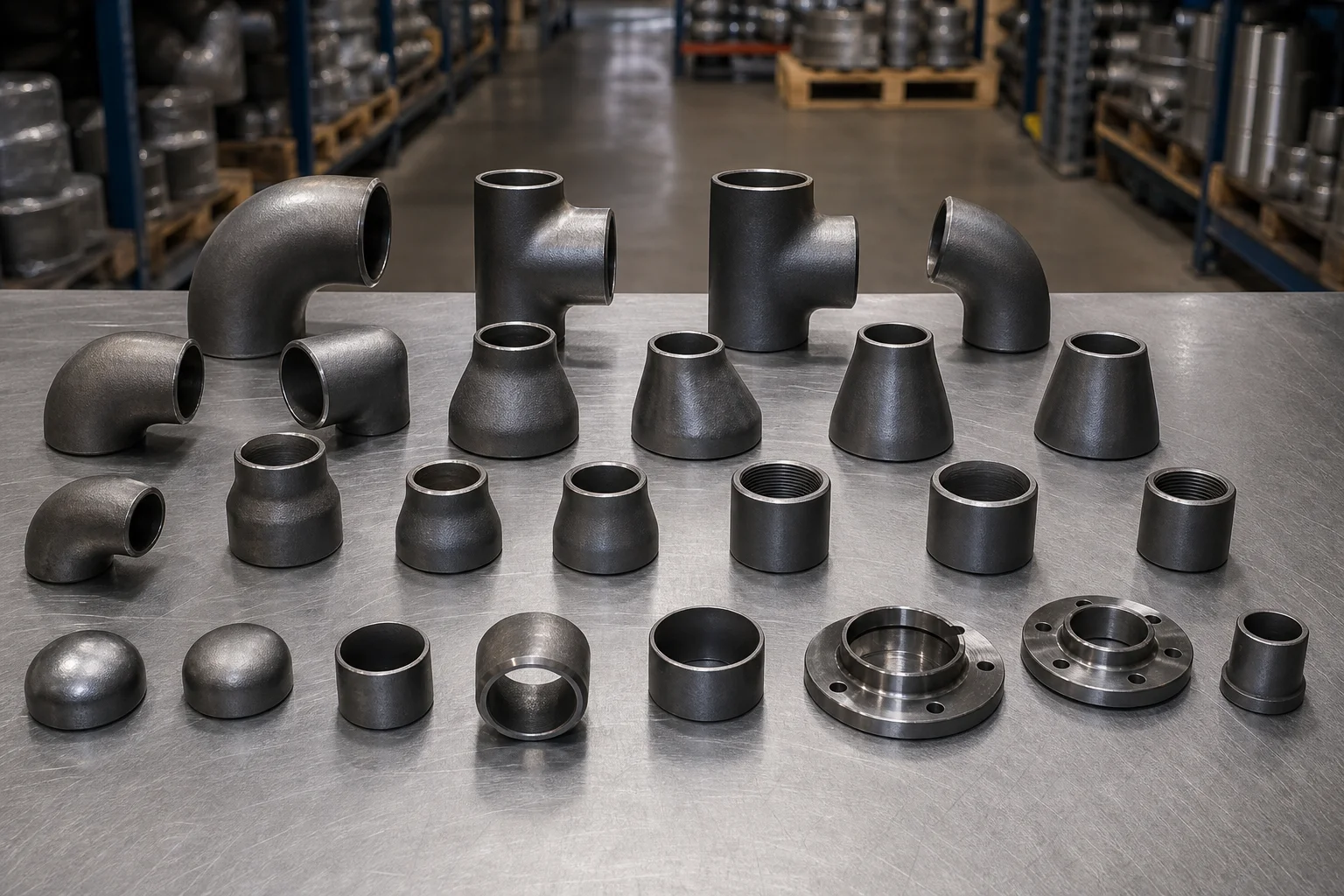
- Elbows change flow direction, commonly at 45° or 90°, in long-radius or short-radius designs.
- Tees create branches with equal or reducing outlets for flow distribution.
- Reducers connect different pipe diameters using concentric or eccentric designs.
- Caps seal pipe ends during isolation, testing, or temporary closure.
- Couplings join two pipe segments and support modular assembly.
Materials Used for Flanges and Pipe Fittings
Material selection influences corrosion resistance, strength, cost, and service life.
- Stainless steel for corrosion resistance and demanding temperature or pressure service
- Carbon steel for strength and cost-effective general industrial piping
- Plastic where chemical resistance and light weight are priorities
- Copper where thermal conductivity and heat-related service matter
Standards and Specifications
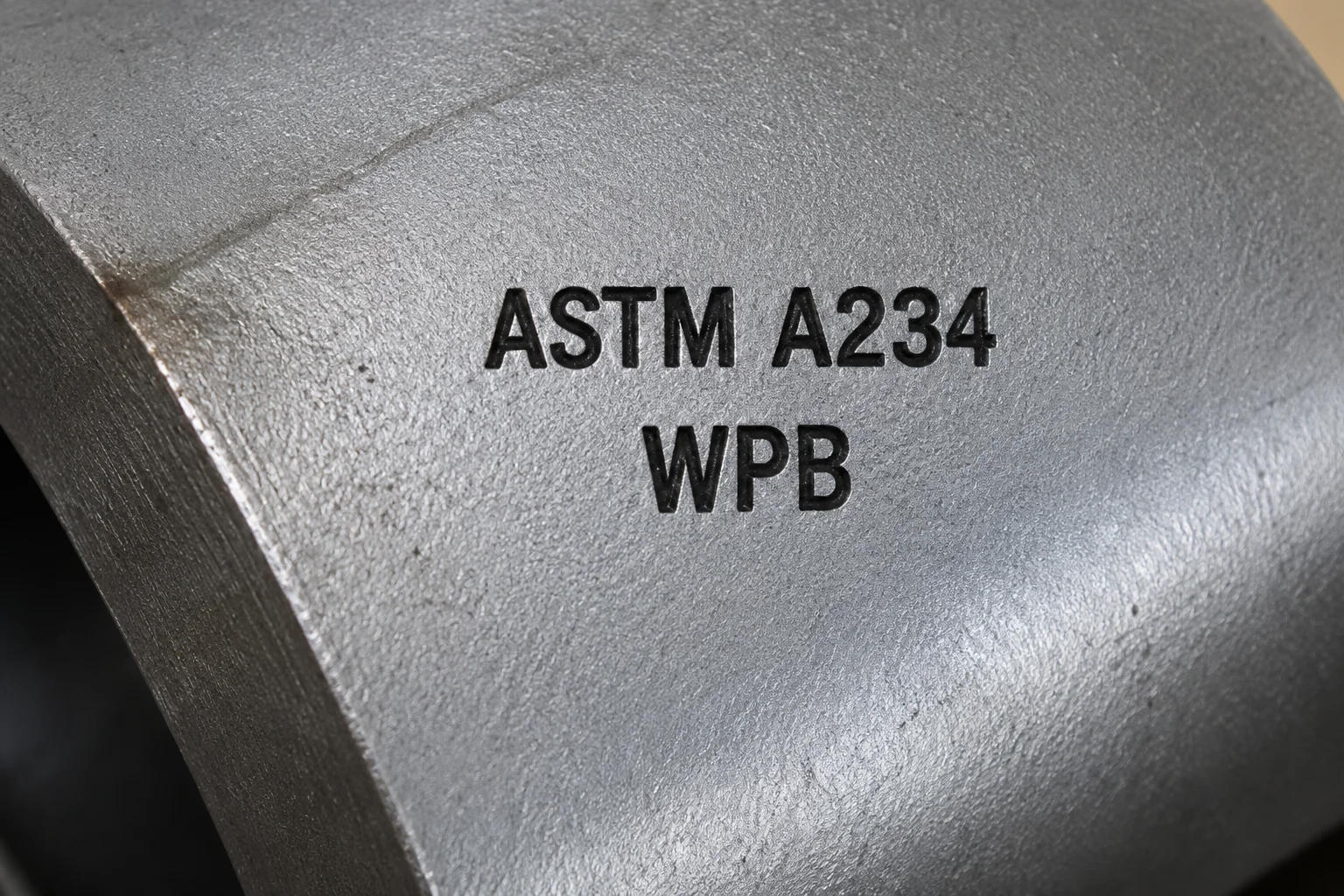
Standards establish dimensions, materials, and quality expectations. Common references include ASME, ANSI, and DIN. Compliance supports interchangeability, pressure reliability, and safer operation across project specifications.
Key Engineering Applications
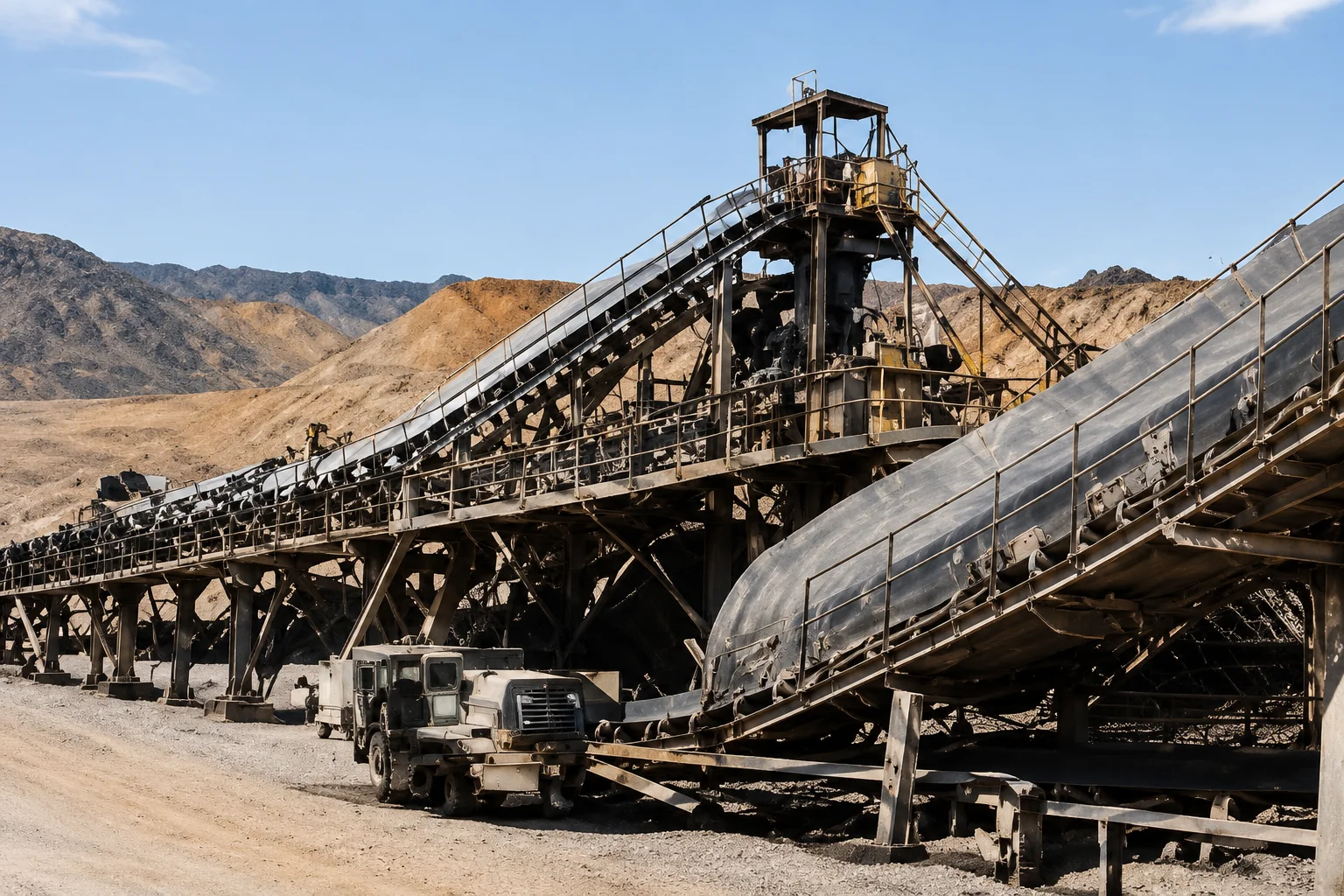
- Oil and gas: high-pressure transport, refinery, and pipeline connections
- Chemical and petrochemical: corrosion-resistant routing and process transfer
- Water treatment and distribution: flow control with hygiene and durability requirements
- Construction and infrastructure: HVAC, plumbing, and building service networks
Design Considerations
Design should account for fluid characteristics, pressure and temperature, material longevity, thermal expansion, support and flexibility, and access for inspection and maintenance. CAD and related tools help verify layout accuracy before fabrication and installation.
Supplier and Inspection Checklist
- Match flange type and fitting type to pressure, temperature, and maintenance needs.
- Confirm applicable standards such as ASME, ANSI, or DIN before ordering.
- Select materials based on fluid chemistry, corrosion risk, and operating conditions.
- Verify dimensional compatibility with mating valves, pumps, and equipment.
- Check bolt torque, alignment, facing, and gasket compatibility during installation.
- Plan routine inspections for wear, corrosion, leakage, and joint integrity.
- Document maintenance, replacements, and inspection results for traceability.
- Review packaging, marking, and certificates when sourcing internationally.
Application to Pipe Fittings, Valves, and Flanges
In practice, flanges often terminate valves and equipment nozzles, while elbows, tees, reducers, caps, and couplings shape the pipe run between those flanged points. Weld neck flanges are common on critical process lines; slip-on and threaded options appear more often in utility service; blind flanges support isolation and pressure testing.
Selecting flanges and fittings as one system—standard, material, facing, and pressure class together—reduces field mismatch and supports safer commissioning.
FAQ
What is the application of flanges and pipe fittings in engineering?
They connect pipes, valves, and equipment into complete piping systems for fluid and gas transport, while supporting maintenance access, branching, direction changes, and system isolation.
Which flange type is used for high-pressure service?
Weld neck flanges are commonly selected for high-pressure and high-temperature service because the tapered hub distributes stress. Socket weld flanges may suit smaller-diameter high-pressure lines.
What pipe fittings are most common in industrial piping?
Elbows, tees, reducers, caps, and couplings are widely used to change direction, create branches, transition diameters, close ends, and join pipe segments.
Why do standards such as ASME, ANSI, and DIN matter?
They define dimensions, ratings, and quality expectations so components remain interchangeable and suitable for the specified service conditions.
How do installation and maintenance affect flange and fitting performance?
Correct alignment, bolt torque, inspection, and scheduled maintenance reduce leaks, corrosion damage, and premature joint failure.
Next Steps
Define your service conditions, flange and fitting types, materials, and standards, then align drawings and inspection requirements before procurement. Correct application of flanges and pipe fittings improves safety, reliability, and long-term system performance.
Request a Quote