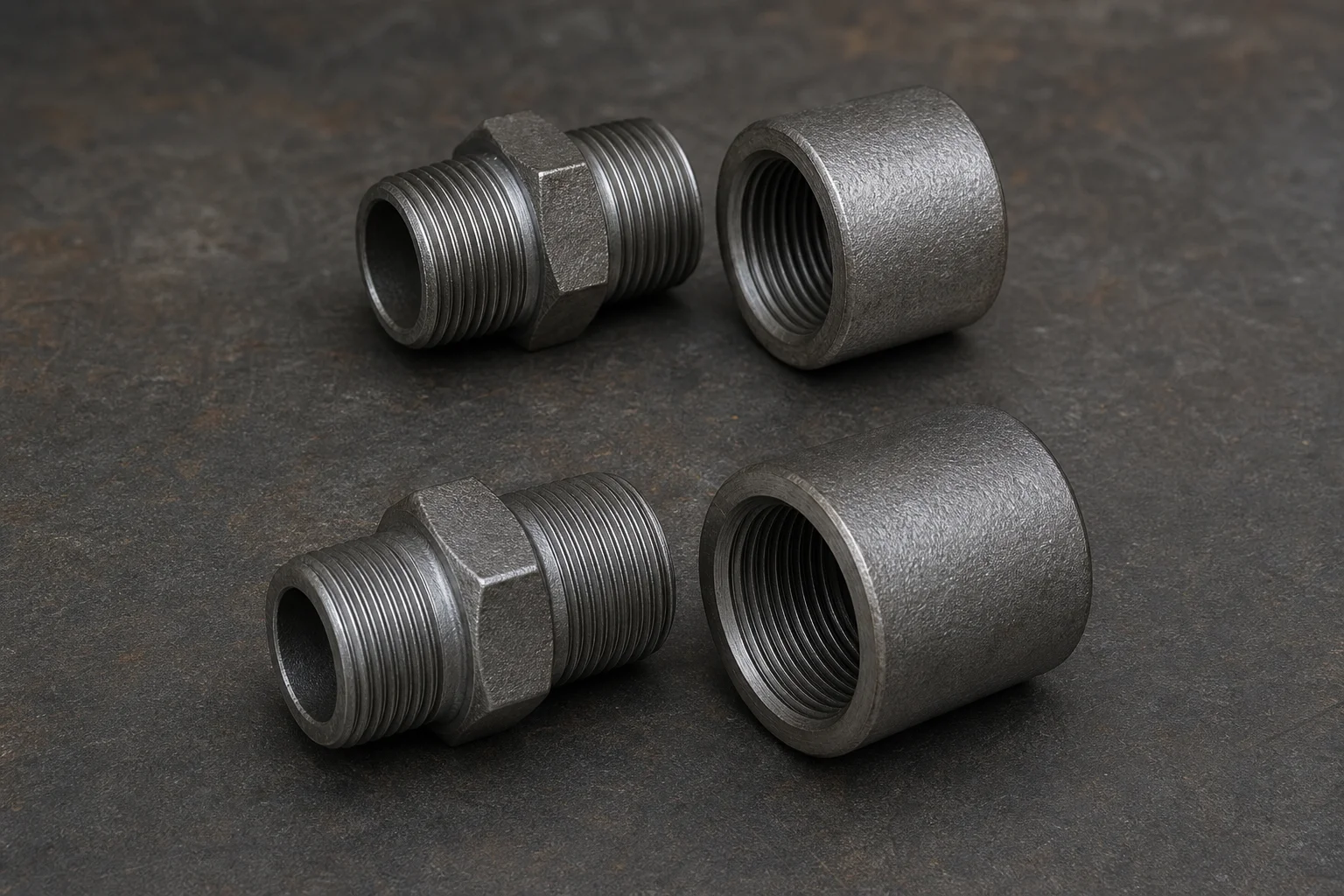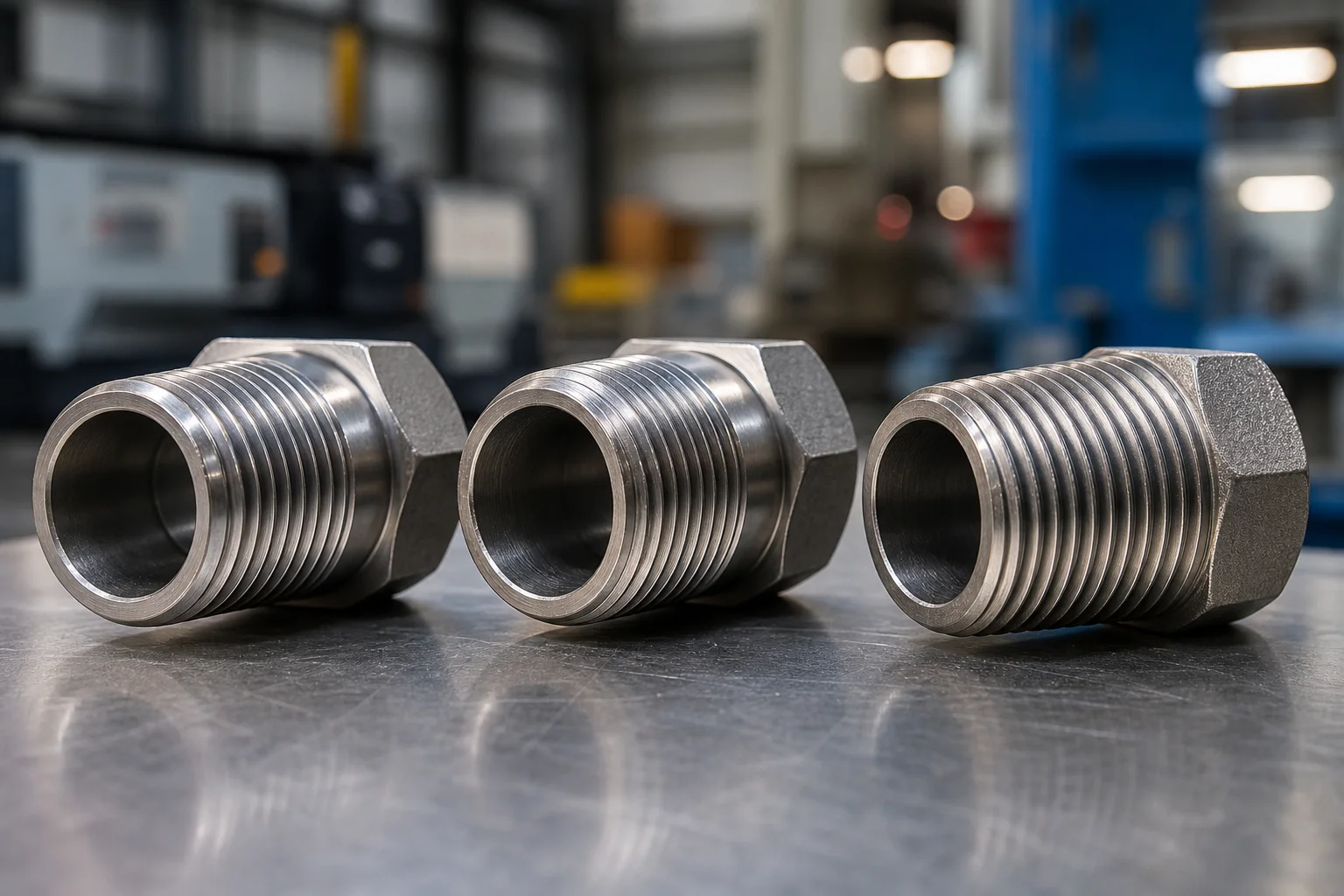
Overview
ASME B16.1 is a standard for Classes 25, 125, and 250 gray-iron pipe flanges and flanged fittings within its stated scope. It includes pressure-temperature ratings, materials, dimensions and tolerances, marking, bolting and gaskets, pressure testing, and the designation of reducing-fitting openings.
Gray iron has different mechanical behavior from forged steel, ductile iron, and malleable iron. A Class 125 gray-iron flange should not be treated as the same product as an ASME B16.5 Class 150 steel flange, even when some drilling patterns may appear similar in selected sizes.
Why It Matters for Pipe Components
Gray iron has relatively low ductility and can be damaged by excessive bolt load, pipe strain, impact, or incompatible raised-face joints. Joint design commonly needs careful control of gasket geometry, flange-face compatibility, alignment, and tightening.
Pressure class numbers from different standards do not establish interchangeability. Materials, pressure-temperature ratings, dimensions, facing, thickness, and allowable loads must be reviewed under the correct standard.
Field welding or repair of gray-iron flanges is not an ordinary carbon-steel welding task. Any repair requires a qualified engineering, metallurgical, and owner-approved procedure.
Methods, Parameters, or Process
Identify the gray-iron standard and complete joint arrangement before comparing it with steel or ductile-iron components.
| Parameter | ASME B16.1 consideration | Procurement action |
|---|---|---|
| Class | 25, 125, or 250 within standard scope | State exact class and size |
| Material | Gray iron covered by the applicable requirements | Confirm material grade and certificate expectations |
| Facing | Must match gasket and mating component | Define flat or other permitted face arrangement |
| Gasket | Geometry and material affect brittle-flange loading | Specify full-face or approved gasket arrangement |
| Bolting | Diameter, material, length, and tightening affect stress | Use approved assembly procedure |
| Mating flange | May be gray iron, steel, valve, or equipment flange | Check face, drilling, stiffness, and project approval |
| Testing | Product and pressure-test requirements within scope | Define project inspection and records |
Supplier and Inspection Checklist
- Confirm ASME B16.1 is the intended standard rather than B16.5.
- State class, nominal size, fitting or flange type, and facing.
- Inspect cast surfaces for cracks, cold shuts, inclusions, porosity, and repairs.
- Check flange thickness, drilling, facing, and dimensional tolerances.
- Verify material identification and manufacturer markings.
- Use a gasket arrangement approved for the brittle flange material.
- Avoid forcing misaligned piping together with flange bolts.
- Follow a controlled cross-pattern tightening procedure.
- Do not field weld, heat, or machine the pressure boundary without approval.
- Confirm pressure-temperature suitability and external-load limits.
Application to Pipe Fittings, Valves, and Flanges
ASME B16.1 gray-iron flanges and fittings are found in water, wastewater, utility, HVAC, pump, and older industrial systems. Valves and equipment with Class 125 cast-iron ends may be intended for compatible flat-face joints.
Connecting a raised-face steel flange to a flat-face gray-iron flange can create bending and cracking risk if the joint is not specifically engineered. The project should define facing, gasket, bolting, and any spacer or transition arrangement.
FAQ
Is Class 125 the same as Class 150?
No. They belong to different standards, materials, and pressure-temperature systems. Do not assume direct equivalence.
What classes are included in ASME B16.1?
The ASME scope identifies Classes 25, 125, and 250 gray-iron flanges and flanged fittings.
Can a gray-iron flange mate with a steel flange?
Only after checking drilling, facing, gasket, stiffness, bolting, pressure rating, and engineering approval.
Why are full-face gaskets often considered with cast iron?
They can distribute load over a larger area for compatible flat-face joints, but the actual gasket must follow the approved joint design.
Can cracked gray iron be welded in the field?
Do not use an ordinary repair. Any repair requires specialist assessment, an approved procedure, and confirmation that repair is permitted.
Next Steps
Confirm the exact gray-iron class, facing, gasket, bolting, mating component, and design temperature. Use the project-required ASME B16.1 edition and approved assembly procedure.
Request a Quote