
Overview
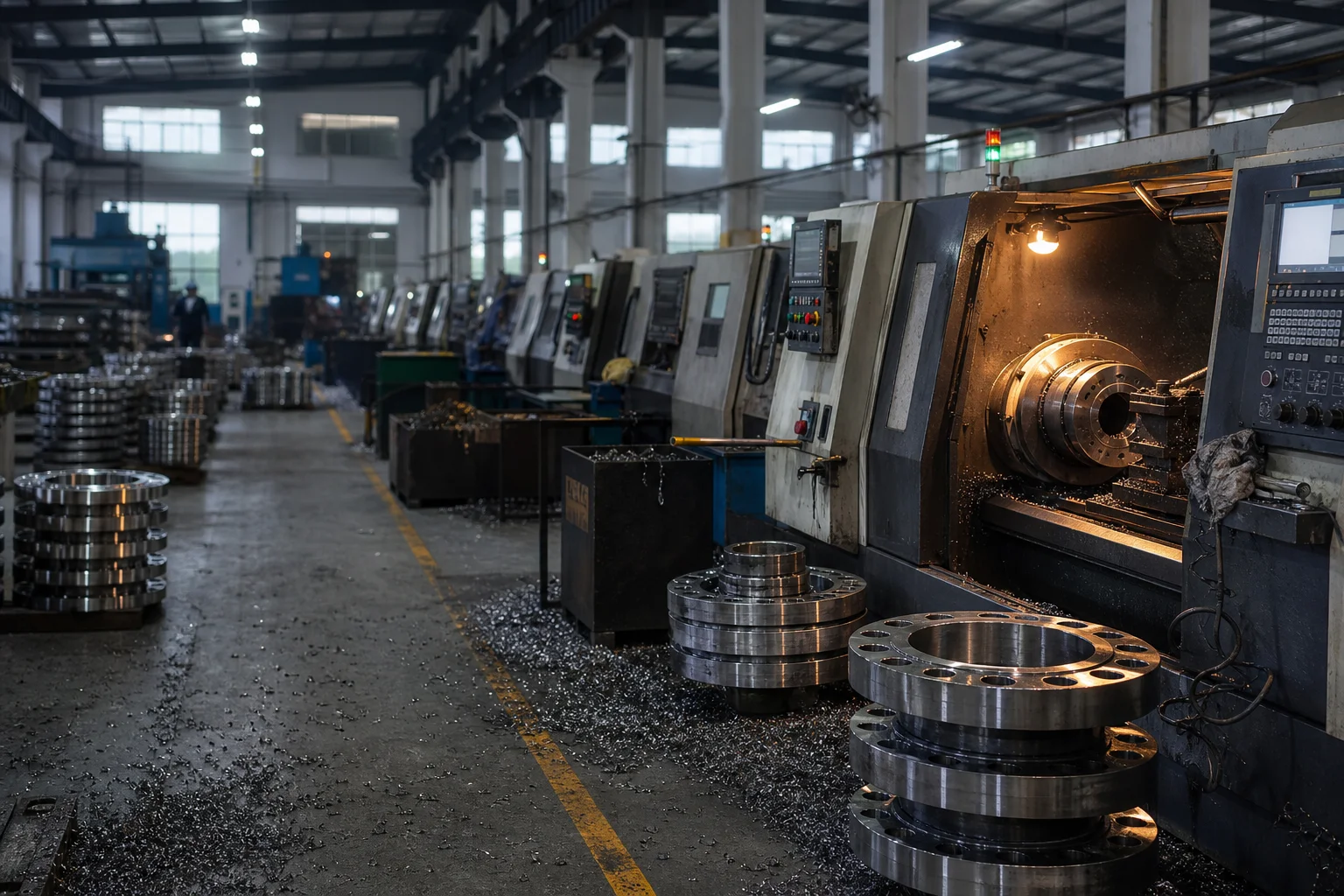
A structured quality checklist is the fastest way to separate a capable Chinese flange supplier from one that relies on trading paperwork without shop-floor control. Flanges are forged or plate-formed, heat-treated, machined, and sometimes NDE-tested before export—each step needs traceable records linking heat numbers to final dimensions and bolt-hole patterns.
Use this checklist during supplier qualification, pre-production review, and pre-shipment inspection to reduce nonconformance at site and protect pressure-boundary integrity across your piping system.
Why It Matters for Pipe Components
Flanges join pipe, fittings, and valves under bolt load and process pressure. When a Chinese flange supplier skips material verification or dimensional sampling, defects appear late: gaskets that will not seal, bolt holes that misalign, or PMI failures on stainless lines mixed with carbon steel. Because flanges sit at every critical interface, one batch error can hold up an entire spool fabrication yard.
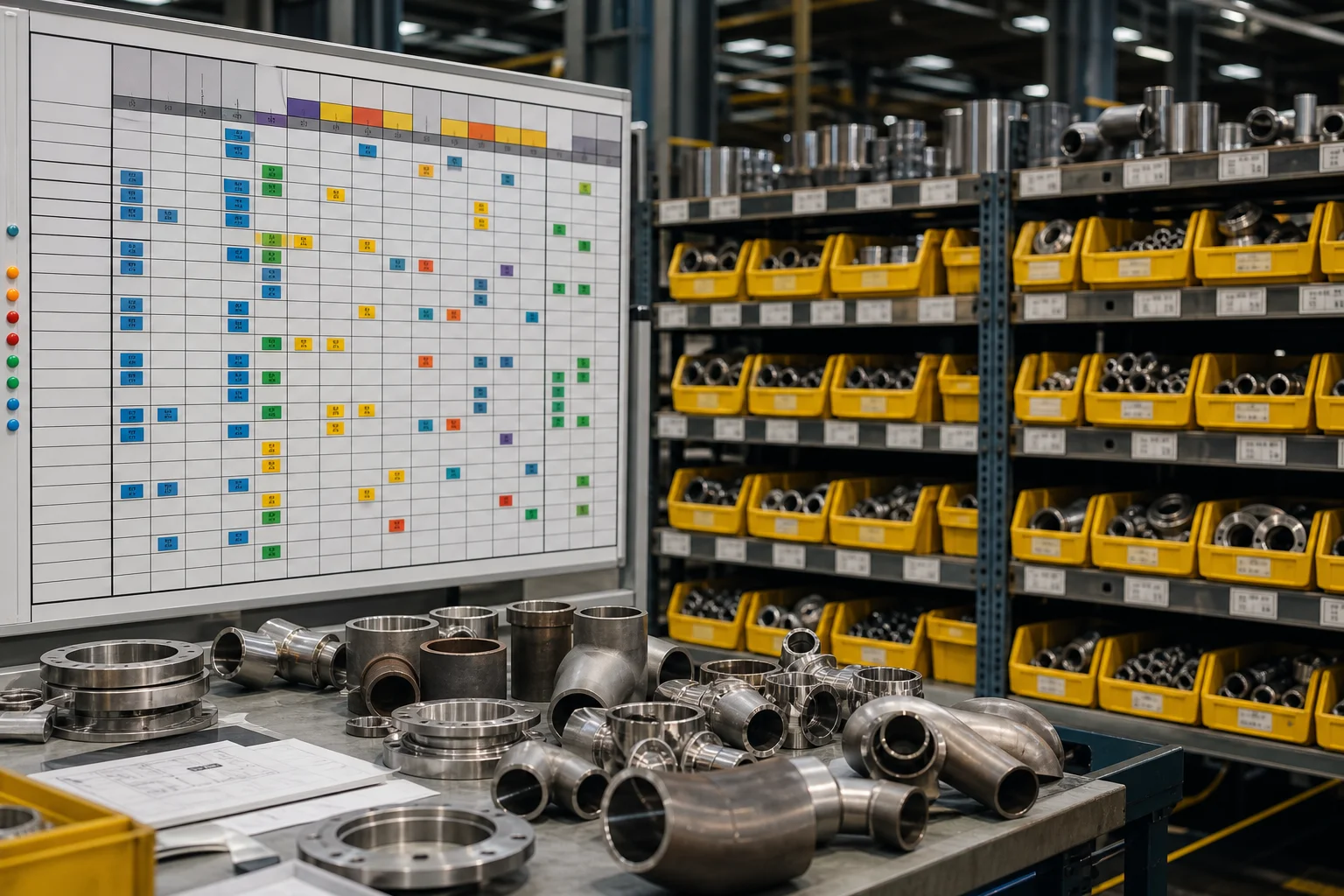
Quality verification also aligns with related components. If flange bores are oversized or facing finish is out of spec, welded fittings and valve bodies mated to those flanges require rework. Early checklist discipline keeps the whole piping package—flanges, elbows, tees, and flanged valves—on schedule.
Inspection Methods and Quality Parameters
Apply the following controls in sequence from material receipt to final packing. Adjust depth based on project inspection level (IL) or owner requirements.
| Control Stage | Method | Acceptance Focus |
|---|---|---|
| Material intake | MTR review, heat number register | Grade, specification, chemical and mechanical values |
| Identity | PMI or spectrometer spot test | Match MTR grade on each heat |
| Forging / forming | Process traveler review | Reduction ratio, forming temperature where applicable |
| Heat treatment | Furnace charts or batch records | Normalizing, annealing per material spec |
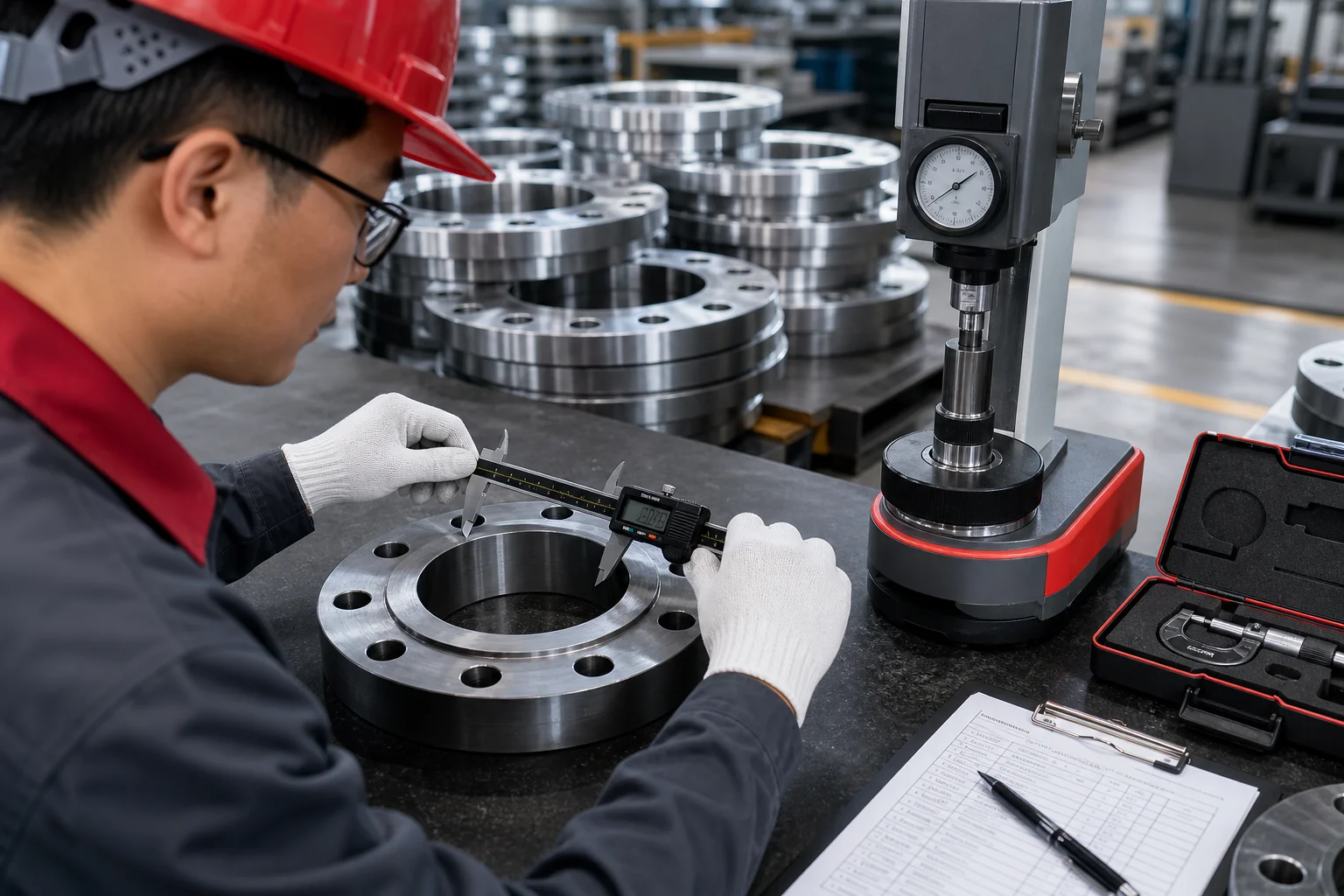
| Machining | Calipers, bore gauges, facing check | OD, bore, bolt circle, facing flatness and finish |
| NDE | VT, MT, PT, UT per PO | No cracks, laps, or unacceptable indications |
| Final | Marking and packing inspection | Traceability tag matches MTC line item |
Dimensional Checks That Catch Most Field Issues
1. Bolt circle and hole count — compare to the governing standard table for each size and class 2. Bore and hub length — critical on weld neck flanges mated to schedule pipe 3. Facing type and finish — RF height, FF flatness, RTJ groove dimensions when specified 4. Flange thickness and hub diameter — verify at multiple clock positions on sampled pieces 5. Bevel angle on weld neck ends — confirm alignment with project welding procedure
Documentation Cross-Check
Every Chinese flange supplier should link physical pieces to paperwork. On audit, pick random flanges and confirm:
- Heat number stamped matches MTC entry
- Size, class, and standard on marking match PO line
- Inspection report date covers the production batch
- Third-party inspection release (if required) references the same batch ID
Supplier and Inspection Checklist
Use this consolidated list before approving shipment from a Chinese flange supplier:
- [ ] MTR for each heat number with chemical and mechanical properties
- [ ] PMI results for stainless and alloy grades (100% or per sampling plan)
- [ ] Dimensional report for sampled sizes across the order range
- [ ] NDE records per specification (VT minimum; MT/PT/UT when required)
- [ ] Heat treatment records for applicable carbon and alloy grades
- [ ] Coating or passivation certificate for stainless when specified
- [ ] Correct facing protection (RF protectors, RTJ ring guards)
- [ ] Export marking: size, class, heat number, standard, manufacturer ID
- [ ] Packing list matches physical count and heat-number breakdown
- [ ] Nonconformance log reviewed—no open NCRs on shipped batch
Hebei Noan Pipe Equipment supports buyer and third-party inspection at its Mengcun, Hebei operations, with quality records structured for export release alongside pipe fittings and valves when projects require unified documentation packages.
FAQ
Is 100% PMI necessary for every Chinese flange order?
Not always. Many projects accept PMI sampling plus MTR review for carbon steel A105 flanges, while stainless and alloy lines often require 100% PMI. Follow the employer's piping material specification or agree a sampling plan in the PO.
What NDE is typical for forged flanges from China?
Visual inspection is baseline. Many export specs add magnetic particle or liquid penetrant on weld neck hubs and critical areas. Ultrasonic testing may apply for special service or owner mandates—state it explicitly in the PO.
Can I rely only on the supplier's internal inspection report?
For new suppliers or critical service, add independent or buyer witness inspection on the first lots. Internal reports are useful only when you have verified the supplier's calibration, training, and traceability system during qualification.
Next Steps
Share your inspection level, sampling plan, and required certificates when you RFQ so the Chinese flange supplier can quote inspection time and cost accurately. Hebei Noan Pipe Equipment welcomes quality audits and pre-shipment checks for export flange orders—contact the team with your specification and checklist requirements before production release.
Request a Quote