
Overview
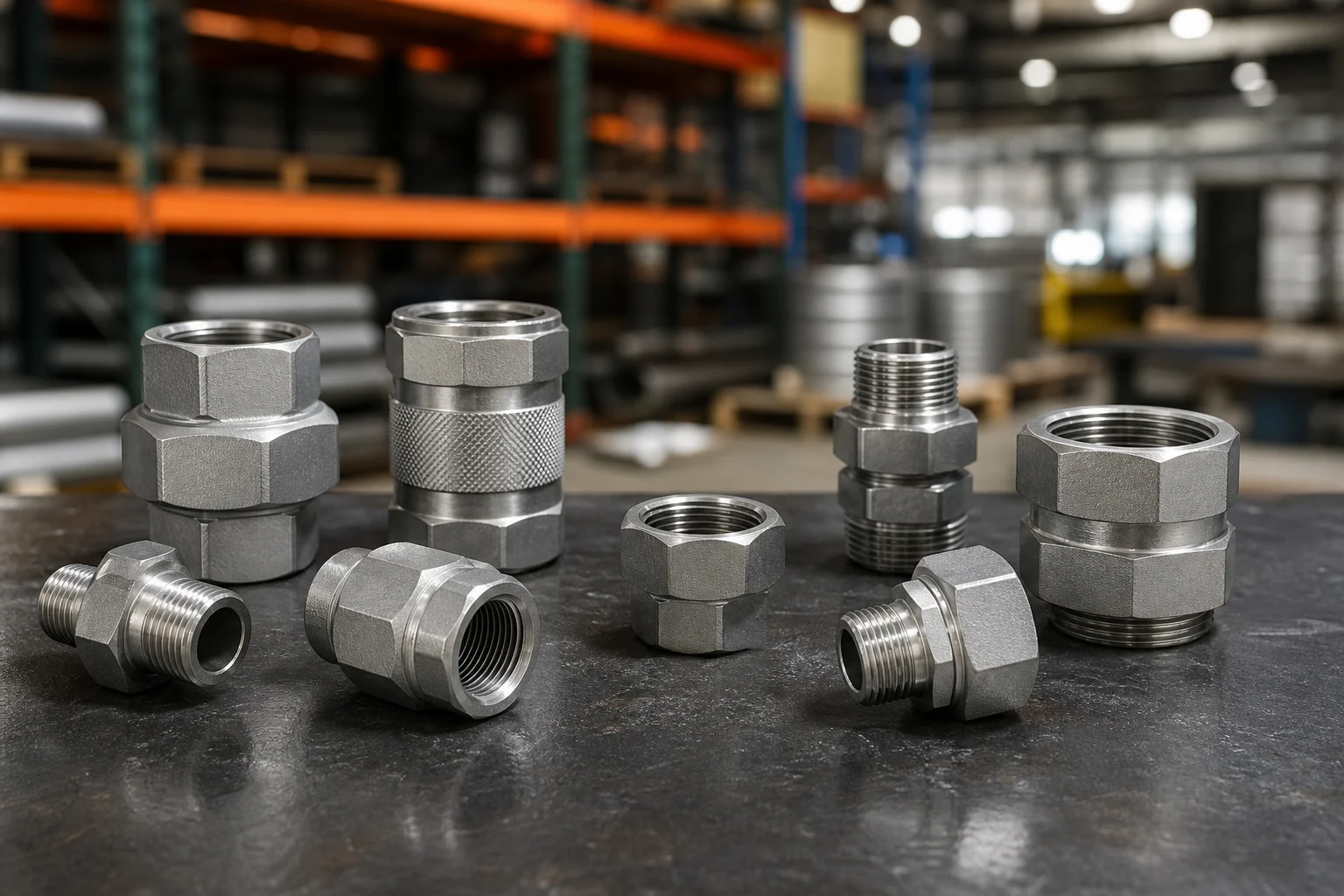
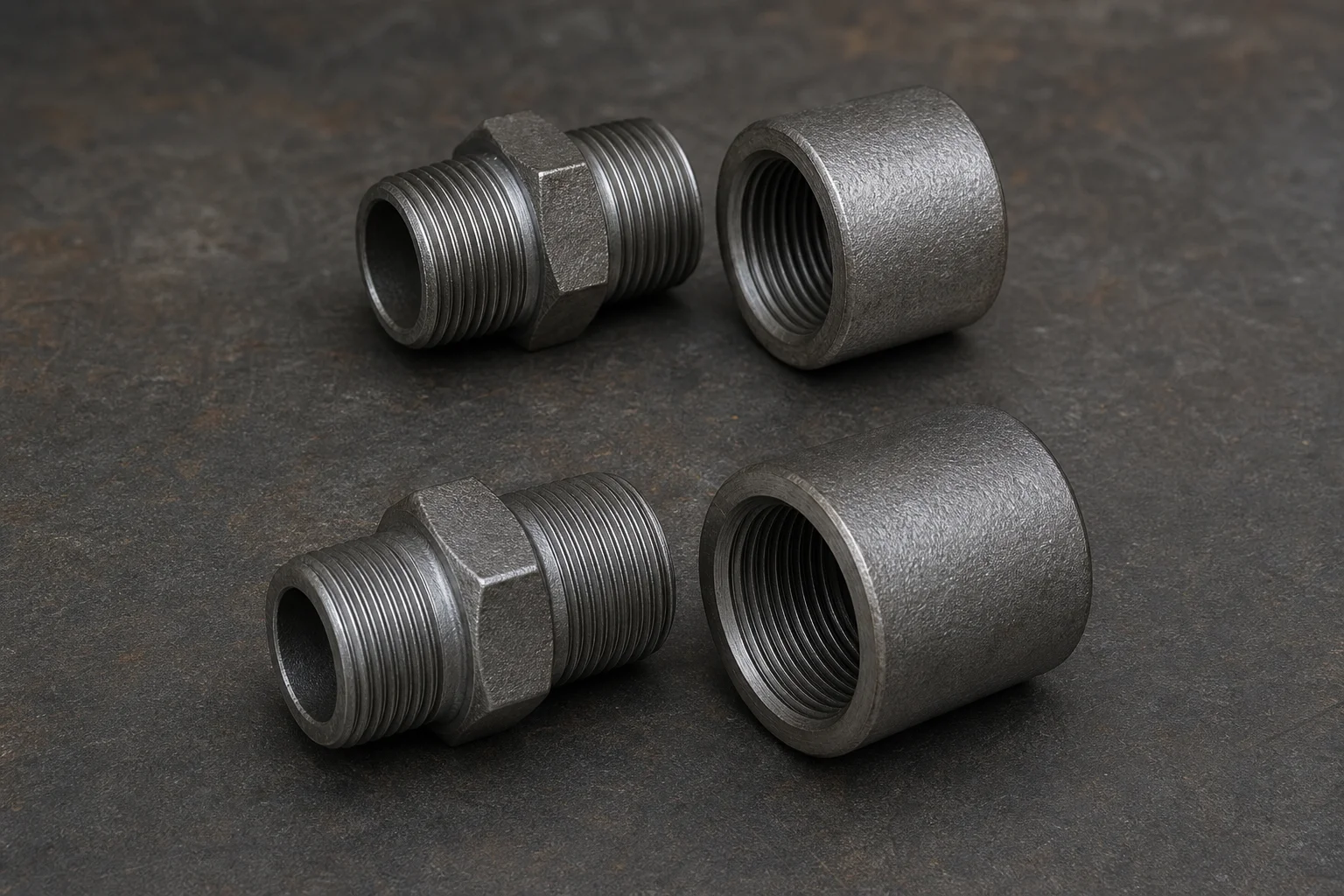
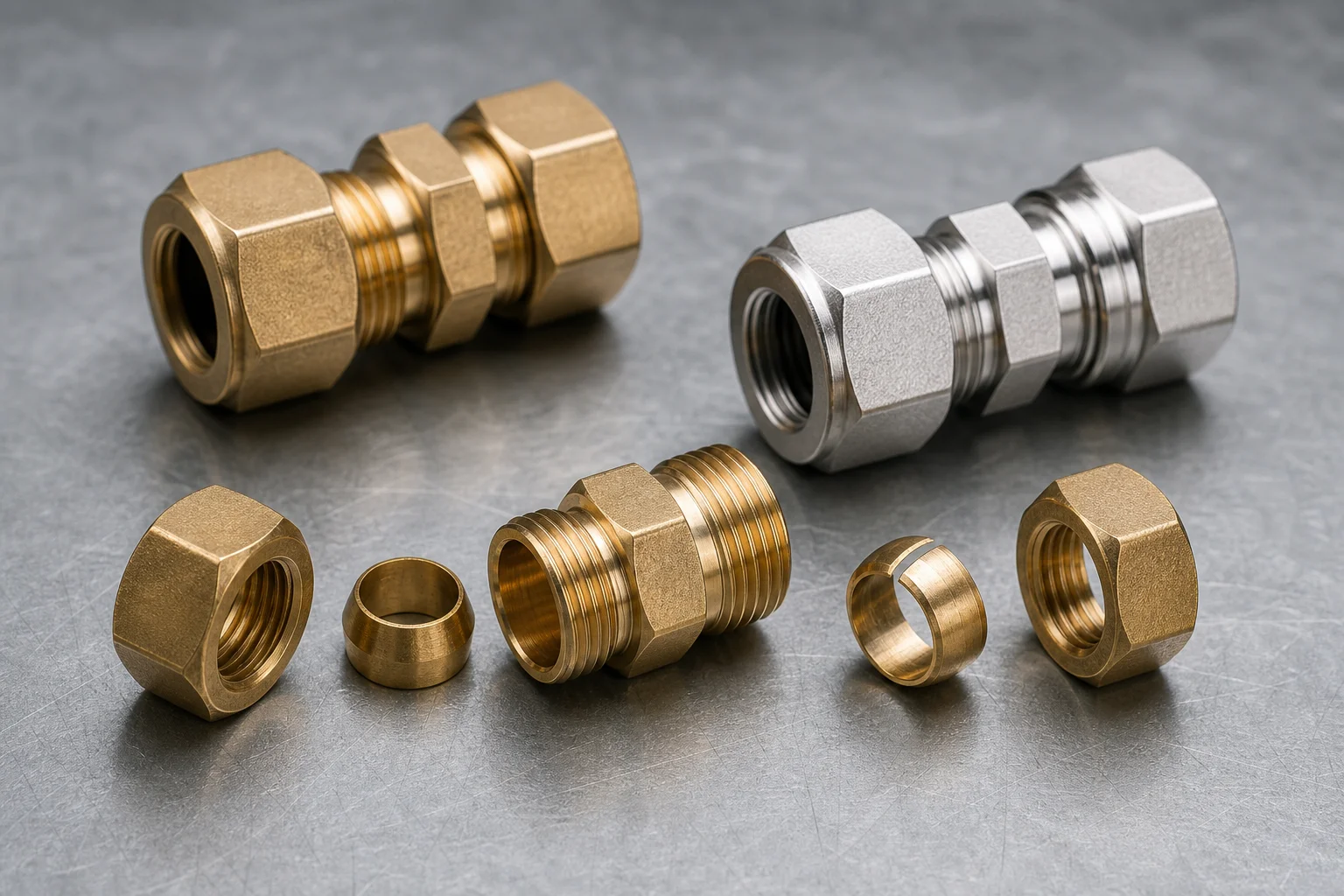
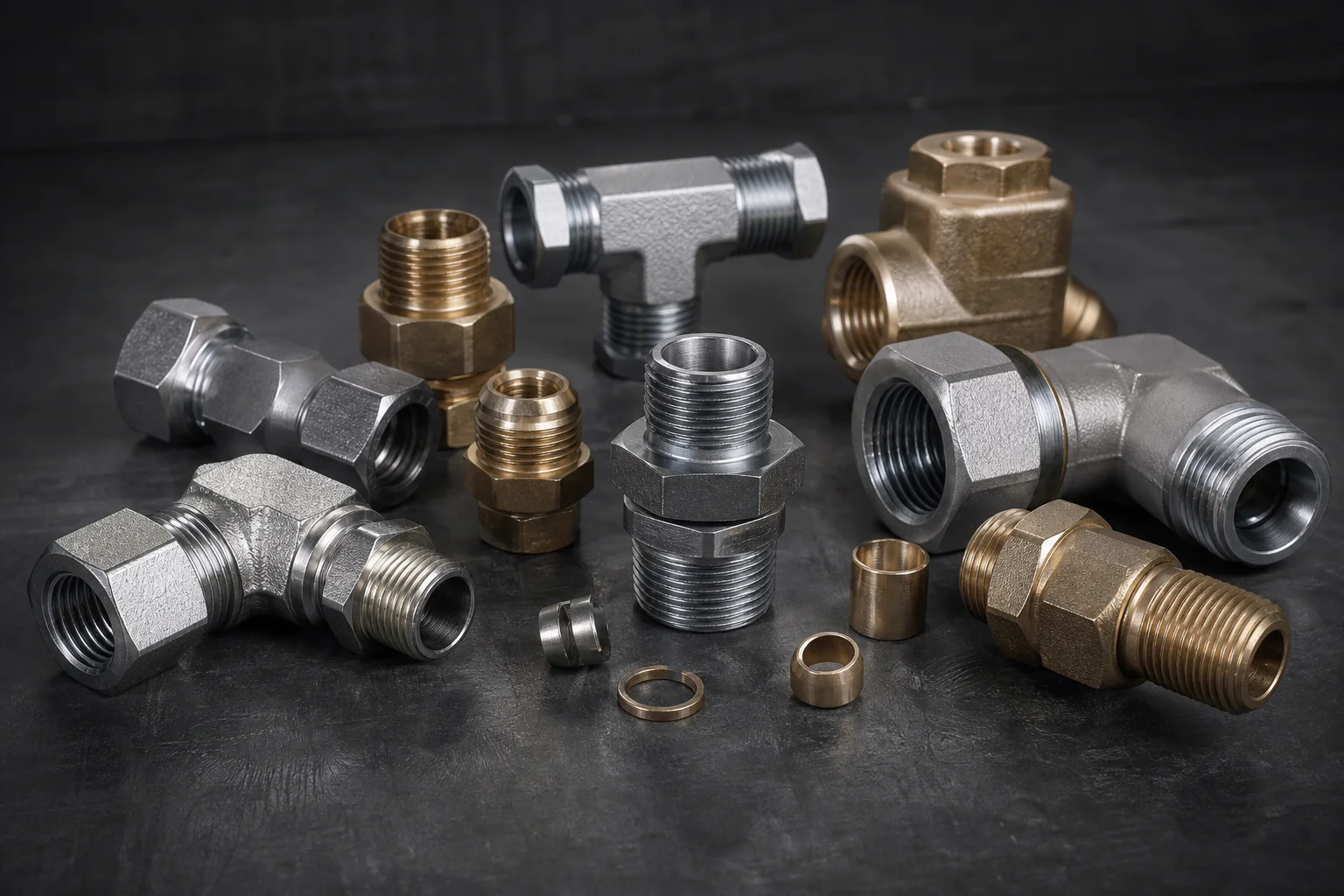
Hydraulic pipe fittings connect rigid pipe, tube, hose, valves, pumps, cylinders, manifolds, and instruments in fluid-power systems. Common connection families include tapered pipe threads, parallel threads with seals, flare fittings, compression fittings, face-seal fittings, bite-type fittings, and flange connections.
Selection is controlled by working pressure, pressure impulse, temperature, fluid compatibility, tube or hose dimensions, thread system, sealing method, vibration, cleanliness, and installation practice.
Why It Matters for Pipe Components
Hydraulic systems can operate at high pressure and experience frequent pressure cycles. A fitting that is dimensionally similar but uses the wrong thread or seal may fail during assembly or service. Leakage can create safety, environmental, and equipment risks.
Pressure rating also depends on the weakest part of the assembled connection. A high-rated adapter does not increase the rating of a lower-rated hose, tube, valve port, or seal. Cleanliness is another critical factor because particles can damage pumps, valves, and actuators.
Methods, Parameters, or Process
Identify the system connection before choosing the fitting.
| Parameter | What to confirm |
|---|---|
| Connection family | NPT, BSP, JIC, ORFS, metric, DIN-type bite ring, flange |
| Size | Nominal pipe, actual tube OD, dash size, hose ID |
| Pressure | Working, proof, burst, impulse requirement |
| Seal | Thread interference, O-ring, bonded seal, metal flare, ferrule |
| Material | Carbon steel, stainless steel, brass, special alloy |
| Finish | Zinc plating, zinc-nickel, passivation, uncoated stainless |
| Fluid | Hydraulic oil, water-glycol, synthetic fluid, other media |
| Environment | Temperature, corrosion, vibration, outdoor exposure |
| Cleanliness | Cleaning method, caps, packaging, particle requirement |
For adapters with different ends, list both ends completely. Orientation also matters for elbow and tee adapters. Swivel designs may simplify installation but have their own pressure and movement limitations.
Testing may include dimensional checks, proof pressure, burst pressure, impulse testing, leakage testing, and material verification depending on the specification.
Supplier and Inspection Checklist
- Identify each connection standard and thread.
- Confirm tube OD, hose size, or nominal pipe size.
- Verify working pressure and impulse conditions.
- Check seal material for fluid and temperature compatibility.
- Review fitting body and plating material.
- Inspect sealing cones, faces, grooves, threads, and ferrule surfaces.
- Use calibrated gauges for threads and dimensions.
- Require cleanliness and capped ends.
- Confirm assembly torque or installation instructions.
- Review proof, burst, and impulse test evidence where required.
- Check corrosion-resistance requirements for the finish.
- Prevent mixing of visually similar but incompatible fitting systems.
Application to Pipe Fittings, Valves, and Flanges
Hydraulic fittings connect directly to directional valves, pressure-control valves, pumps, cylinders, filters, accumulators, and manifolds. Port standards must match adapter ends. In larger systems, split-flange or four-bolt flange connections may be used instead of small threaded connections.
Transition fittings between process pipe and hydraulic tube should be reviewed carefully because the sizing conventions and cleanliness requirements differ.
FAQ
Are hydraulic fittings interchangeable across brands?
Only when they follow the same dimensional and sealing standard. Proprietary variations and tolerance differences may prevent safe interchangeability.
What is the difference between working and burst pressure?
Working pressure is the allowable service pressure. Burst pressure is a destructive test threshold and should not be used as the operating rating.
Why are hydraulic fitting ends capped?
Caps protect threads and sealing surfaces and help maintain internal cleanliness during transport and storage.
Can NPT fittings be used in every hydraulic system?
No. Some systems prefer face-seal, flare, metric, or flange connections because of pressure cycling, leakage control, assembly, or regional standards.
Next Steps
Prepare a connection schedule listing each port, mating component, size, standard, seal, material, pressure, temperature, orientation, and cleanliness requirement. Request samples or drawings when systems are visually similar.
Request a Quote