
Overview
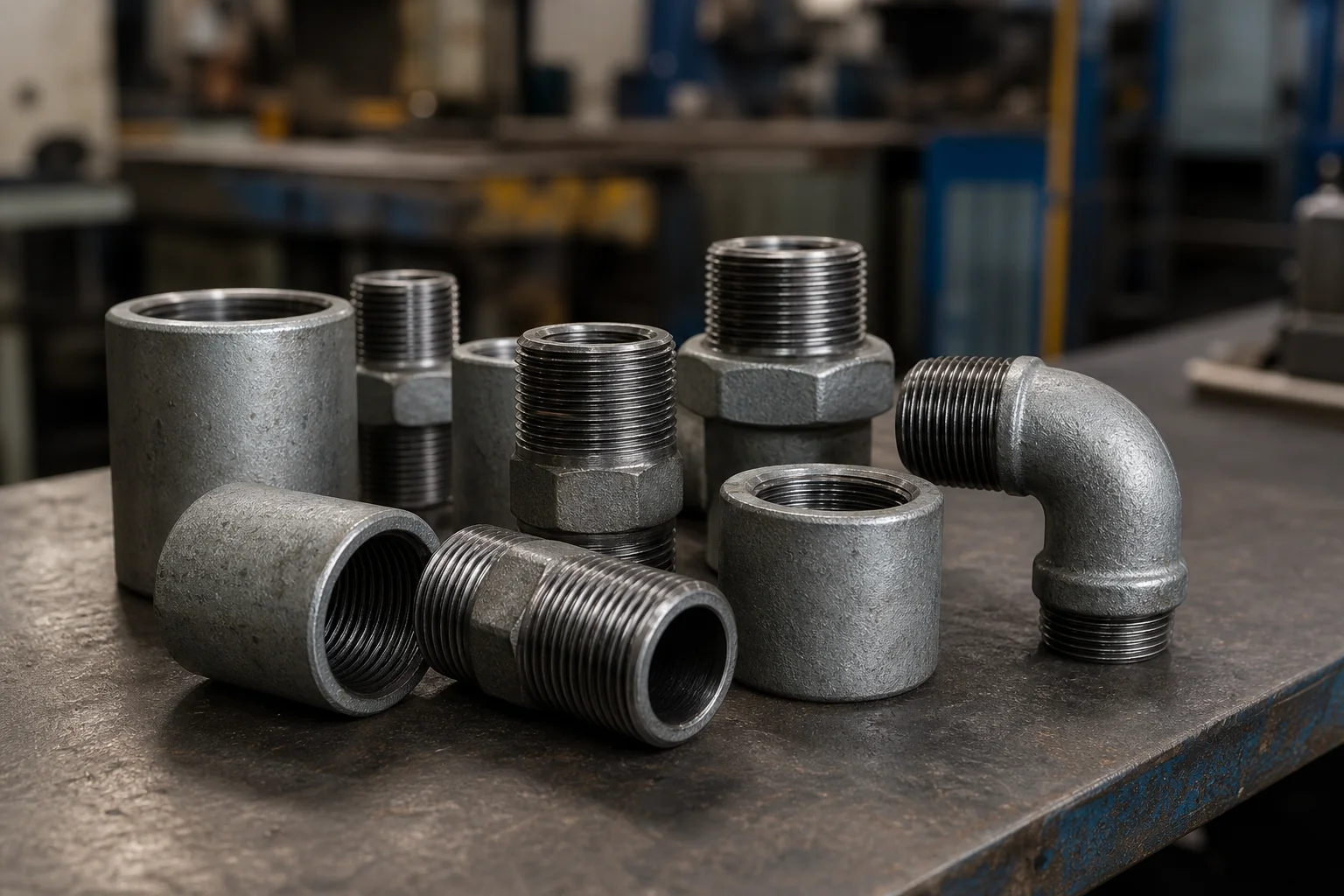
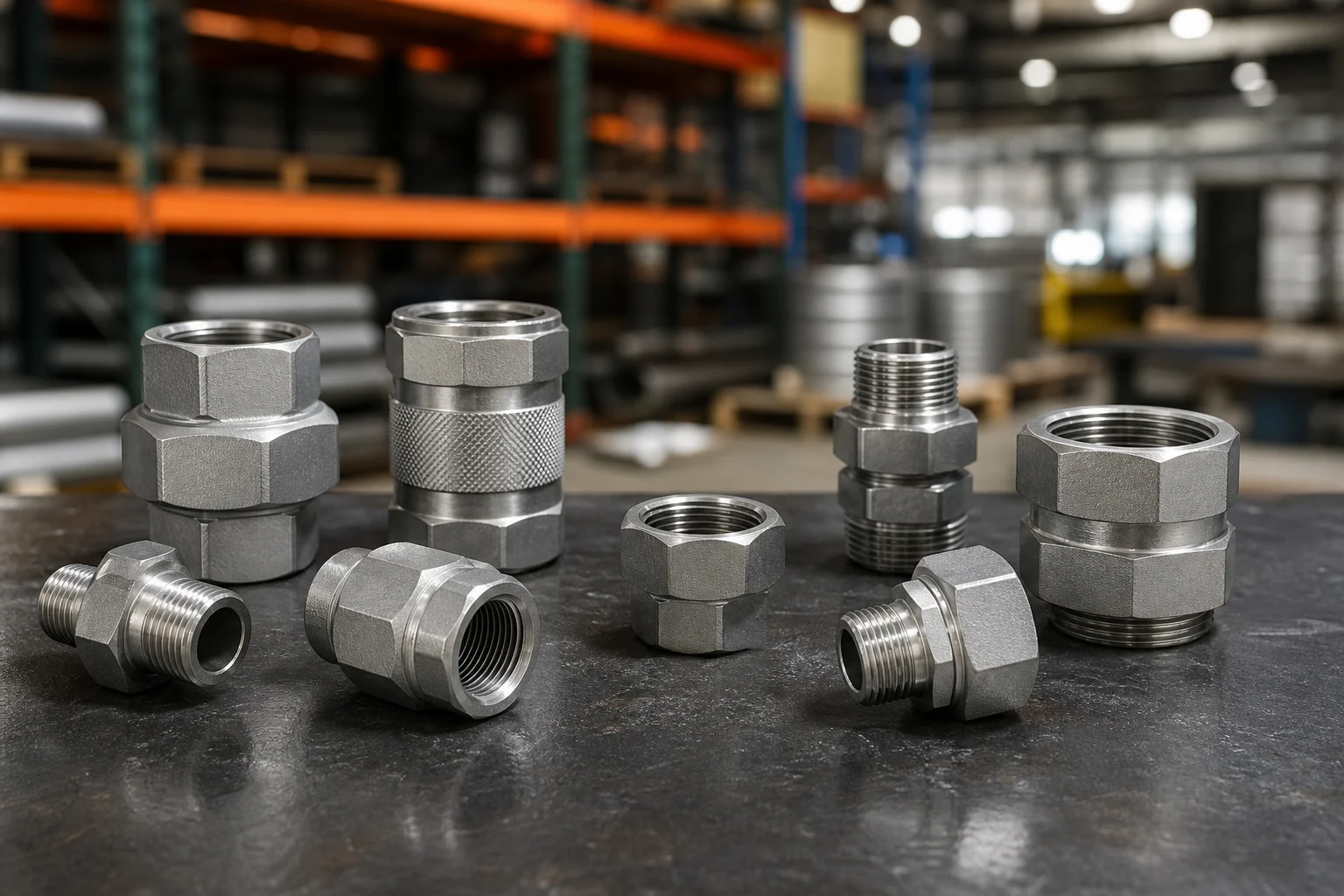
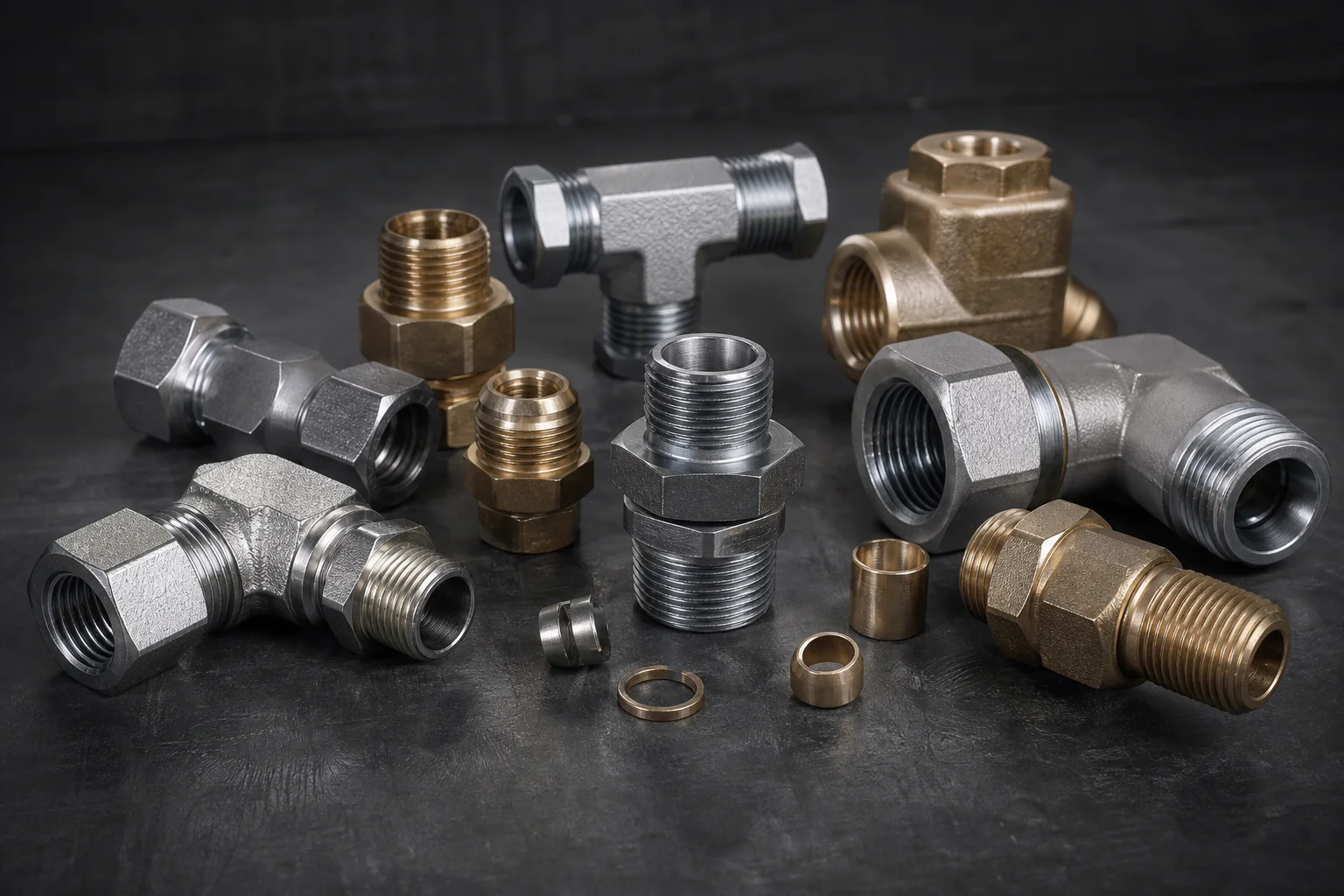
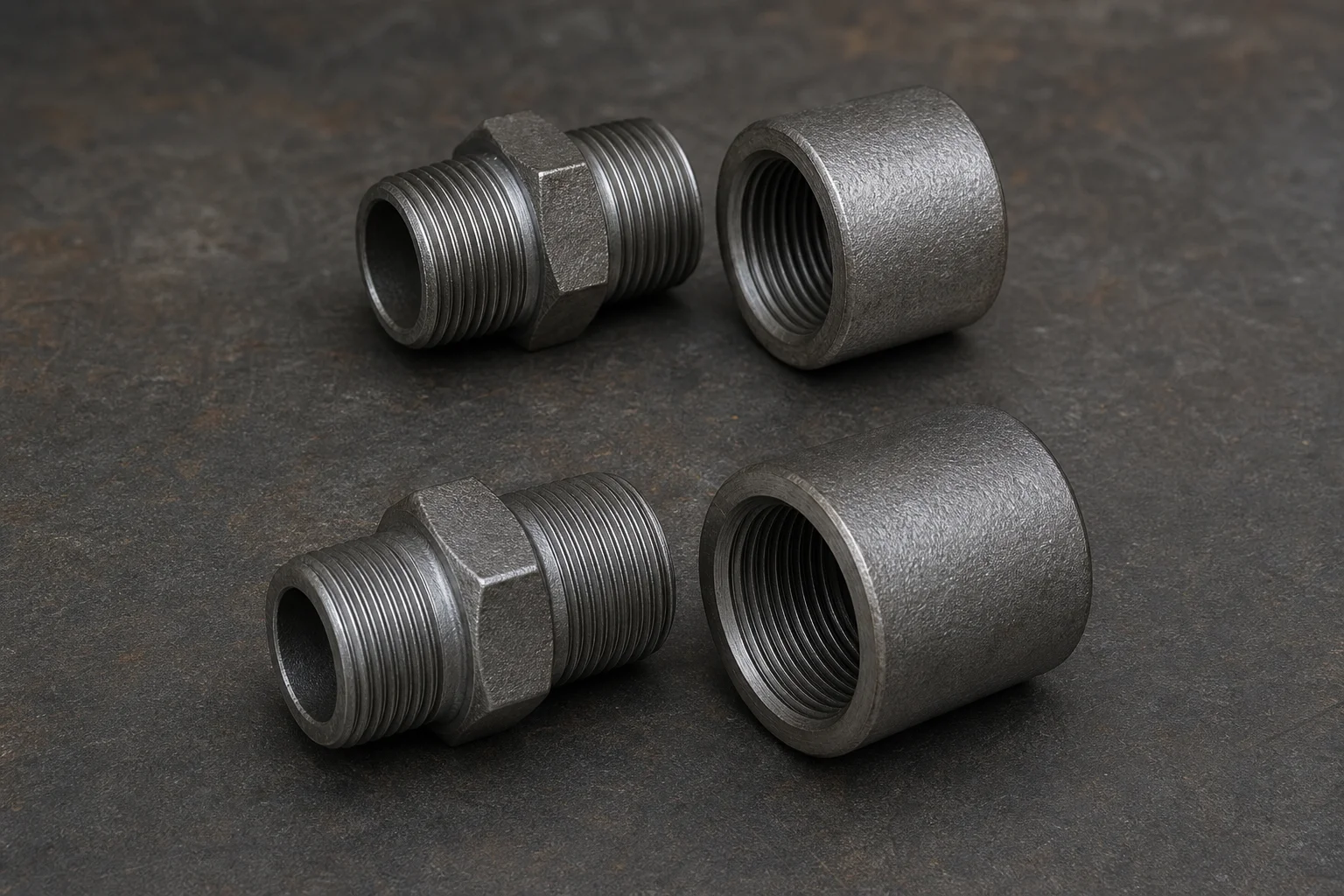
Male and female pipe fittings are identified by whether the connection has an external thread or an internal thread. A male end screws into a female end, but correct assembly requires more than matching nominal size. The thread form, pitch, angle, taper, sealing method, pressure rating, and material must also be compatible.
Common male-female products include adapters, nipples, bushings, elbows, tees, unions, valve connectors, and hydraulic fittings.
Why It Matters for Pipe Components
A nominal 1/2-inch male fitting may not match every nominal 1/2-inch female port. NPT, BSPP, BSPT, metric, and proprietary threads use different geometry or sealing methods. Forced assembly can damage threads and may appear tight without creating a safe seal.
Orientation matters as well. A fixed male elbow may not point in the desired direction after tightening. Swivel or adjustable fittings may be required for instruments, hydraulic lines, and compact assemblies.
Methods, Parameters, or Process
Identify both ends of the fitting.
| Feature | What to record |
|---|---|
| End type | Male or female |
| Thread family | NPT, BSPP, BSPT, metric, unified, proprietary |
| Size | Nominal size and pitch |
| Taper | Tapered or parallel |
| Seal | Thread, gasket, bonded washer, O-ring, cone, face seal |
| Orientation | Fixed, swivel, adjustable |
| Material | Carbon steel, stainless steel, brass, alloy |
| Rating | Working pressure and temperature |
A mixed-end description should use a clear format:
> Reducing adapter, 3/4 male NPT × 1/2 female NPT, 316 stainless steel.
For hydraulic or instrument fittings, include the port standard and seal type. For parallel threads, the thread may provide retention while a separate gasket or O-ring provides sealing.
Supplier and Inspection Checklist
- Define male or female for every connection.
- State complete thread designation and standard.
- Confirm pitch, taper, and nominal size.
- Identify the sealing surface and seal material.
- Check hex size and wrench clearance.
- Verify orientation requirements.
- Gauge internal and external threads.
- Inspect crests, roots, starts, and thread finish.
- Confirm coating does not reduce thread clearance.
- Check material and pressure rating.
- Protect threads with caps and plugs.
- Provide drawings for multi-end adapters or special orientations.
Application to Pipe Fittings, Valves, and Flanges
Male and female fittings are often used at valve ports, gauge connections, drains, vents, lubricating points, hydraulic manifolds, and instrument tubing transitions. The port identification on the valve or equipment drawing should be used as the source of truth.
Threaded flange openings and instrument bosses also require exact matching. Where repeated maintenance is expected, consider a union, swivel, or flange instead of a fixed threaded adapter.
FAQ
Does male always mean tapered thread?
No. Male and female describe external and internal threads. Either may be tapered or parallel depending on the standard.
Can a male NPT fitting connect to a female BSPT fitting?
They should not be treated as compatible. Geometry differences can prevent correct engagement and sealing.
What is a male-female reducer?
It is an adapter or bushing that changes size while also changing from an external thread to an internal thread.
Why is thread sealant sometimes still needed?
Some tapered threads require approved tape or compound to improve sealing and assembly. Parallel threads often rely on a separate gasket or O-ring.
Next Steps
Record the exact port designation from the mating component and include it in the RFQ. For adapters, list both ends, material, pressure, seal, orientation, overall length, and required inspection.
Request a Quote