Overview
Pipe couplings join two pipe ends through threads, sockets, grooves, compression seals, sleeves, or other mechanical arrangements. A union also joins two ends but includes a separable seat and nut that allows disconnection without rotating long sections of pipe. The terms are sometimes used loosely, so the actual connection design must be stated.
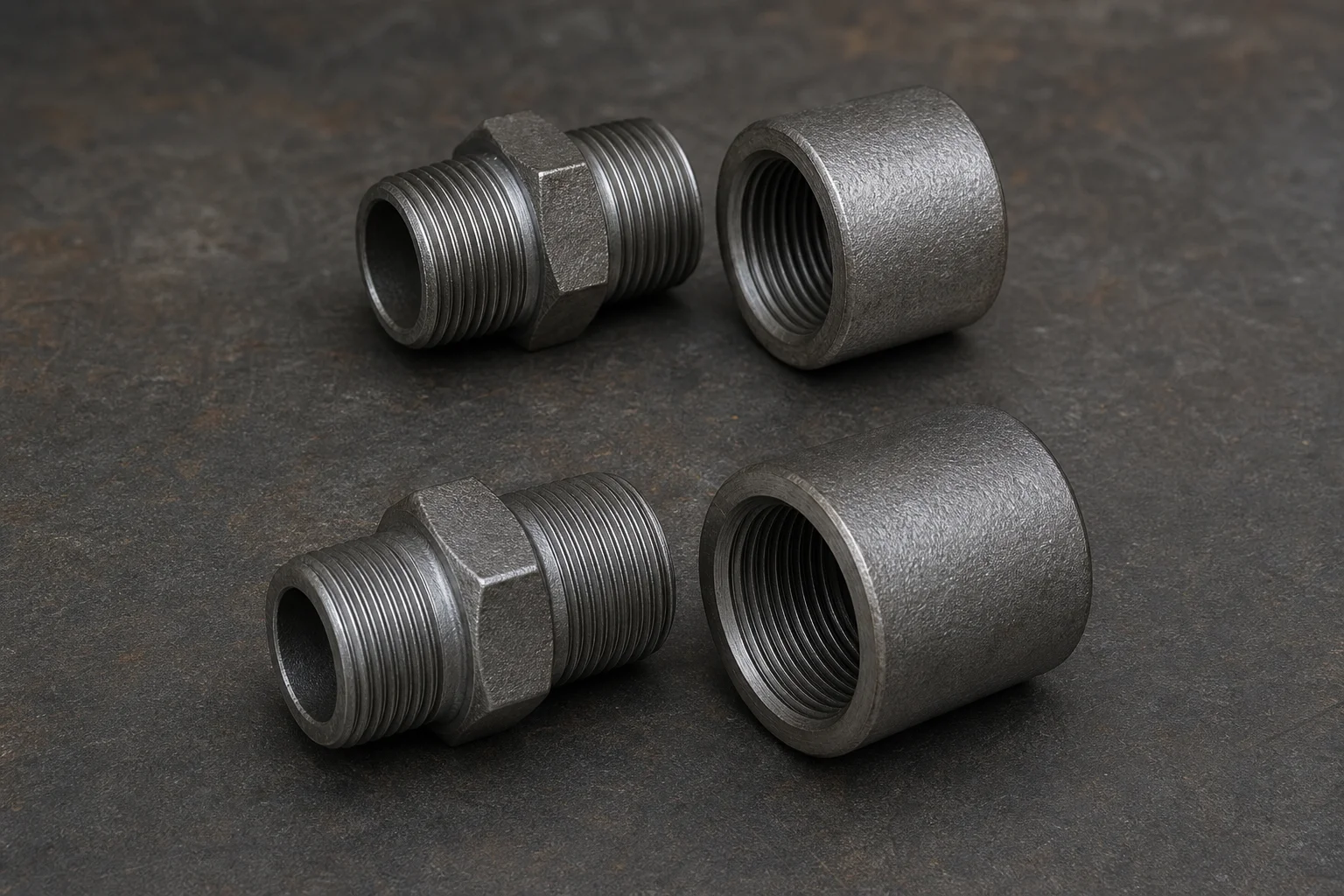
Common coupling categories include full and half threaded couplings, socket-weld couplings, grooved couplings, compression couplings, repair sleeves, restrained mechanical couplings, and transition couplings. Each uses a different pressure-rating, sealing, installation, and inspection method.
Why It Matters for Pipe Components
A threaded coupling can be compact but requires compatible threads and sealant. A socket-weld coupling introduces crevice and fillet-weld considerations. A grooved coupling depends on groove dimensions, gasket, housing, and bolt assembly. A repair coupling may not be suitable as a permanent pressure connection unless the design and owner approve it.
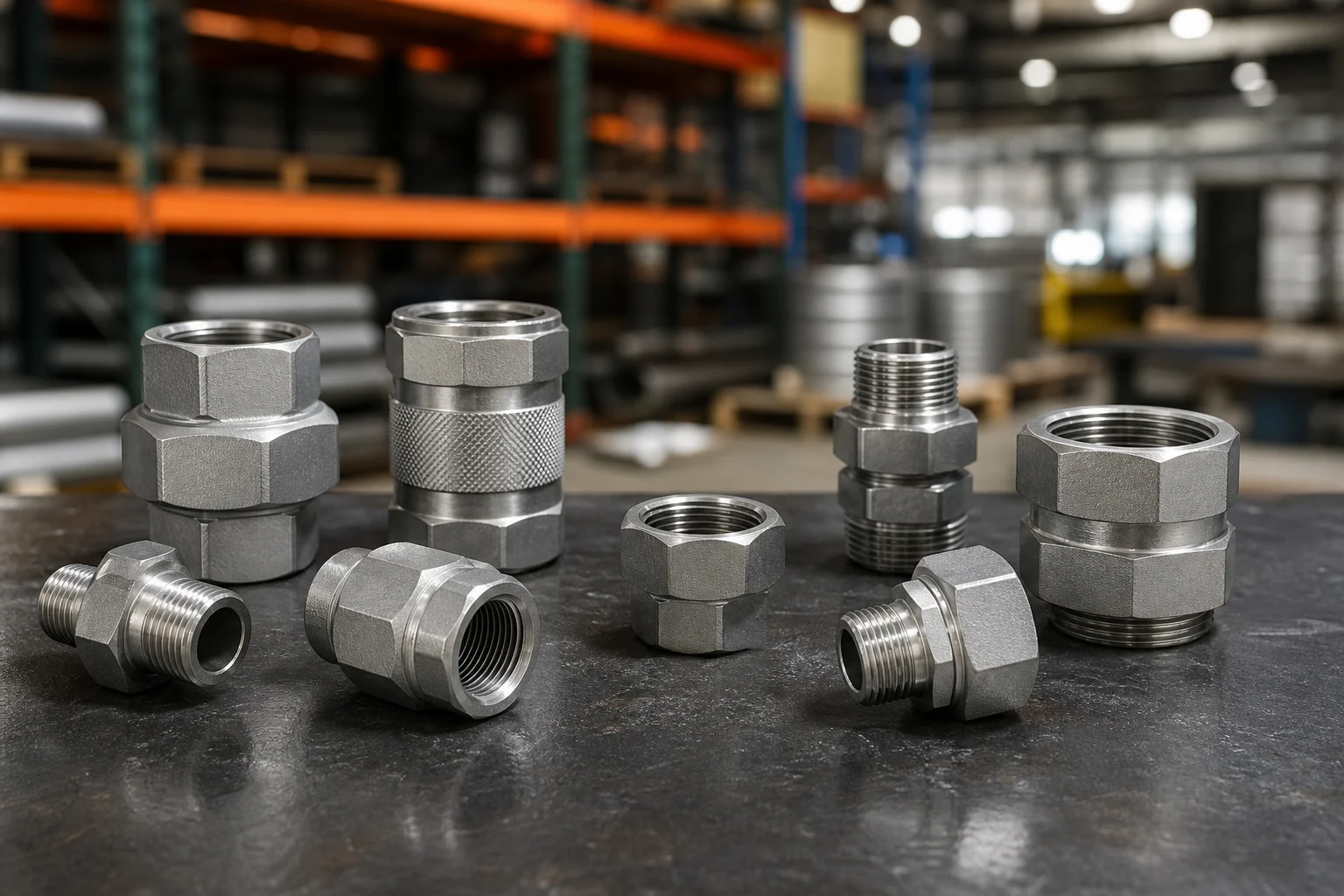
A union is useful where valves, instruments, or equipment require removal, but its seat, nut, material, and alignment must match the service. Opening a union under pressure is hazardous, and the joint should not be treated as an isolation device.
The pipe OD system is critical for mechanical couplings. Nominally similar steel, copper, plastic, ductile-iron, and tubing products can have different actual diameters.
Methods, Parameters, or Process
Select the connection by pipe geometry, service, required removability, and approved piping class.
| Connection | How it joins | Key control |
|---|---|---|
| Threaded coupling | Female threads join two male pipe ends | Thread standard, class, material, sealant, engagement |
| Socket-weld coupling | Pipe enters sockets and is fillet welded | Socket dimensions, insertion gap, WPS, weld inspection |
| Union | Three-piece joint with nut and seat | Seat type, material, alignment, class, thread or weld ends |
| Grooved coupling | Housing and gasket engage pipe grooves | Pipe OD, groove standard, gasket, bolt torque |
| Compression coupling | Seals through rings or elastomers under compression | OD, surface condition, restraint, pressure/temperature |
| Repair sleeve/coupling | Clamps or seals around damaged pipe | Temporary/permanent status, defect assessment, design approval |
Supplier and Inspection Checklist
- Identify pipe material, actual OD, wall, and end condition.
- Name the exact coupling or union type.
- Specify material, size, class or rating, and product standard.
- Confirm thread, socket, groove, gasket, or compression geometry.
- Check axial restraint and thrust requirements.
- Verify gasket and seal compatibility with fluid and temperature.
- Inspect sealing surfaces, threads, grooves, castings, and weld ends.
- Follow the manufacturer’s assembly, lubrication, and tightening instructions.
- Do not use a repair coupling without defect assessment and owner approval.
- Provide access and support so a union can be safely opened during maintenance.
Application to Pipe Fittings, Valves, and Flanges
Threaded couplings and unions are common in utilities, instruments, air, water, and selected gas service. Socket-weld couplings are used in small-bore process piping where permitted. Grooved couplings are widely used in fire, water, and utility systems with compatible grooved pipe.
Transition couplings connect different materials or OD systems but require careful review of restraint, corrosion, pressure, and thermal movement. Valves with union ends can simplify replacement, while flanged joints remain more common for larger removable connections.
FAQ
What is the main difference between a union and a coupling?
A union is designed to separate at its nut and seat without rotating the connected pipe. A basic coupling normally requires pipe rotation or cutting for removal.
Are all pipe couplings restrained?
No. Some seal but do not resist axial thrust. The restraint requirement must be stated.
Can a grooved coupling join any pipe with a groove?
No. Pipe OD, groove dimensions, housing, gasket, pressure rating, and manufacturer system must be compatible.
Is a half coupling half the pressure rating?
No. Half coupling describes geometry, not half the rating. Its class and standard must be specified.
Can a union be opened while the line is pressurized?
No. The system must be isolated, depressurized, drained, and made safe under the approved procedure.
Next Steps
Specify the pipe OD system, connection method, restraint, material, rating, gasket or seal, and required removability. Request manufacturer drawings for mechanical and transition couplings.
Request a Quote