
Overview
A pipe cross section is the circular cut view used to identify outside diameter, inside diameter, wall thickness, metal area, and internal flow area. These values are connected but not interchangeable. Nominal pipe size is a designation, while actual OD and wall come from the applicable dimensional standard or project specification.
For fittings and flanges, the critical cross-sectional inputs are actual outside diameter and specified wall thickness. They affect weld ends, fitting wall, flange bore, reducer geometry, weight estimates, and inspection.
Why It Matters for Pipe Components
Two pipes with the same nominal size can have the same OD but different wall thicknesses. The thicker pipe has a smaller ID and greater metal area. This changes mass, flow area, velocity, welding heat input, bevel detail, and the bore transition into fittings and flanges.
The cross section prevents schedule mistakes. A weld-neck flange ordered without a bore basis may create an internal step. A butt-weld fitting with the wrong wall can require unapproved transition machining.
Corrosion allowance, mill tolerance, lining, coating, and machining can change usable dimensions. Engineering calculations should use project design values and tolerances, not only a nominal schedule label.
Methods, Parameters, or Process
The relationships below are useful for basic geometry. Confirm units, tolerances, and the design basis before using them.
| Parameter | Basic relationship | Procurement relevance |
|---|---|---|
| Outside diameter, OD | From the specified standard or drawing | Matches fitting ends, clamps, supports, and flange geometry |
| Wall thickness, t | Specified directly or by approved schedule | Controls strength, weight, welding, and ID |
| Inside diameter, ID | Nominally ID = OD − 2t | Affects flow area and bore matching |
| Internal flow area | A = π(ID²)/4 | Used when the actual ID basis is defined |
| Metal area | A = π(OD² − ID²)/4 | Used for theoretical weight |
| Mass per length | Metal area × density | Useful for estimates, not certified actual weight |
Supplier and Inspection Checklist
- State nominal size, actual OD, wall or schedule, and dimensional standard.
- Confirm whether wall is nominal, minimum, or subject to negative tolerance.
- Check whether corrosion allowance is included in ordered wall.
- Match butt-weld fitting ends to pipe OD and wall.
- Specify weld-neck flange bore or pipe schedule.
- Check internal transitions between components with different bores.
- Include lining, cladding, coating, or machining allowances.
- Use calibrated OD, thickness, and bore measuring equipment.
- Separate theoretical weight from actual shipment weight.
- Do not infer pressure rating from schedule alone.
Application to Pipe Fittings, Valves, and Flanges
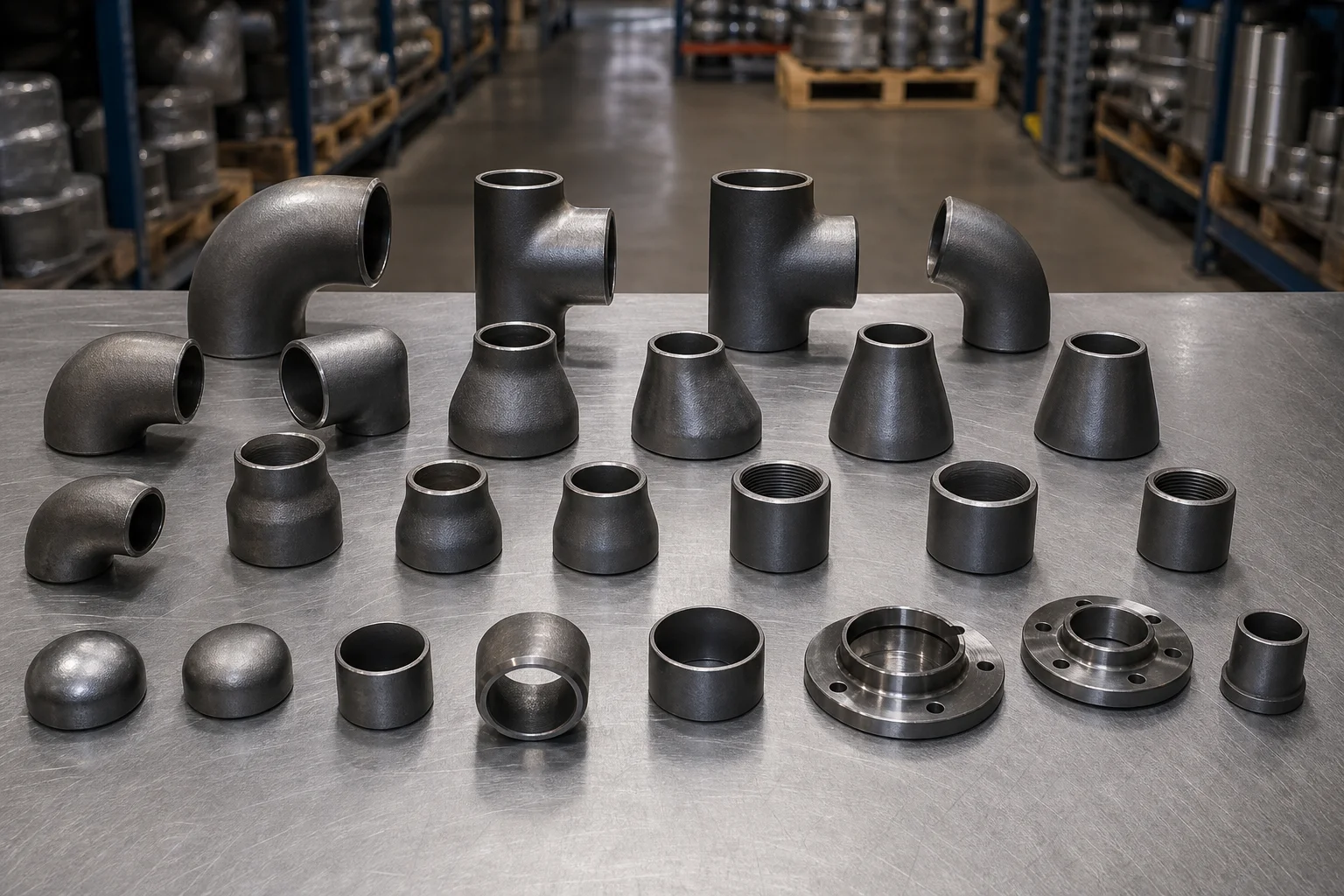
Elbows, tees, reducers, caps, and stub ends must match the ordered pipe OD and wall. Reducers need both large-end and small-end dimensions. The product standard may permit tolerances that must be considered during fit-up.
Weld-neck flanges need bore and bevel review. Slip-on flanges are selected by pipe OD and joint detail. Socket-weld fittings require the correct socket bore, depth, and pipe size.
Valves can have reduced or full ports that differ from pipe ID. Any smaller internal opening should be evaluated for pressure drop, erosion, pigging, drainage, and cleaning.
FAQ
Is nominal pipe size the same as outside diameter?
Not for every size. Nominal size is a designation; use the applicable standard or drawing for actual OD.
How do I calculate inside diameter?
For a nominal estimate, subtract twice the wall thickness from OD. Actual ID varies with manufacturing tolerances.
Does a higher schedule always mean a higher pressure rating?
A thicker wall can increase capacity, but material, temperature, corrosion allowance, quality, and design code also control the rating.
Why does a weld-neck flange need a bore basis?
The bore should provide an acceptable transition to the connected pipe and avoid excessive internal mismatch.
Can theoretical weight be used for freight booking?
Use it for early estimates. Final booking should use verified supplier packing data or actual weight.
Next Steps
Provide OD, wall, material, standard, and end preparation for every pipe and butt-weld component. Add a cross-sectional sketch when bore matching is critical.
Request a Quote