
Overview
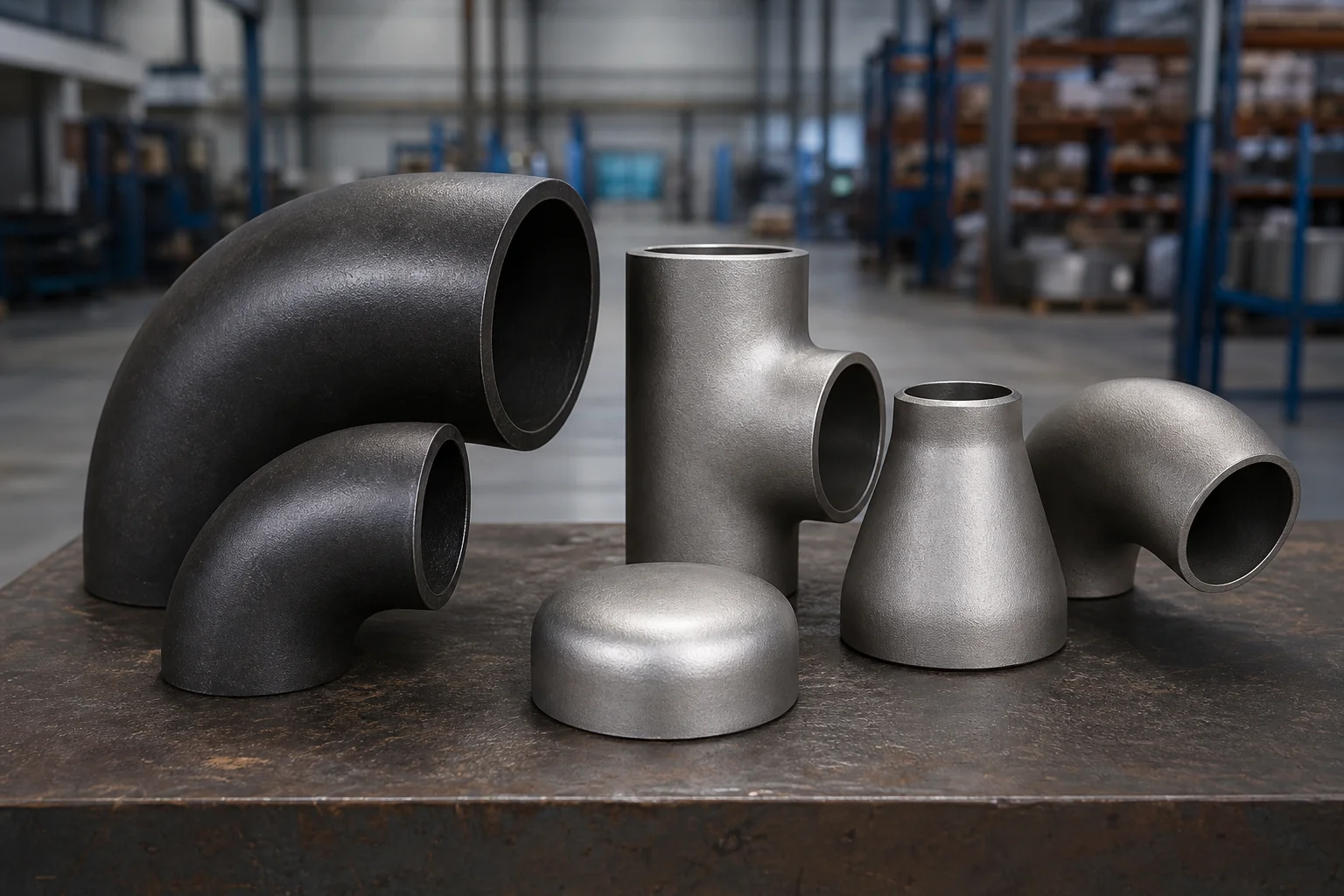
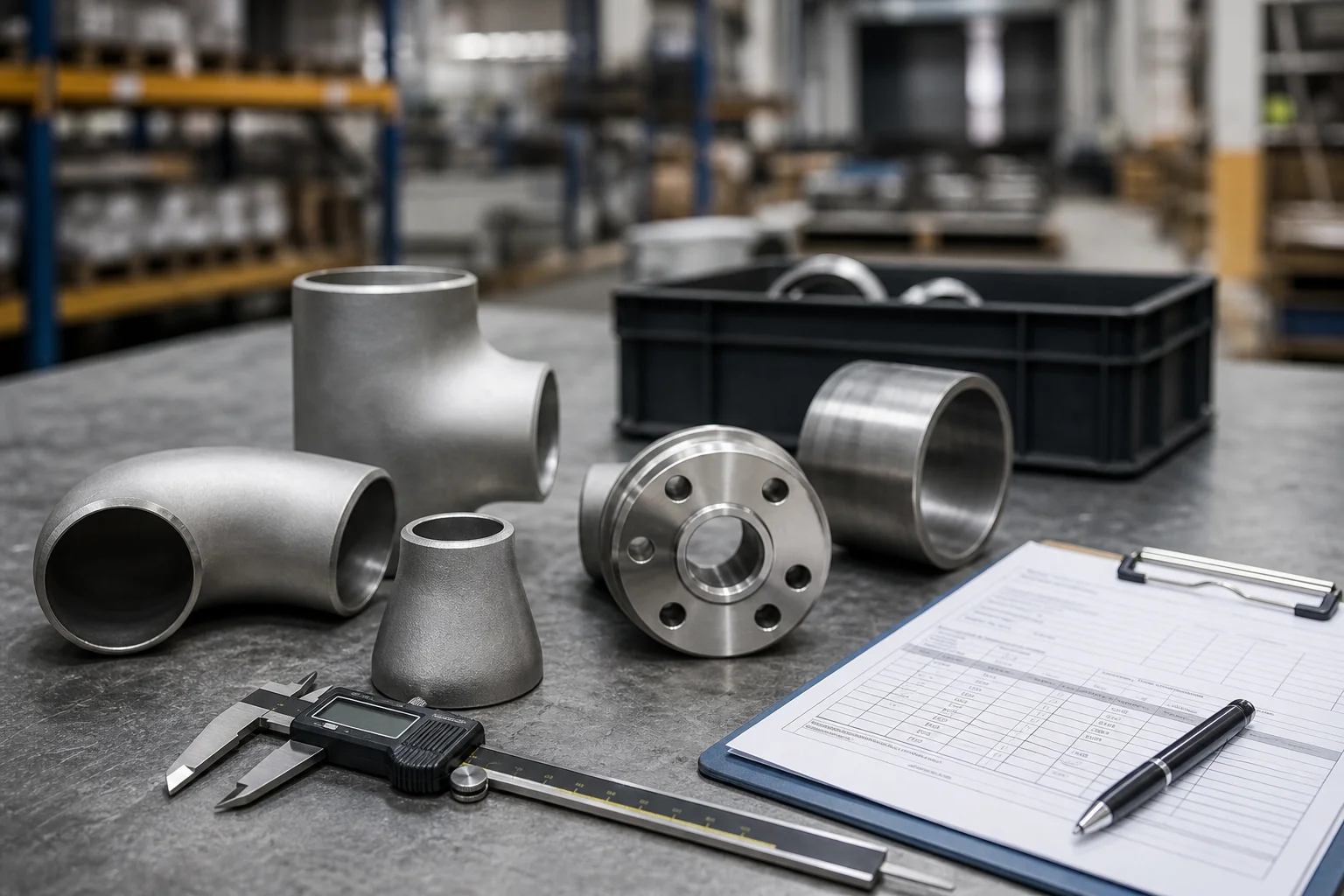
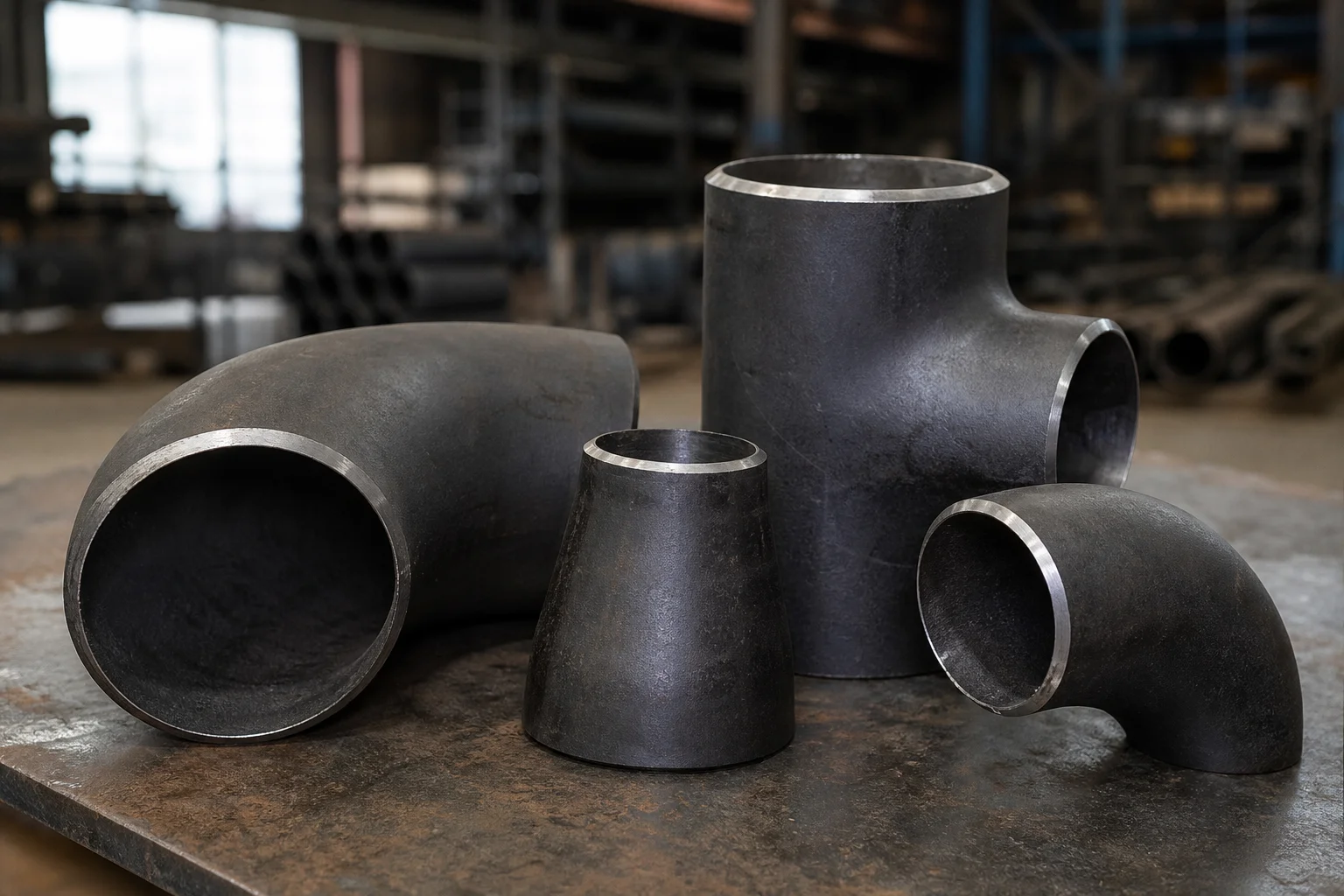
A pipe fitting manufacturer converts pipe, plate, bar, billet, forgings, or cast material into pressure-containing components such as elbows, tees, reducers, caps, couplings, unions, and branch fittings. A qualified manufacturer must control the complete route from material receipt through forming, heat treatment, machining, inspection, marking, preservation, and final documentation.
When buyers evaluate a factory, the central question is not only whether the factory can make the shape. It is whether the manufacturer can repeatedly produce the required dimensions, mechanical properties, surface condition, traceability, and certification for the specified standard.
Why It Matters for Pipe Components
Different fitting families require different manufacturing capabilities. Butt-weld elbows may be formed by hot pushing, mandrel forming, pressing, or fabrication. Tees may be hot formed, hydraulically formed, forged, or fabricated. Forged fittings require controlled forging and machining. Large-diameter products may require forming from plate and full weld inspection.
A factory that performs well on standard carbon steel elbows may not be suitable for duplex stainless steel, low-temperature service, high-alloy materials, or large fabricated fittings. Heat-treatment control, contamination prevention, weld procedure qualification, and testing capability become increasingly important as material and service severity rise.
Methods, Parameters, or Process
A manufacturing audit should follow the process flow.
| Process stage | Key control points |
|---|---|
| Material receipt | Grade, heat number, dimensions, certificate review, segregation |
| Cutting and preparation | Identification transfer, cut allowance, surface quality |
| Forming or forging | Temperature range, reduction, tooling, deformation control |
| Heat treatment | Furnace calibration, loading, time-temperature record, cooling method |
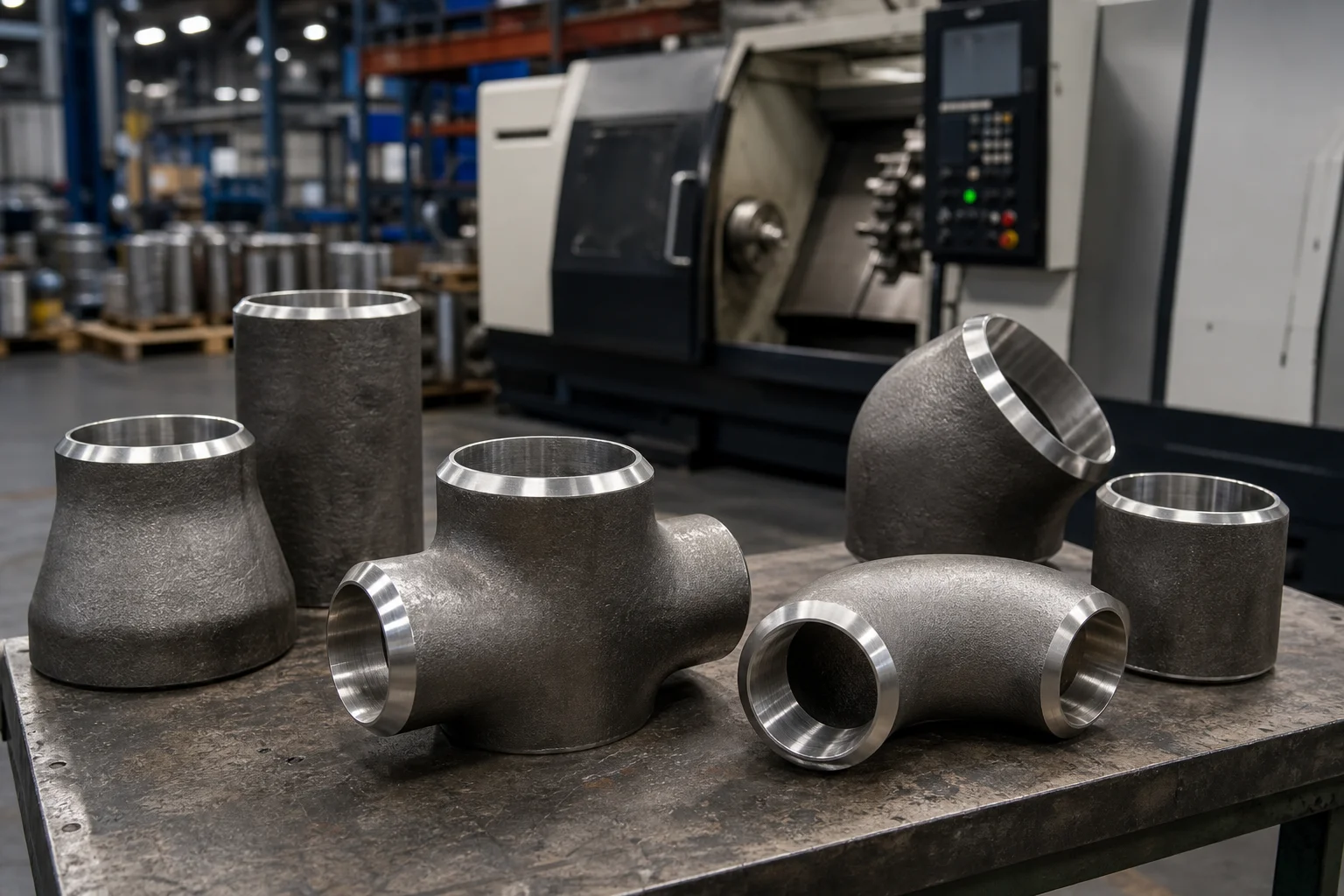
| Machining | End dimensions, bevels, threads, sockets, facing, bore transition |
| Welding or repair | Approved procedure, qualified welders, filler control, NDT |
| Inspection | Visual, dimensional, PMI, mechanical tests, NDT, pressure tests where applicable |
| Marking and packing | Standard marking, heat traceability, protection, item segregation |
For heat-treated products, review furnace charts rather than accepting only a statement that heat treatment was completed. For forged fittings, check that forging reduction and starting material are suitable. For welded fittings, review welding procedure qualifications, welder qualifications, consumable control, and the required volumetric or surface examination.
Manufacturers should also have a controlled system for customer drawings and standard revisions. Nonstandard dimensions must be approved before raw material is committed.
Supplier and Inspection Checklist
- Confirm the manufacturing route for each fitting family.
- Review in-house and subcontracted processes separately.
- Check forming, forging, machining, welding, and heat-treatment equipment.
- Verify furnace calibration and temperature uniformity records.
- Review material identification and heat-number transfer at each stage.
- Inspect storage segregation for carbon steel, stainless steel, and alloy materials.
- Confirm measuring equipment range and calibration.
- Review NDT personnel qualifications and procedures.
- Check mechanical testing and external laboratory controls.
- Examine sample production travelers and inspection records.
- Verify marking, coating, pickling, passivation, and end protection.
- Review previous nonconformities and corrective actions.
- Confirm capacity for the required size, wall thickness, and delivery schedule.
Application to Pipe Fittings, Valves, and Flanges
Many manufacturers specialize. A pipe fitting factory may not produce valves or flanges, but it should understand how its products interface with them. Butt-weld fitting bores should align with valve and pipe bores. Flanged ends must follow the selected standard and rating. Branch fittings should provide the correct run and branch dimensions for the piping design.
For package orders, the project supplier should coordinate specialist manufacturers while maintaining one traceability and documentation system.
FAQ
What is the difference between a manufacturer and a supplier?
A manufacturer physically produces the fitting. A supplier may be the manufacturer, a stockist, a trader, or a project integrator. Buyers should identify the actual manufacturing source for critical items.
Which production records should be available?
Typical records include raw-material certificates, process travelers, forming records, heat-treatment charts, machining reports, NDT reports, mechanical test results, dimensional reports, and final inspection release.
Can one factory manufacture every type of pipe fitting?
Few factories are equally capable across all fitting types, materials, sizes, and standards. Specialist capability is often more important than a very broad catalog.
Why is traceability important?
Traceability connects the finished fitting to its raw material, production process, heat treatment, inspection, and test results. Without it, the certificate may not reliably prove product compliance.
Next Steps
Before factory approval, prepare a capability questionnaire, request sample records, review critical equipment, and define a test order or audit plan. Match the manufacturer to the specific fitting family, material, size range, and inspection level required.
Request a Quote