
Overview
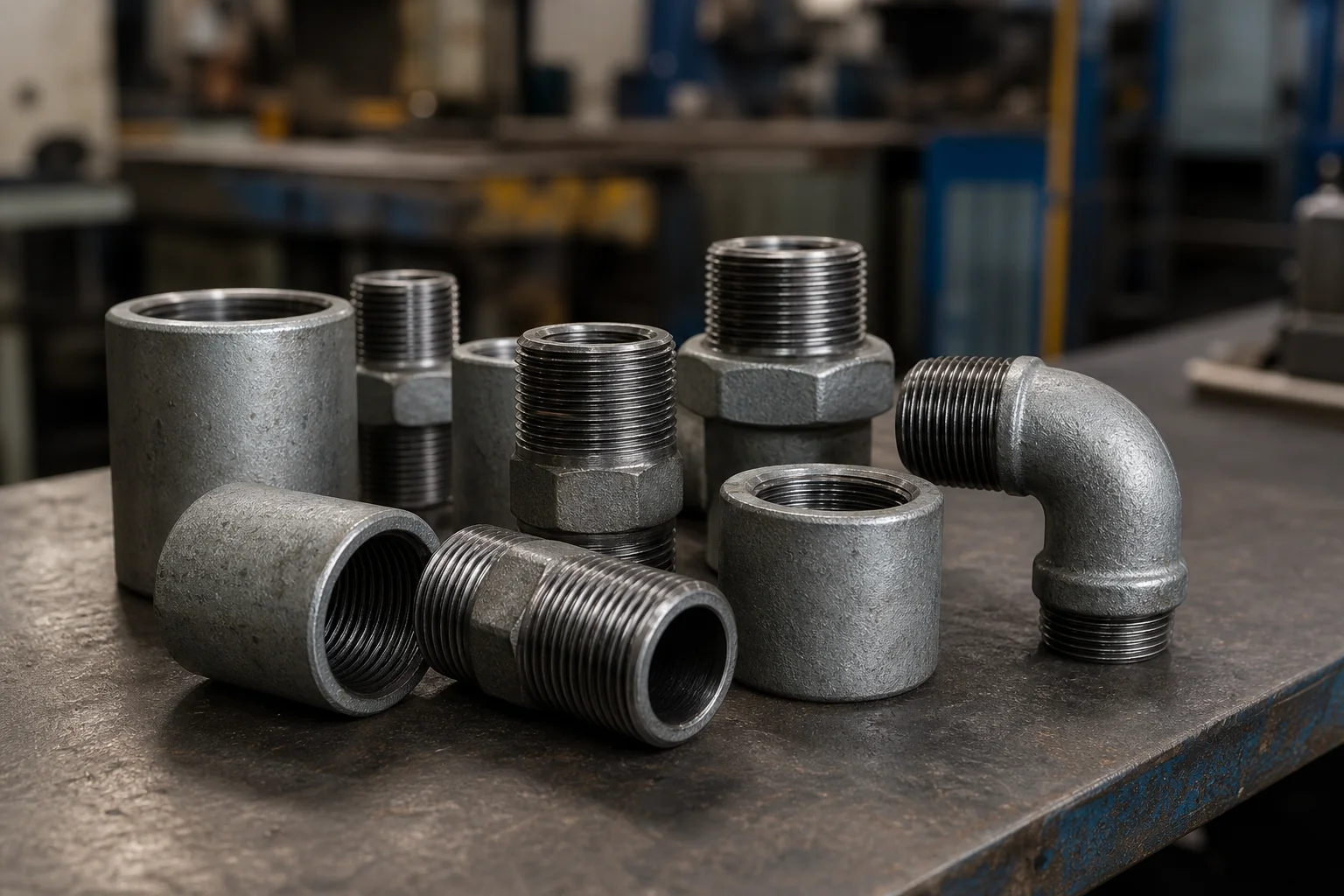
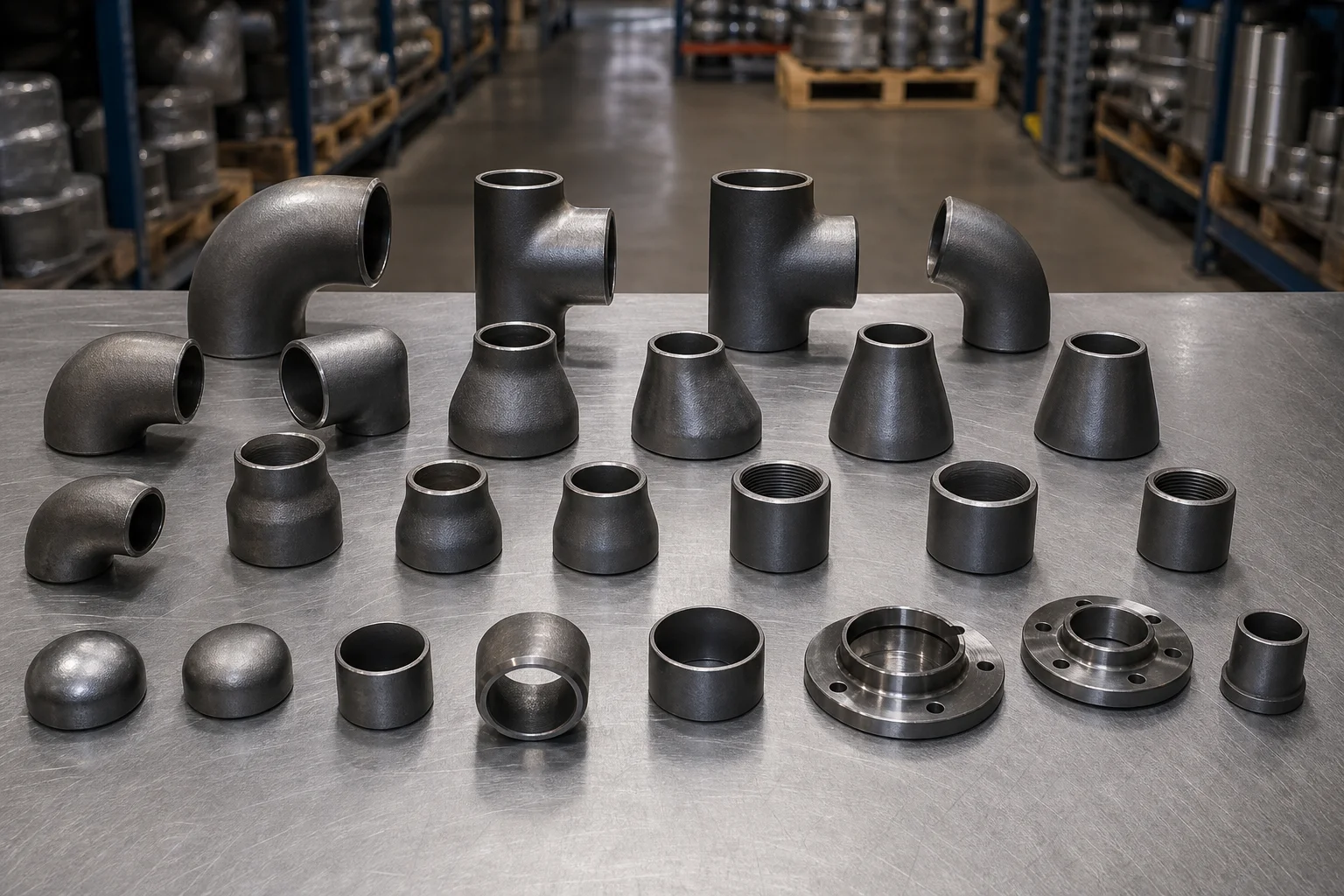
The main types of pipe fittings change direction, divide or combine flow, change size, close an end, create a branch, or provide a removable connection. Common examples include elbows, tees, crosses, reducers, caps, couplings, unions, branch outlets, stub ends, and flanges. The correct fitting depends on pipe material, OD, wall, pressure, temperature, fluid, connection, and code.
The fitting name alone is not enough. An elbow may be butt-weld, socket-weld, threaded, grooved, compression, or fabricated. Each version uses different dimensional, material, rating, welding, and inspection requirements.
Why It Matters for Pipe Components
Choosing the wrong fitting changes more than installation convenience. A short-radius elbow affects layout differently from a long-radius elbow. A reducing tee differs from a branch outlet in geometry and reinforcement. Concentric and eccentric reducers manage flow and drainage differently.
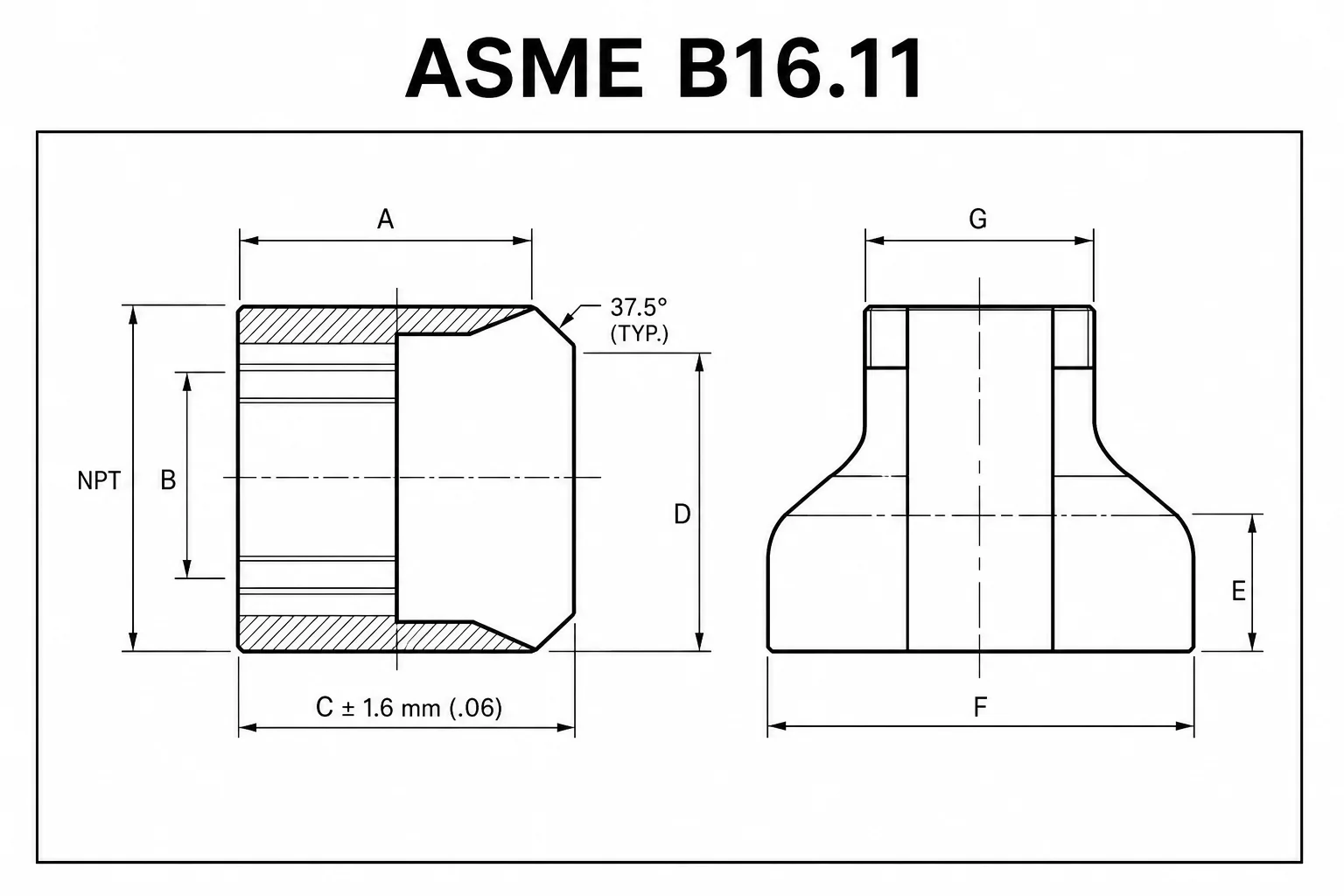
Connection method changes the failure mode and inspection plan. Butt-weld fittings rely on bevels and qualified welding. Socket-weld fittings need socket and fillet-weld control. Threaded fittings require the correct thread and sealant. Mechanical couplings depend on groove, gasket, housing, and bolts.
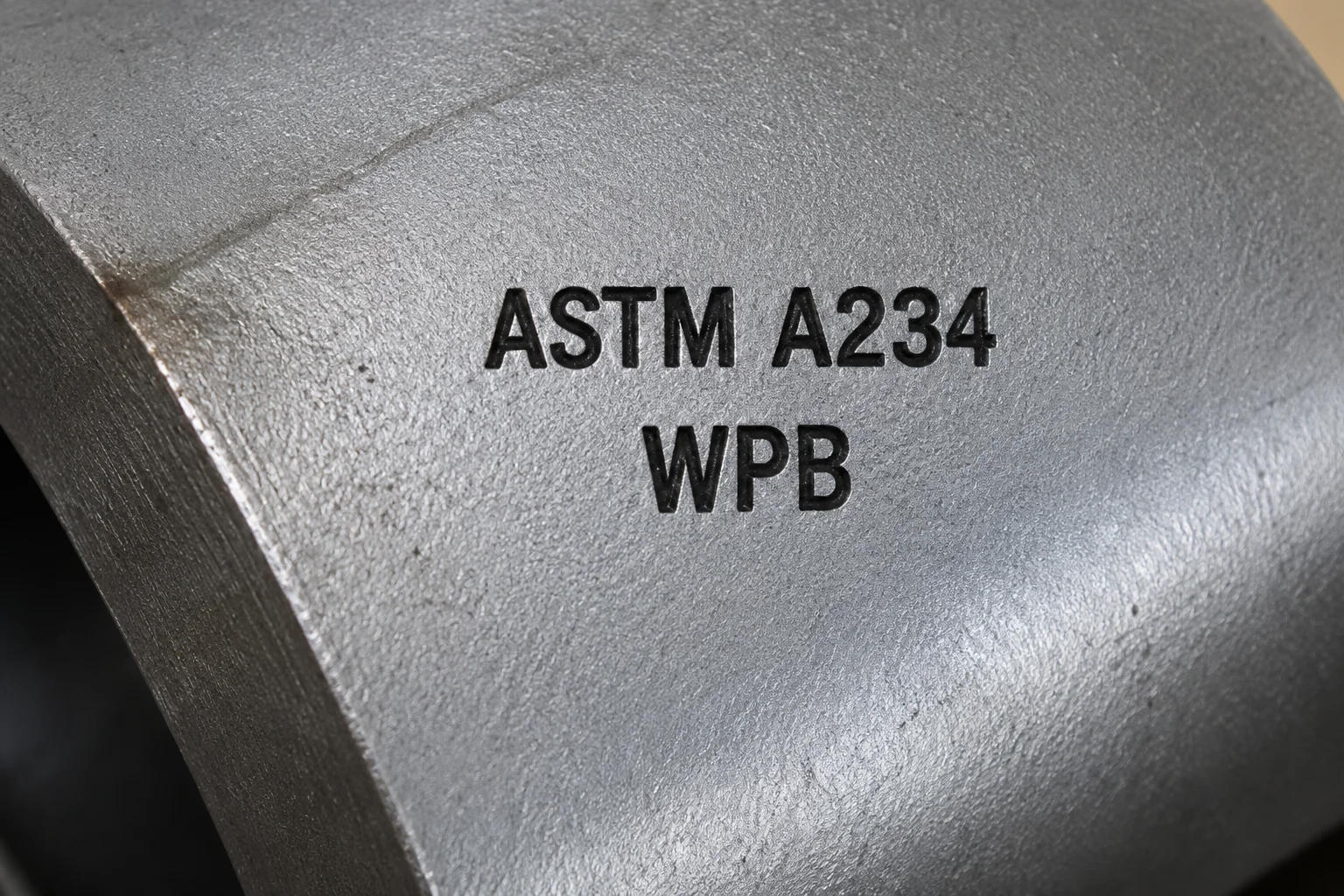
Grouping every item under plumbing fittings can hide impact testing, NDE, heat treatment, hardness, sour-service, and traceability requirements.
Methods, Parameters, or Process
The table summarizes common fitting functions. Permitted use must be verified against the project specification.
| Fitting | Main function | Key ordering data |
|---|---|---|
| Elbow or bend | Changes direction | Angle, radius, OD, wall, material, end type |
| Tee or cross | Creates or combines branches | Equal/reducing sizes, wall, branch geometry |
| Reducer | Changes line size | Concentric/eccentric, end sizes, wall, length |
| Cap or plug | Closes an end | End type, size, wall/class, material |
| Coupling or socket | Joins two ends | Full/half, threaded/socket/grooved, rating |
| Union | Creates a removable joint | Seat, material, class, thread |
| Branch outlet | Adds a reinforced branch | Header, branch, type, class, weld profile |
| Stub end and lap flange | Creates a rotating flanged joint | Stub type, wall, lap, backing flange |
| Flange | Creates a bolted joint | Type, standard, size, class/PN, face, bore |
Supplier and Inspection Checklist
- Define piping code, project class, and service.
- Specify material grade and product standard separately.
- State size, actual OD where needed, wall or schedule, and reducing sizes.
- Identify butt weld, socket weld, threaded, grooved, flanged, or mechanical ends.
- Confirm geometry, radius, angle, center-to-end, and branch orientation.
- Define facing, bevel, thread, groove, or socket details.
- State heat treatment, NDE, impact, hardness, PMI, coating, and certificates.
- Check pressure-temperature suitability.
- Request drawings for nonstandard, fabricated, large, or customized fittings.
- Protect bevels, faces, threads, coatings, and markings during packing.
Application to Pipe Fittings, Valves, and Flanges
Butt-weld elbows, tees, reducers, and caps create a welded flow path. Their wall and weld ends should match the connected pipe or an approved transition. Forged socket-weld and threaded fittings are often used for smaller branches and utilities.
Flanges provide access for valves, equipment, maintenance, and isolation. They are often managed separately because facings, gaskets, bolting, and pressure classes require joint-level selection.
Valves are not fittings, but their end connections must match the piping system. A valve order should state body material, class, end standard, bore, trim, seat, testing, operation, and service.
FAQ
What are the most common types?
Elbows, tees, reducers, caps, couplings, unions, branch fittings, stub ends, and flanges are common.
What is the difference between a fitting and a flange?
A fitting changes or connects the route. A flange creates a bolted joint. Their ordering data differ.
How do I choose threaded versus welded?
Review pressure, temperature, fluid, size, corrosion, leakage risk, maintenance, code, and welding capability.
Is schedule enough to order a fitting?
No. Also provide size, material, standard, type, ends, quantity, and inspection.
When is a drawing required?
For nonstandard geometry, fabricated fittings, special tolerances, custom bores, reinforcement, or project-specific marking.
Next Steps
Build the bill of materials with one complete description format for every fitting: material, standard, connection, size, wall or class, testing, coating, and documentation.
Request a Quote