
Overview
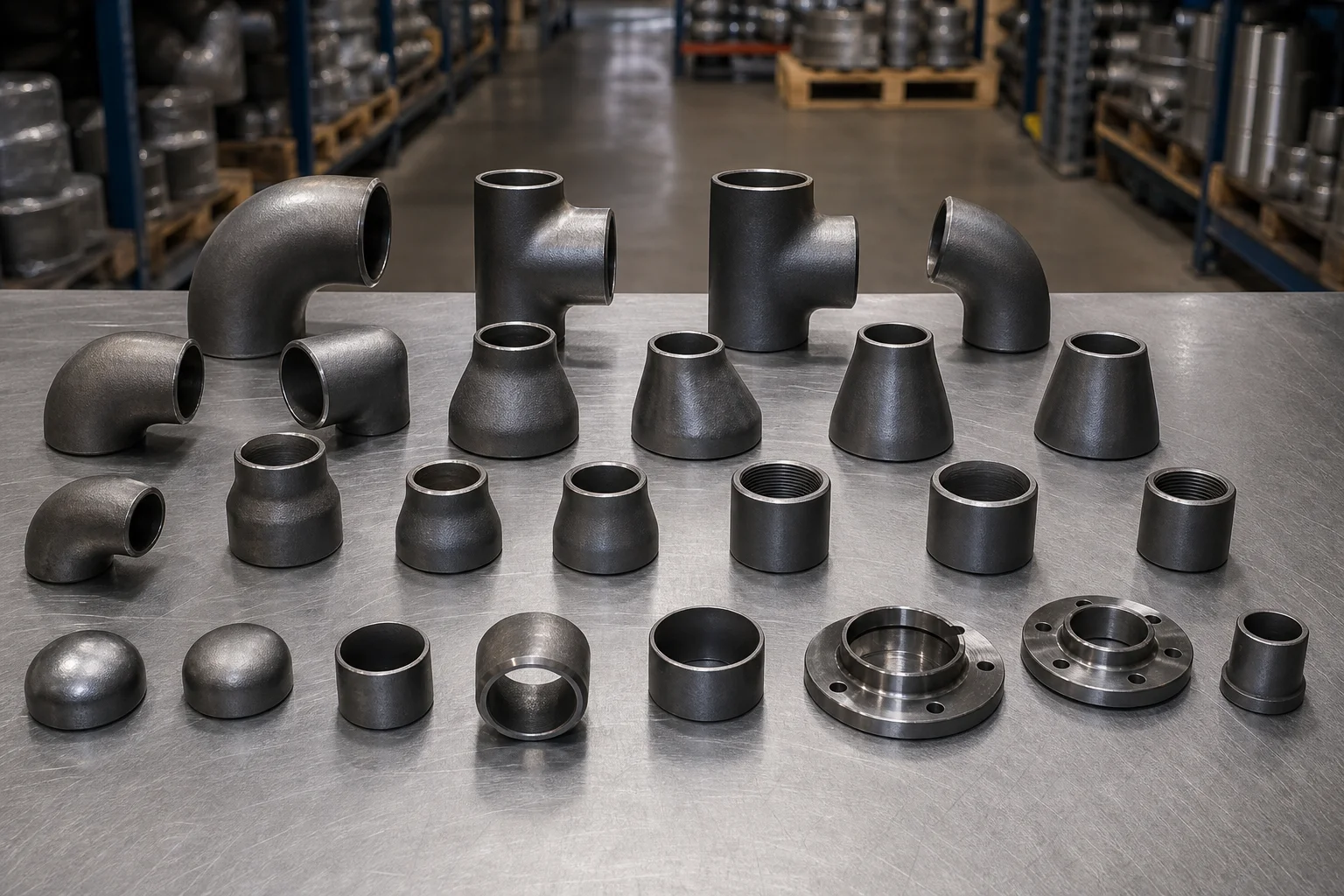
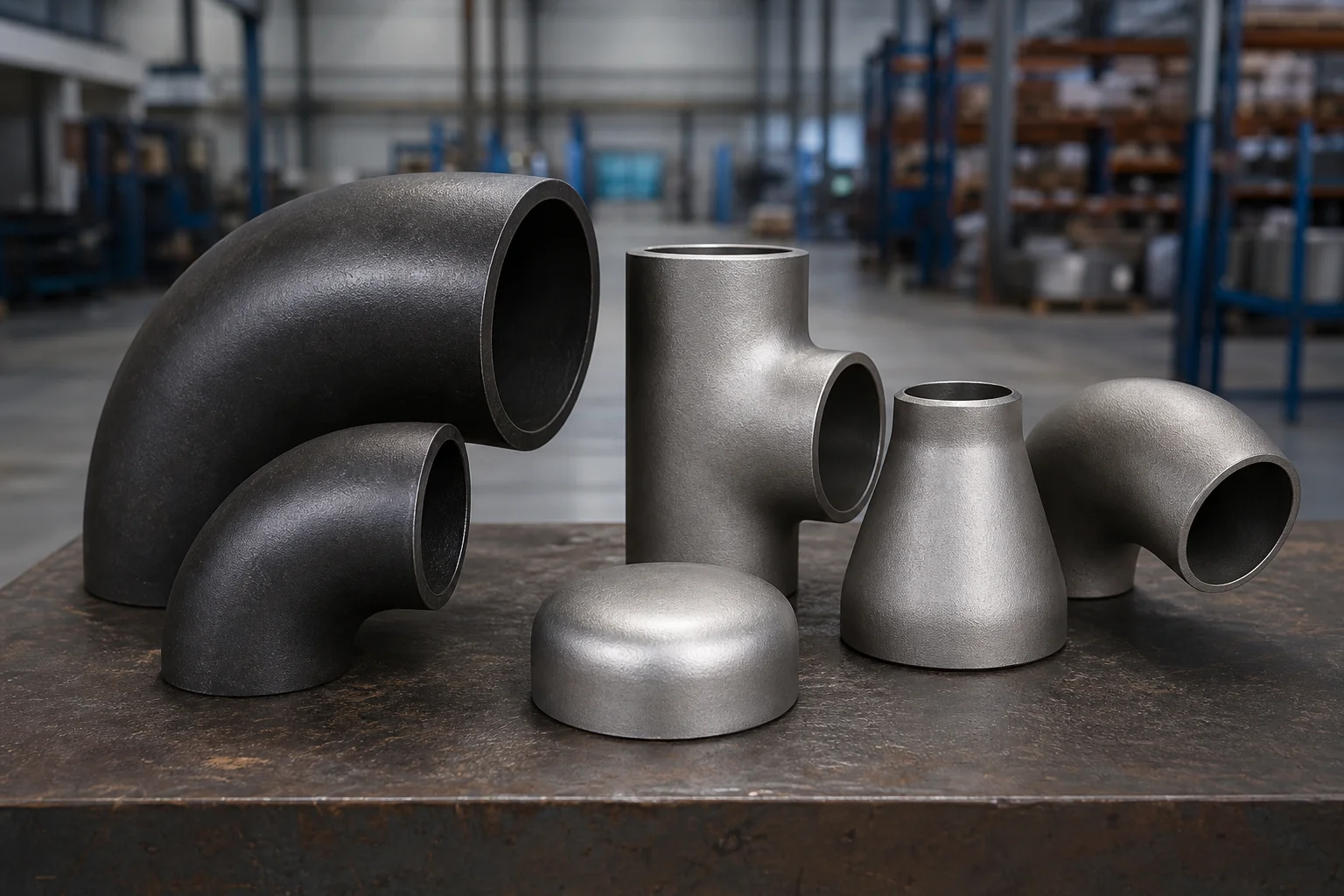
Pipe fittings are components used to change direction, branch a pipeline, reduce or increase diameter, close an opening, or connect pipe to equipment. In industrial projects, the right fitting must match the pipe material, outside diameter, wall thickness, pressure and temperature design conditions, connection method, dimensional standard, and inspection requirement.
A fitting that looks correct may still be unsuitable if its schedule, metallurgy, end preparation, pressure class, or standard does not match the piping specification. For that reason, buyers should evaluate pipe fittings as engineered pressure-containing components rather than as generic hardware.
Why It Matters for Pipe Components
Pipe fittings influence flow, pressure drop, system integrity, maintenance access, and total installation cost. A wrong elbow radius may create layout conflicts or excessive turbulence. An incorrect reducer orientation may trap liquid or gas. A threaded fitting may be unacceptable where a welded joint is required. A material substitution may introduce corrosion, brittle fracture, or galvanic compatibility concerns.
For export and project supply, dimensional consistency is equally important. Fittings are often installed with pipe, flanges, valves, and prefabricated spools from different sources. If the outside diameter, center-to-end dimension, bevel, bore, or facing does not match, site work slows down and rework costs rise.
Methods, Parameters, or Process
A practical selection process starts with the piping class or customer datasheet and checks the following parameters.
| Parameter | Typical options | Why it matters |
|---|---|---|
| Fitting type | Elbow, tee, reducer, cap, coupling, union, olet | Defines the function in the piping layout |
| Connection | Butt weld, socket weld, threaded, compression, flanged | Controls installation method and joint performance |
| Material | Carbon steel, stainless steel, alloy steel, duplex, copper alloy | Must suit corrosion, temperature, and mechanical requirements |
| Size | NPS, DN, tube OD, nominal bore | Must match connected pipe and equipment |
| Wall or class | Schedule, pressure class, tube wall | Determines bore and pressure capability |
| Standard | ASME, MSS, EN, DIN, ISO, JIS, project standard | Controls dimensions, tolerances, and marking |
| End preparation | Beveled, plain, threaded, socket, grooved | Must match the intended joint |
| Inspection | Visual, dimensional, PMI, NDT, pressure test | Confirms compliance with the purchase specification |
Common product families include butt-weld fittings for process piping, forged socket-weld and threaded fittings for smaller high-pressure lines, compression fittings for instrument and utility tubing, and flanged fittings for removable connections.
The purchase description should avoid vague wording such as “steel pipe fitting.” A more complete description is:
> 90-degree long-radius elbow, NPS 6, ASME B16.9, ASTM A234 WPB, Schedule 40, butt-weld ends, seamless construction, with EN 10204 3.1 certificate.
Where the project specifies a particular edition of a standard, include that edition in the inquiry and purchase order.
Supplier and Inspection Checklist
- Confirm the applicable dimensional and material standards.
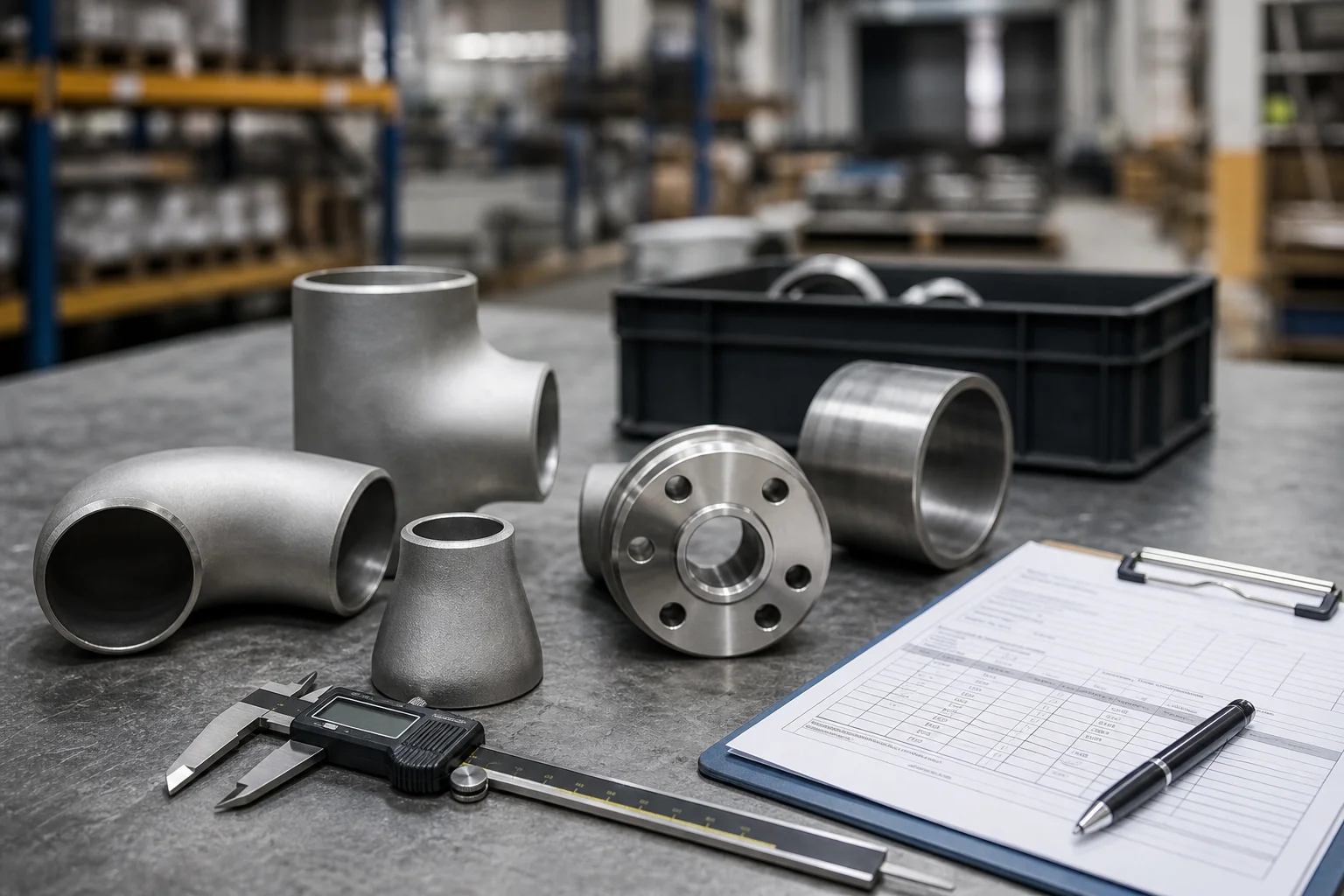
- Verify NPS or DN, outside diameter, wall thickness, schedule, and pressure class.
- Confirm seamless, welded, forged, cast, or fabricated construction.
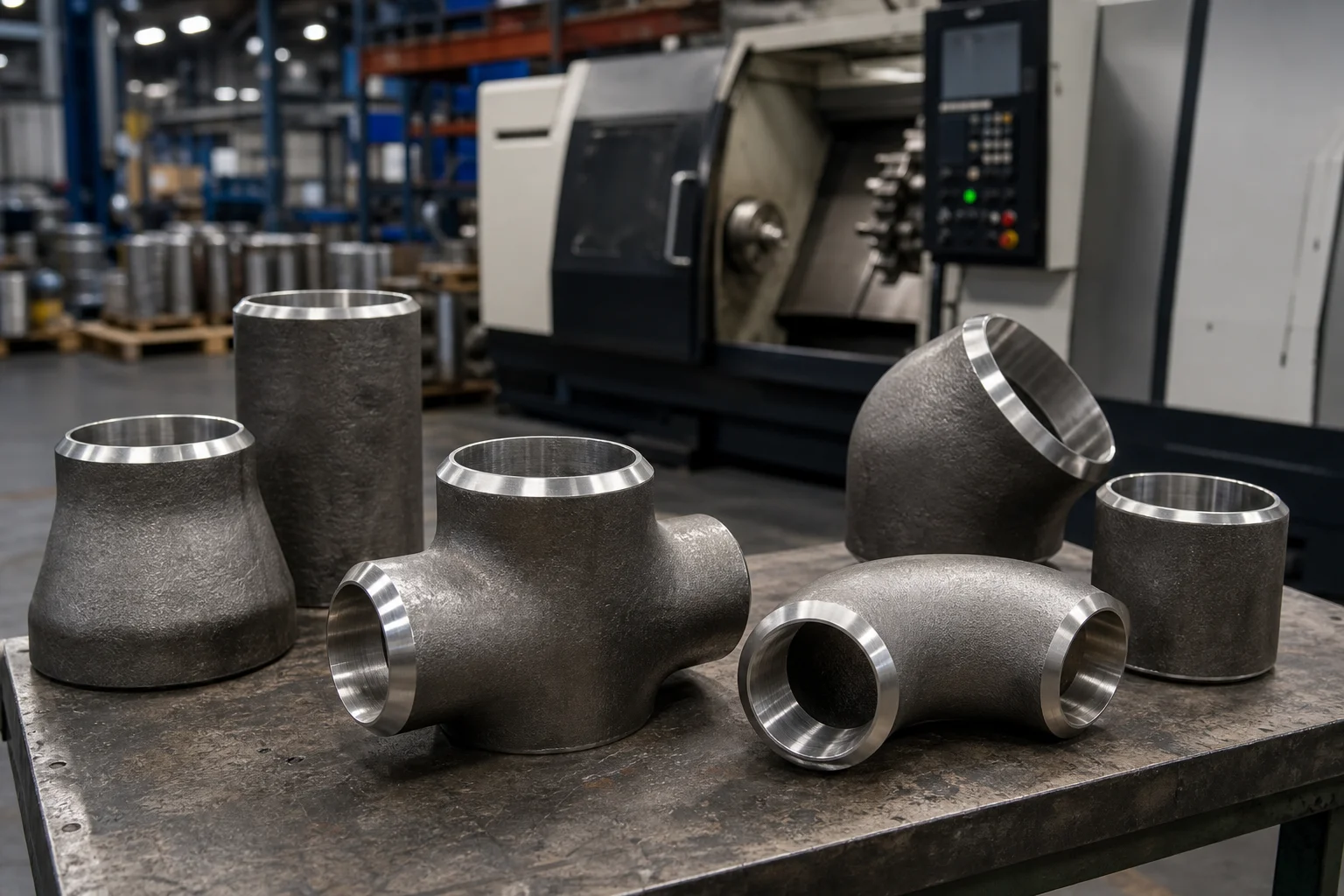
- Check bevel angle, root face, socket depth, thread type, and end finish.
- Review material test certificates and heat-number traceability.
- Require positive material identification when alloy verification is critical.
- Check dimensional tolerances, ovality, center-to-end dimensions, and bore alignment.
- Confirm marking, coating, packaging, and country-specific documentation.
- Define any NDT, impact testing, hardness, corrosion testing, or third-party inspection.
- Approve drawings for nonstandard or large-diameter fabricated fittings before production.
Application to Pipe Fittings, Valves, and Flanges
Pipe fittings do not work in isolation. Their bore, wall thickness, material group, pressure-temperature capability, and connection method must align with valves and flanges in the same piping class. A butt-weld valve should have compatible end preparation and bore transition. A flanged valve requires matching flange standard, rating, facing, gasket, and bolting. A threaded branch connection must match the specified thread form and sealing method.
For packaged supply, reviewing fittings, valves, flanges, gaskets, and bolting together reduces mismatches and makes project documentation easier to control.
FAQ
What are the most common types of pipe fittings?
The most common types are elbows, tees, reducers, couplings, unions, caps, plugs, crosses, nipples, and branch outlet fittings. The correct type depends on the required change in direction, branch arrangement, size transition, or termination.
What is the difference between pipe fittings and tube fittings?
Pipe fittings are usually specified by nominal pipe size and schedule, while tube fittings are commonly specified by actual outside diameter and tube wall thickness. The two systems may overlap in some industries, but dimensions and connection methods should never be assumed to be interchangeable.
Which pipe fitting standard should be used?
The piping specification determines the standard. ASME standards are common in process and energy projects, while EN, DIN, ISO, JIS, and other systems are widely used in regional and industry-specific applications.
Are higher pressure classes always better?
No. The fitting should meet the design pressure and temperature with appropriate margin, but unnecessary over-rating can increase cost, weight, and installation difficulty.
Next Steps
Prepare an RFQ with the fitting type, size, material, schedule or pressure class, standard, end connection, quantity, certification, inspection, coating, and delivery requirements. For nonstandard items, attach a drawing and identify every critical dimension.
Request a Quote