
Overview
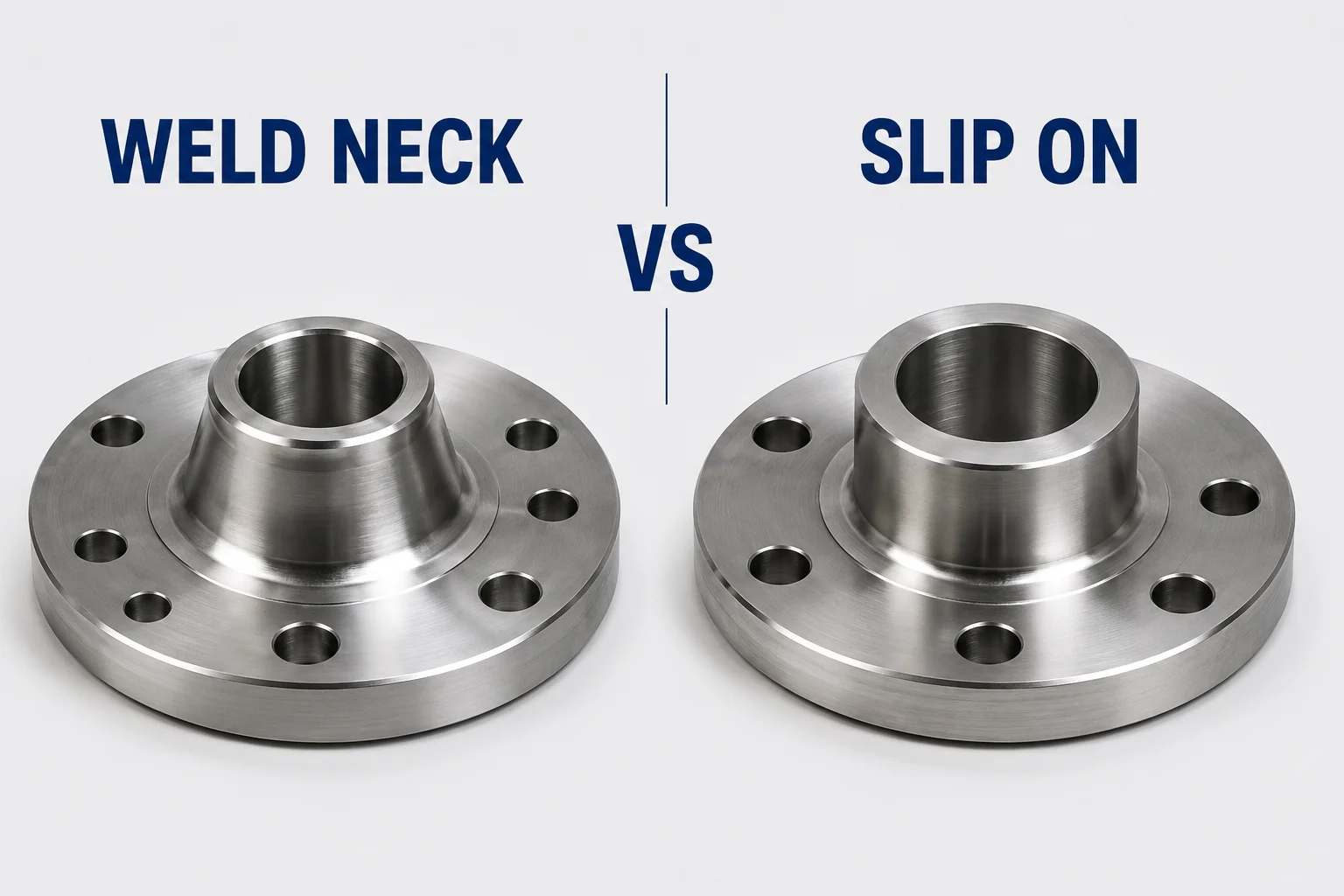
A slip-on flange slides over the pipe and is normally attached with fillet welds. It is widely used because fit-up is straightforward and the flange can be positioned before welding. Correct selection still requires the standard, size, rating, material, facing, bore, weld details, and project acceptance criteria.

Why It Matters for Pipe Components
Slip-on flange performance depends heavily on fabrication control. Pipe insertion, flange squareness, weld size, weld access, and face protection affect the finished joint. A flange that is dimensionally correct can still create problems if it is welded out of alignment or if weld spatter damages the gasket face.
The piping class should confirm whether a slip-on connection is permitted for the service. Industry preference is not a substitute for a project rule.
Methods, Parameters, or Process
Define the purchase and fabrication requirements before welding.
| Item | What to verify |
|---|---|
| Standard | Applicable flange dimensional standard and edition |
| Rating | Class or PN designation approved by the piping class |
| Bore | Compatible with pipe outside diameter and fabrication clearance |
| Facing | Matches the mating flange and gasket |
| Pipe position | Set by the approved fabrication drawing or WPS |
| Welds | Type, size, sequence, and examination from the WPS and project specification |
| Material | Full specification and grade with traceability |
| Finish | Gasket face protected from weld damage and coating |
During fit-up, measure flange face alignment and bolt-hole orientation before welding. Use a controlled sequence to reduce distortion. Do not publish a universal insertion distance or weld size: those values must come from the approved design, standard detail, or welding procedure.
Verification note: exact dimensions and pressure-temperature ratings must be checked against the contract-required standard edition.
Supplier and Inspection Checklist
- Confirm that slip-on flanges are allowed by the piping class.
- Check flange bore and pipe outside diameter before fit-up.
- Verify face orientation, squareness, and bolt-hole position.
- Keep the pipe end and internal weld area clean.
- Follow the qualified WPS for weld size, consumable, preheat, interpass temperature, and inspection.
- Check for overlap, undercut, cracks, arc strikes, and incomplete weld coverage where visually accessible.
- Recheck flange face alignment after welding.
- Protect the facing during blasting, coating, transport, and storage.
Application to Pipe Fittings, Valves, and Flanges
Slip-on flanges are common in utility piping, water systems, general process piping, skid packages, and fabricated spools where the approved piping class allows them. They can simplify alignment during shop fabrication.
For valves and equipment nozzles, the flange facing and rating must match the mating component. For lined or corrosion-resistant systems, confirm whether internal weld geometry, crevice exposure, or lining continuity changes the preferred flange type.
FAQ
How many welds are used on a slip-on flange?
A common arrangement uses internal and external fillet welds, but the approved detail and WPS control the actual joint. Do not treat a common arrangement as a universal rule.
Is a slip-on flange the same as a socket weld flange?
No. A slip-on flange slides over the pipe, while a socket weld flange has a machined socket that locates the pipe end.
Can the pipe end be flush with the flange face?
The approved fabrication detail controls pipe position. An uncontrolled flush condition can interfere with the gasket area or change the intended weld geometry.
What is the main inspection risk?
Misalignment and weld-related distortion are frequent concerns. The face should be rechecked after welding, not only before.
Next Steps
Send the pipe outside diameter, wall thickness, flange standard, class, facing, material, coating limits, WPS requirements, and inspection plan. Ask the fabricator to confirm the fit-up detail before production.
Request a Quote