
Overview
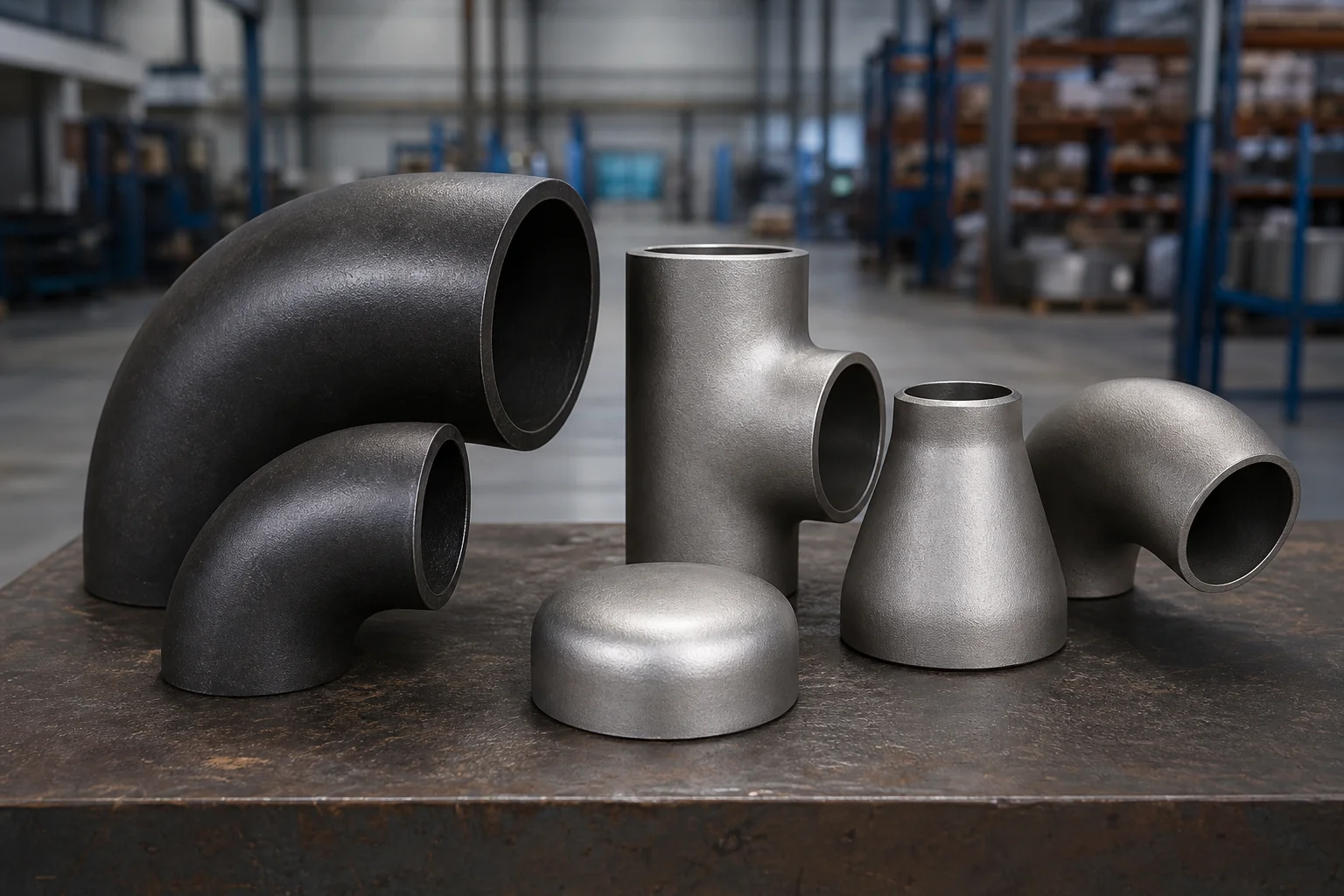
Fitting steel pipe requires components that match the pipe material, dimensions, wall thickness, service conditions, and joining method. Steel pipe fittings include carbon steel, stainless steel, low-alloy steel, high-alloy steel, duplex stainless steel, and clad or lined constructions.
The product description should identify the fitting type, material specification and grade, size, schedule or class, dimensional standard, construction route, end preparation, heat treatment, inspection, and certification.
Why It Matters for Pipe Components
The word “steel” covers a wide range of properties. Carbon steel may be suitable for general process service but not severe corrosion. Stainless steel performance depends on grade and environment. Alloy steels may be selected for elevated temperature or strength. Duplex grades require tight heat-treatment and welding control.
Material mix-ups can be difficult to detect visually. Heat-number traceability and positive material identification are therefore important for alloy and stainless products. Carbon contamination can also damage stainless surfaces during manufacturing and storage.
Methods, Parameters, or Process
Start with the material family and product route.
| Steel fitting category | Typical product forms | Important controls |
|---|---|---|
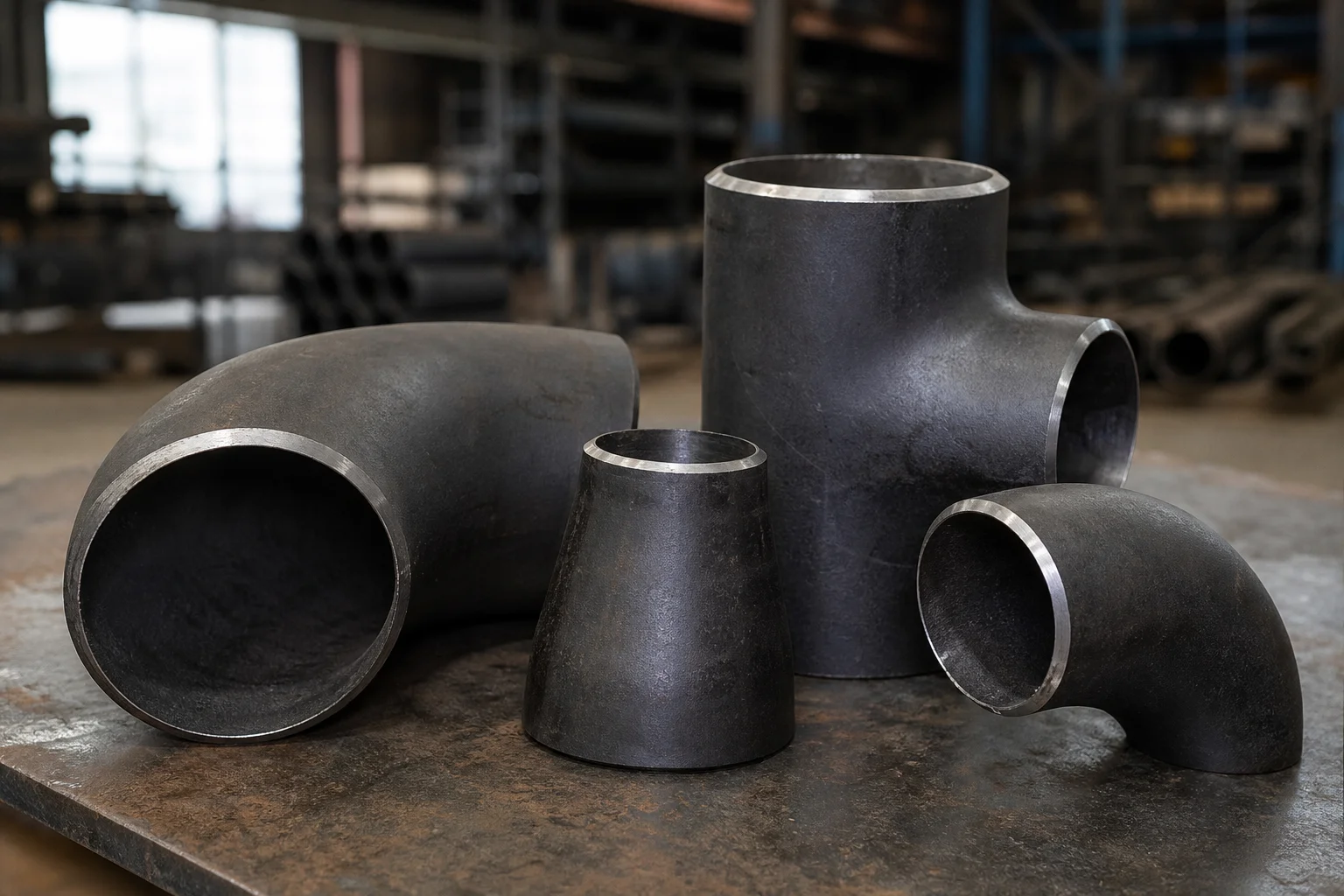
| Carbon steel | Butt-weld, forged, threaded, fabricated | Grade, heat treatment, impact requirement |
| Stainless steel | Butt-weld, forged, sanitary, compression | Grade, PMI, surface condition, passivation |
| Alloy steel | High-temperature or high-strength fittings | Chemistry, heat treatment, hardness |
| Duplex stainless | Process and corrosive service | Solution treatment, ferrite balance, PMI |
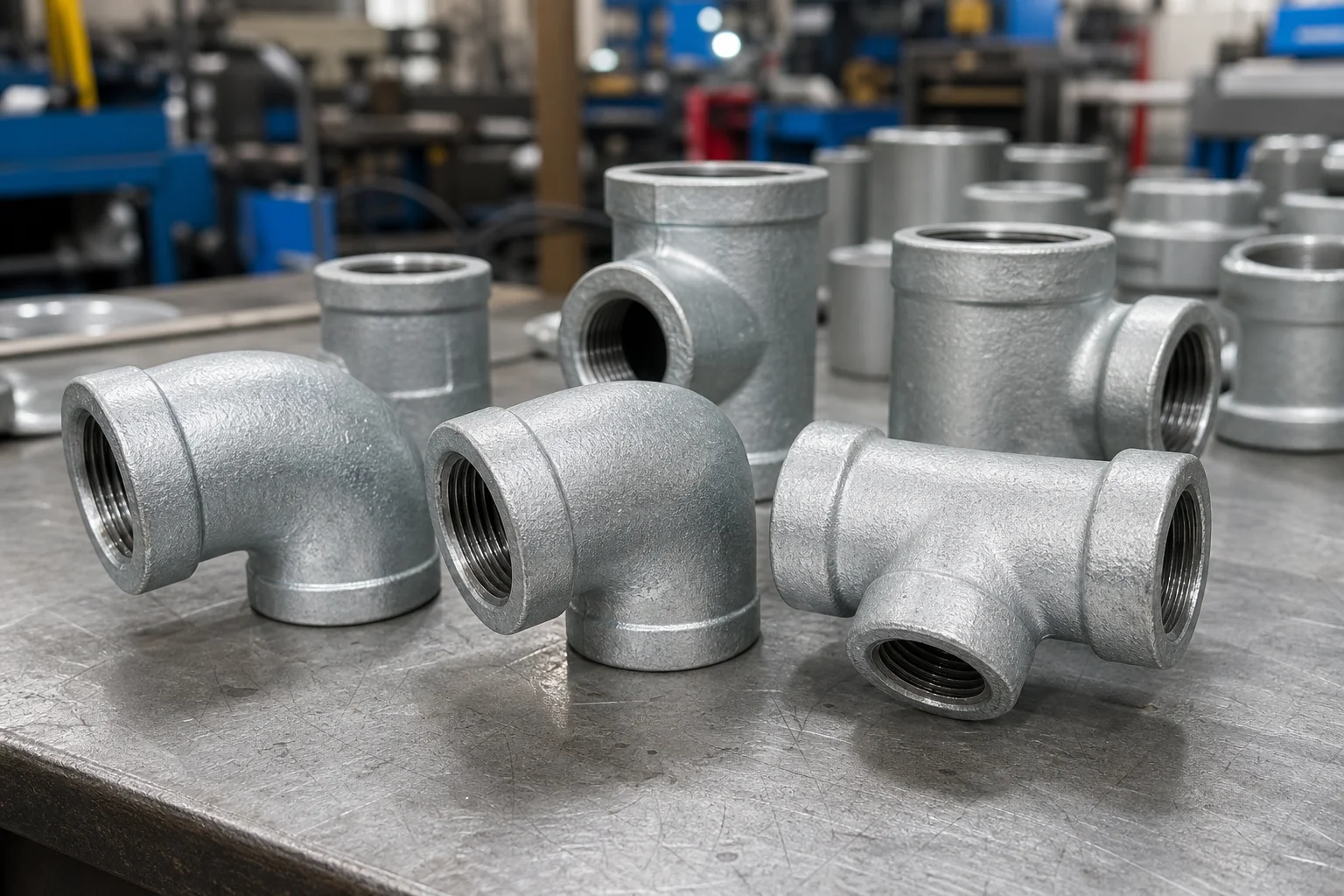
| Galvanized steel | Threaded, grooved, plumbing fittings | Base material, zinc coating, thread fit |
| Clad or lined steel | Corrosive service with structural backing | Liner continuity, weld details, end transition |
Steel fittings may be seamless, welded, forged, cast, or fabricated. The applicable standard and project specification determine acceptable routes and examination.
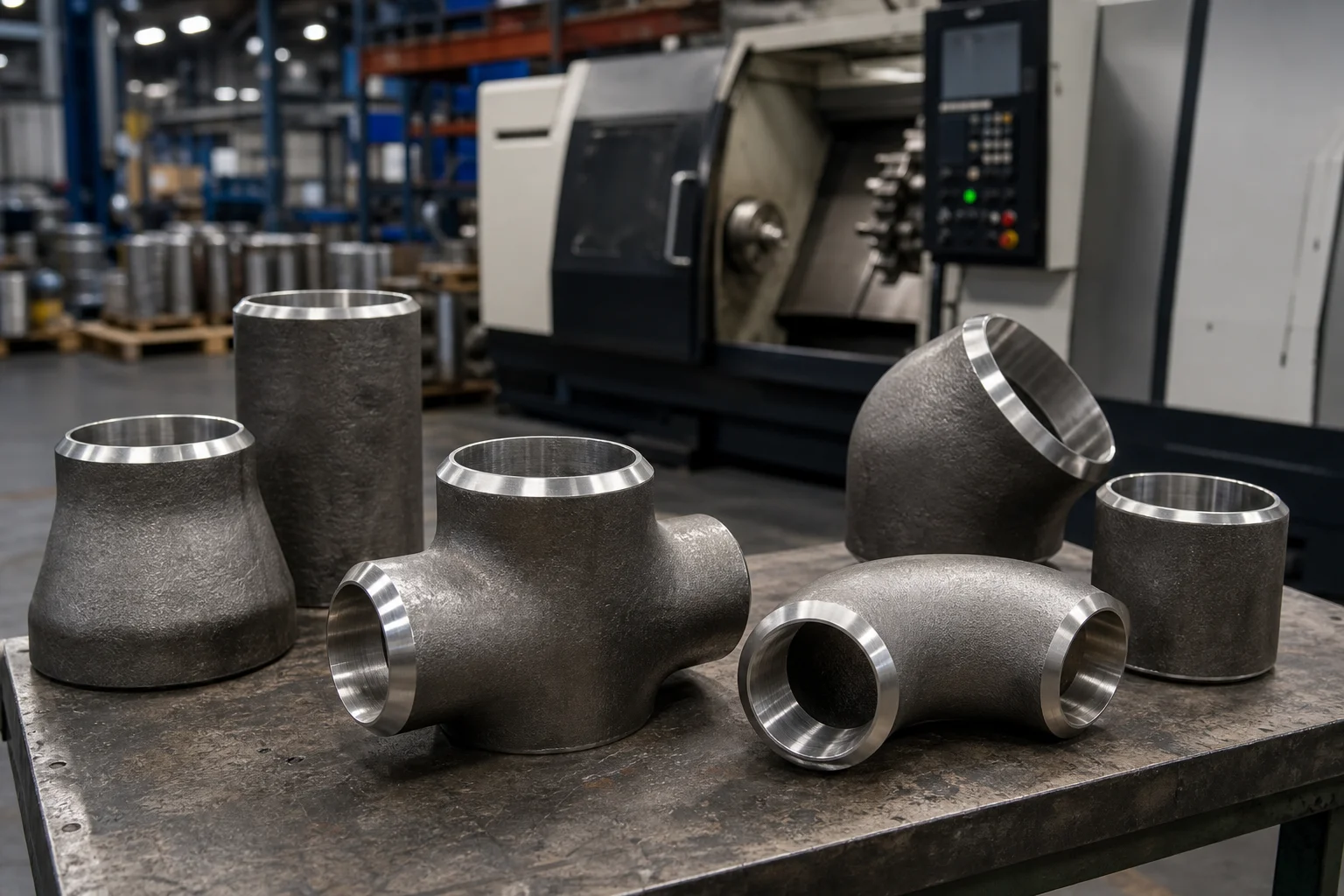
For butt-weld products, check schedule, bevel, wall, center-to-end dimensions, and bore. For forged products, check pressure class, thread or socket dimensions, and forging quality. For fabricated fittings, review weld procedures and NDT coverage.
Supplier and Inspection Checklist
- Confirm material specification and grade.
- Verify heat-number traceability from raw material to final marking.
- Use PMI where alloy verification is required.
- Review chemical and mechanical test results.
- Confirm heat-treatment cycle and furnace records.
- Check hardness and impact testing when specified.
- Inspect dimensions, wall, ovality, bevel, thread, and socket.
- Verify surface condition and removal of scale or contamination.
- Separate stainless and carbon steel during production and packing.
- Review weld procedure, welder qualification, and NDT for fabricated fittings.
- Confirm coating, pickling, passivation, or painting.
- Require clear marking and complete material certificates.
Application to Pipe Fittings, Valves, and Flanges
Steel fittings are commonly supplied with matching steel valves and flanges. Material grouping should align with the piping class, but the exact specifications for forged flanges, valve bodies, pipe, and wrought fittings may differ. Compatibility must be based on engineering requirements rather than identical grade names.
Weld-end transitions, flange ratings, gasket materials, bolting, and corrosion protection should be checked across the complete joint.
FAQ
Are carbon steel and stainless steel fittings interchangeable?
No. They have different corrosion behavior, mechanical properties, surface-control requirements, and often different project restrictions.
What is PMI?
Positive material identification is a method used to verify alloy composition. It helps detect material mix-ups but does not replace full material certification and mechanical testing.
Are seamless fittings always required?
Not always. Welded and fabricated fittings may be acceptable when permitted by the standard and project specification and when the required examination is completed.
Why is heat treatment important?
Heat treatment can control strength, toughness, hardness, corrosion performance, and microstructure. Requirements depend on material and manufacturing route.
Next Steps
Prepare the RFQ with material specification and grade, fitting type, size, schedule or class, standard, construction, heat treatment, inspection, certification, coating, quantity, and delivery requirements. Require deviations to be listed separately.
Request a Quote