
Overview
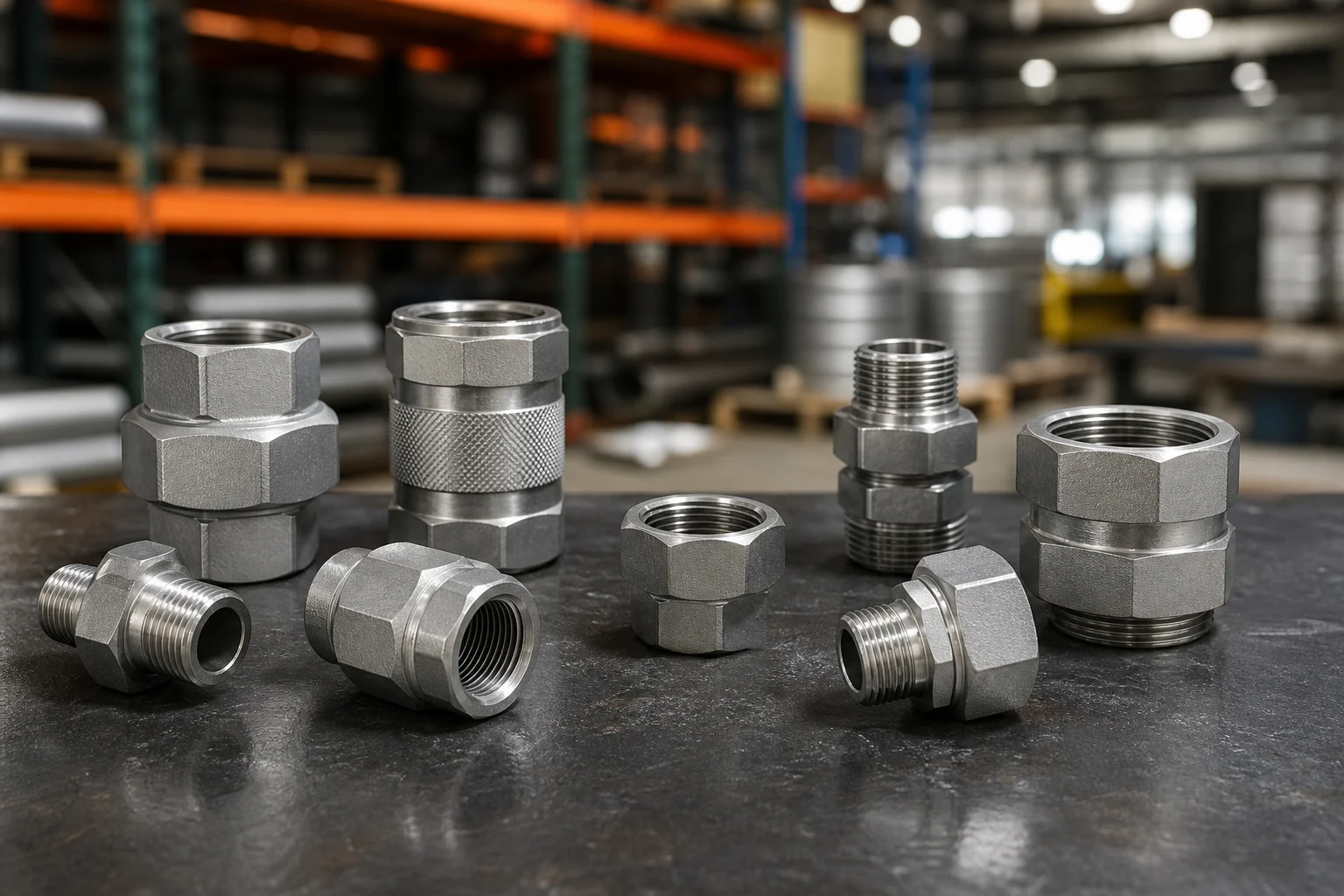
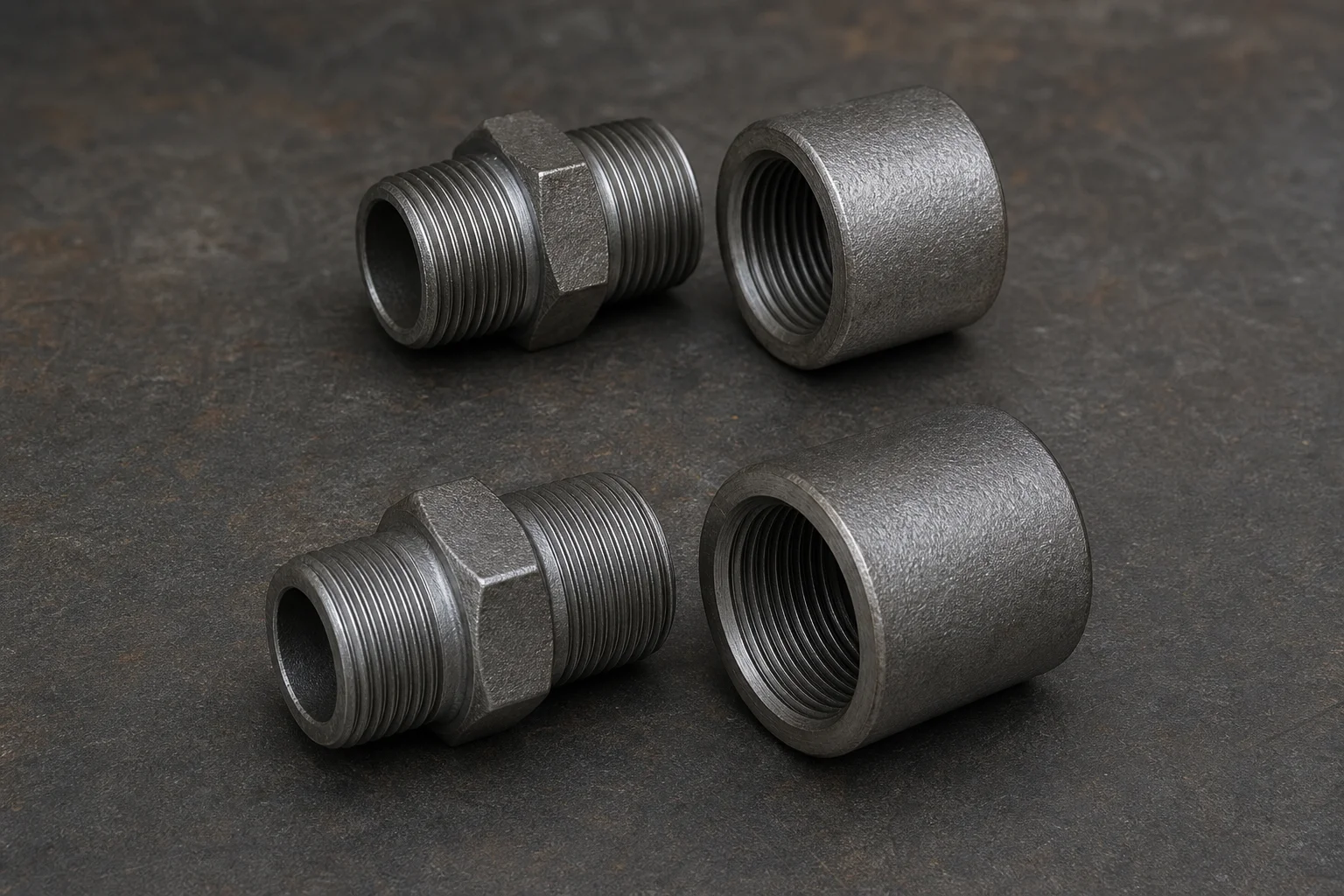
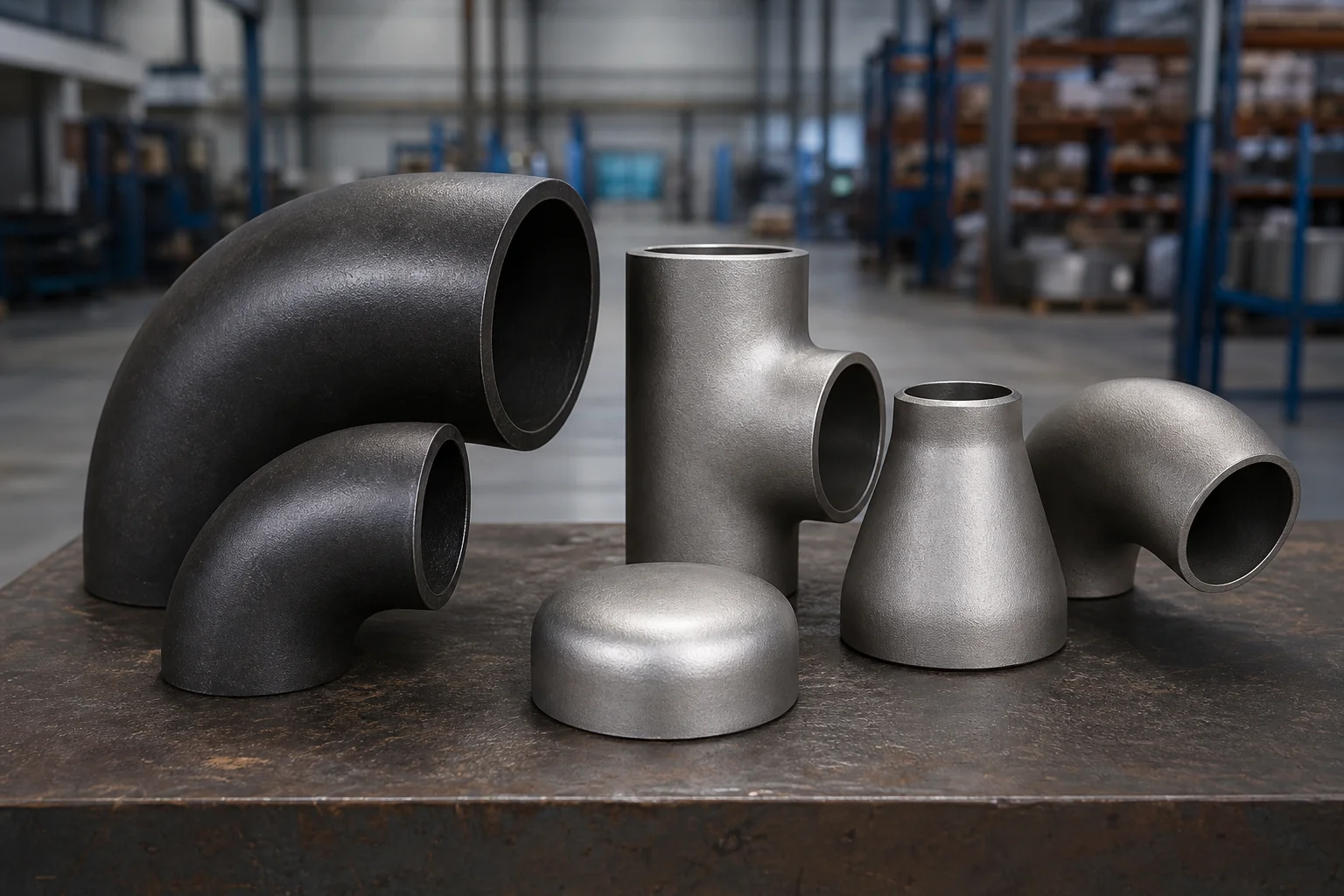
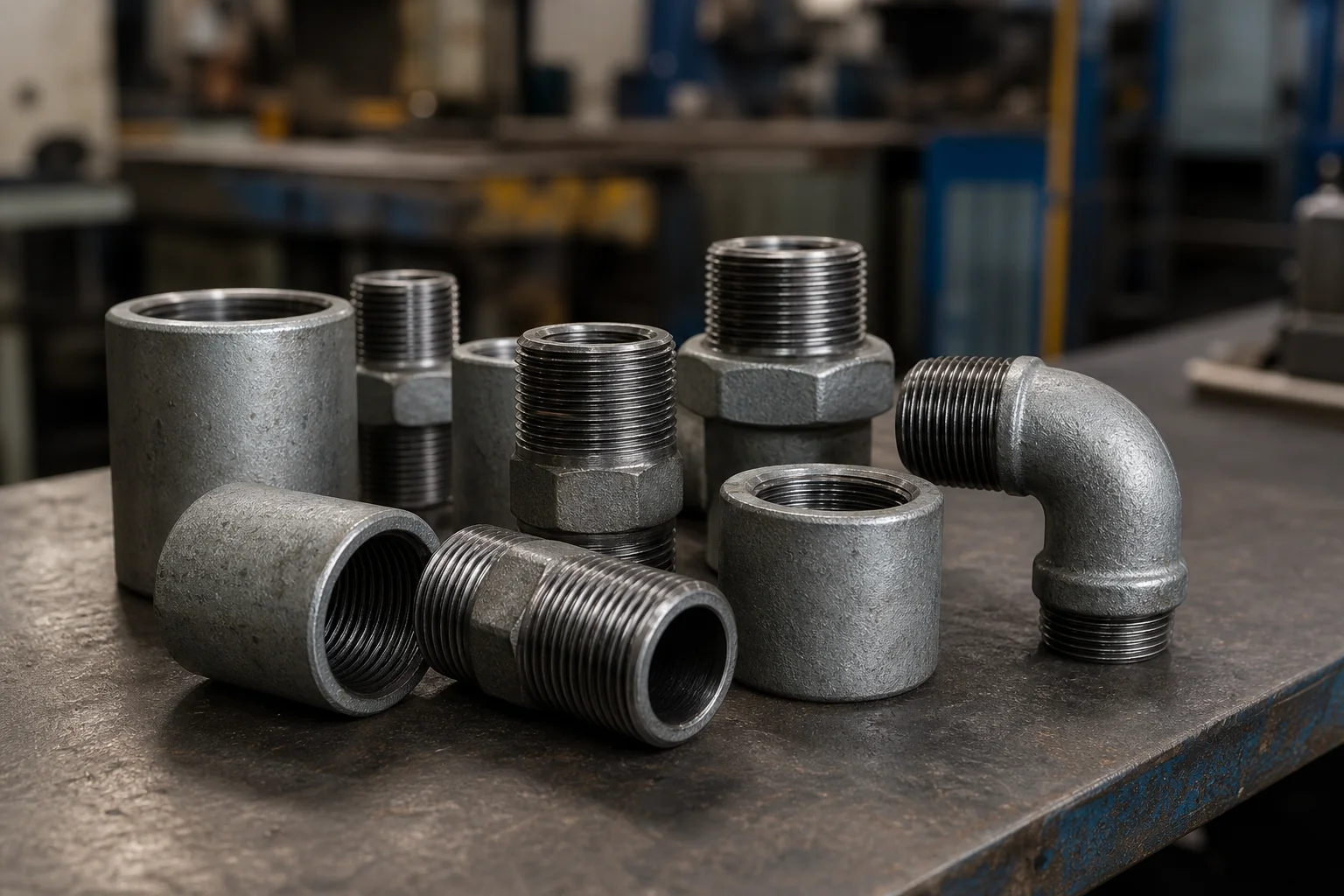
Threaded pipe and fittings create mechanical connections using mating internal and external threads. Common products include elbows, tees, couplings, unions, reducers, bushings, nipples, plugs, and caps. They are widely used in small-bore utility, air, water, instrument, drain, and process lines where the piping specification permits threaded joints.
The thread standard must be specified clearly. NPT, BSPP, BSPT, metric, and other thread forms are not automatically interchangeable.
Why It Matters for Pipe Components
Thread mismatch can cause leakage, thread damage, or unsafe assembly. Even when two fittings appear to engage, differences in thread angle, pitch, taper, and sealing method may prevent a reliable joint.
Material and pressure class also matter. Forged threaded fittings for process service are different from light-duty plumbing fittings. Stainless steel threads may gall without proper manufacturing finish and assembly practice. Galvanized coatings can affect thread fit if not controlled.
Methods, Parameters, or Process
Specify the connection system first.
| Parameter | Options | Procurement note |
|---|---|---|
| Thread form | NPT, NPTF, BSPP, BSPT, metric, project-specific | State exact standard |
| Thread type | Internal, external, male-female | Define each end |
| Fitting type | Elbow, tee, coupling, union, bushing, plug, cap | Match function |
| Material | Carbon steel, stainless steel, malleable iron, brass, alloy | Match service |
| Class or rating | Standard class, forged class, pressure rating | Do not infer from size |
| Seal method | Thread interference, tape, compound, gasket, O-ring | Must suit thread design and fluid |
| Finish | Black, galvanized, plated, passivated | Consider corrosion and thread fit |
For industrial forged fittings, the buyer should define the dimensional standard, material specification, class, end thread, and any impact or hardness requirements. For mixed-end adapters, each side should be listed separately.
Thread inspection may include pitch, taper, effective diameter, gauge engagement, crest and root condition, and visual examination for tearing or burrs.
Supplier and Inspection Checklist
- State the exact thread standard and designation.
- Define male or female connection for every end.
- Verify nominal size and pressure class.
- Check fitting material and compatible pipe material.
- Require calibrated thread gauges.
- Inspect thread depth, taper, pitch, and engagement.
- Check threads for burrs, tearing, dents, and coating buildup.
- Confirm galvanizing or plating does not prevent assembly.
- Verify markings and heat traceability for forged products.
- Review hydrostatic or pneumatic test requirements where applicable.
- Define thread protectors and moisture-resistant packaging.
- Prohibit unauthorized thread chasing or repair after final inspection.
Application to Pipe Fittings, Valves, and Flanges
Threaded fittings frequently connect gauges, drains, vents, small valves, instrument roots, and equipment accessories. The valve port thread must match the fitting thread exactly. Threaded flanges may be used where welding is restricted, but rating and service limitations must be checked against the piping code.
Mixed systems may require threaded-to-socket, threaded-to-tube, or threaded-to-flange adapters. These transition points should be clearly identified on drawings and bills of materials.
FAQ
Are NPT and BSP threads compatible?
No. They differ in geometry and sealing behavior. They may appear to connect partially, but they should not be treated as interchangeable.
What is the difference between a coupling and a union?
A coupling joins two threaded pipe ends and normally requires rotation of one component during assembly. A union can be separated without rotating the connected pipe.
When should threaded fittings be avoided?
They may be restricted in severe cyclic service, high vibration, hazardous leakage service, very high temperature, or where the piping code requires welded connections.
How are threaded joints sealed?
Depending on the thread system, sealing may come from thread interference, approved tape or compound, a gasket, a bonded seal, or an O-ring. The seal method should match the connection design and process fluid.
Next Steps
For each line item, provide fitting type, size, material, pressure class, thread standard, male or female end arrangement, finish, quantity, inspection, and certification. Include mating-component details when compatibility is critical.
Request a Quote