
Overview
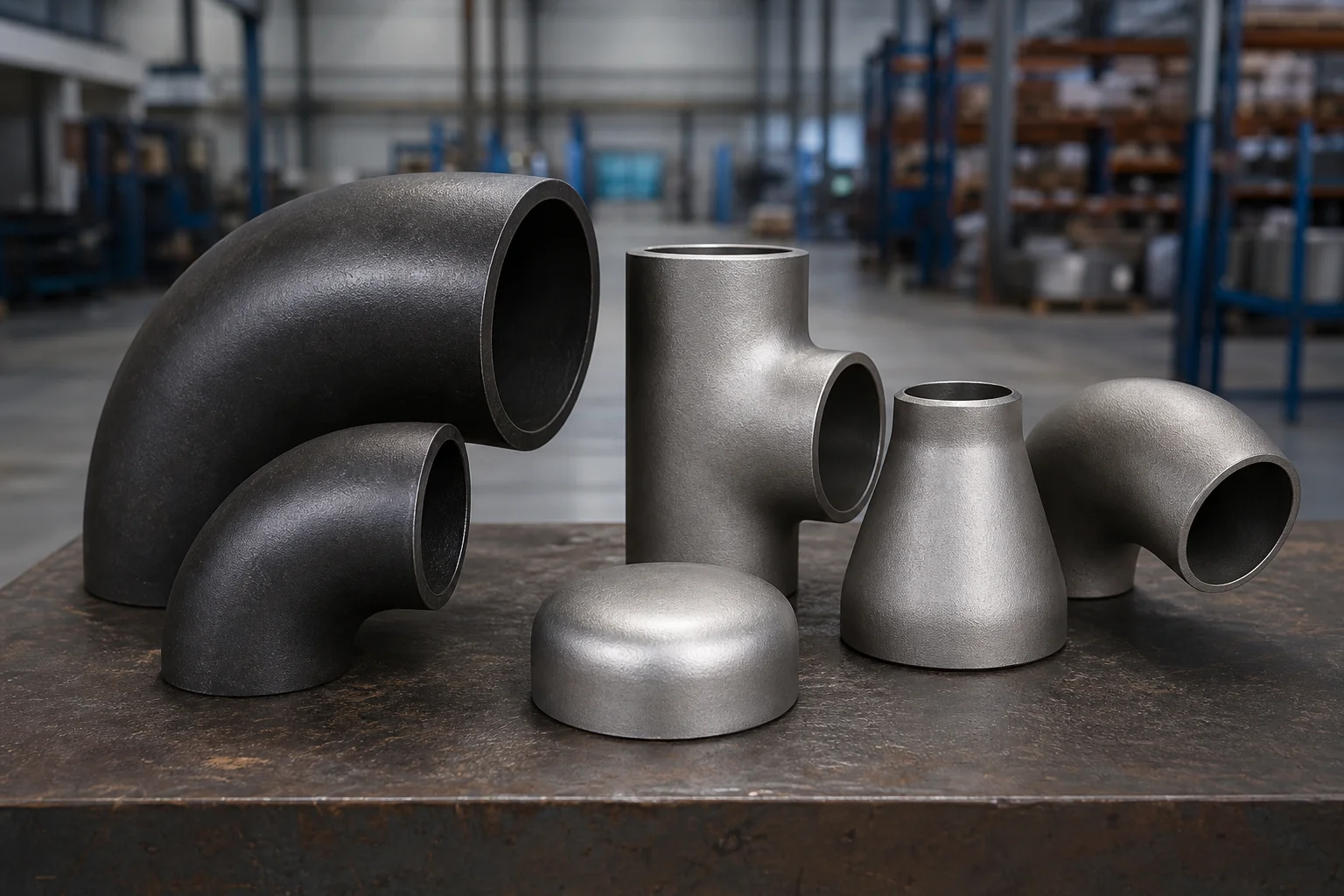
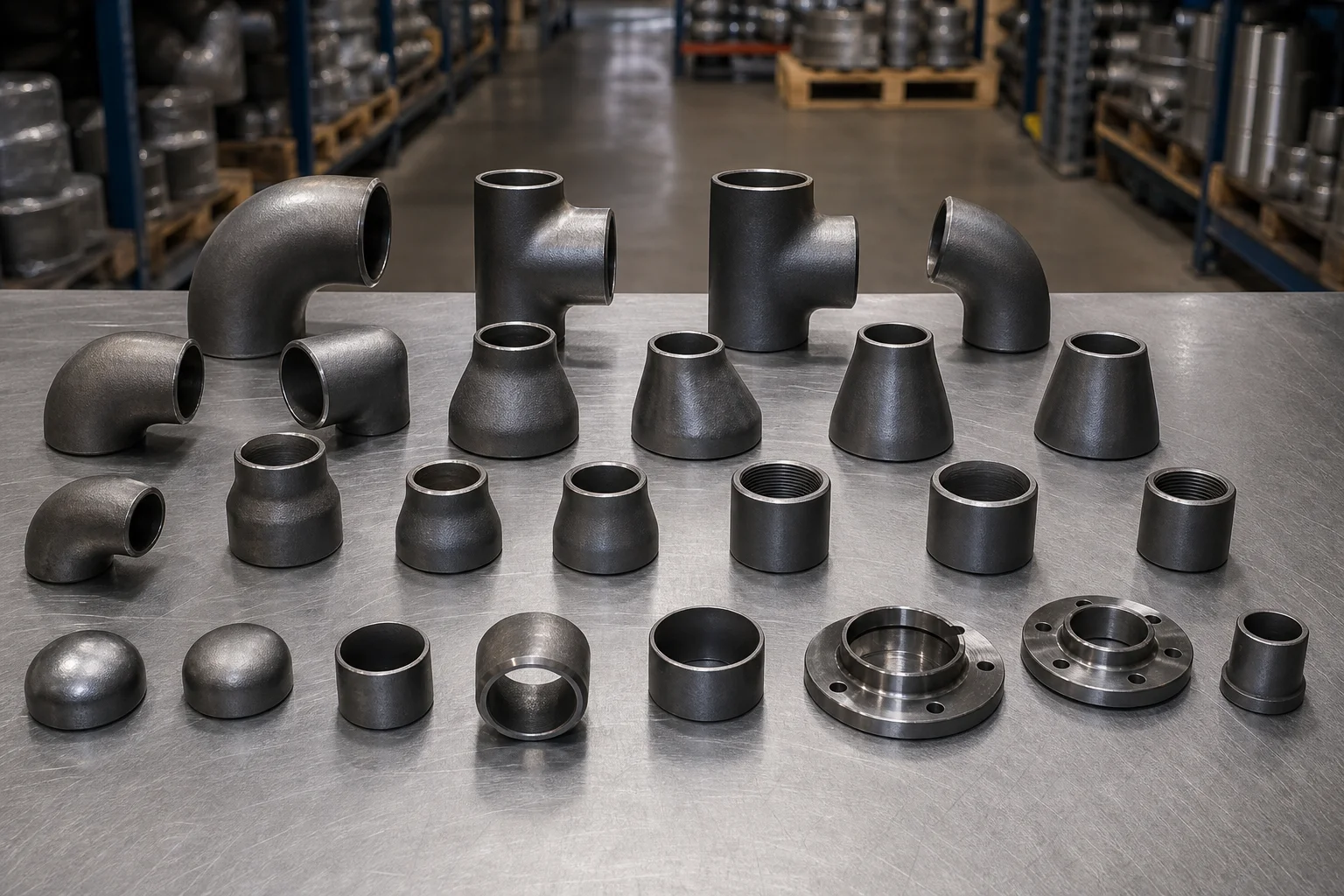
The different types of pipe fittings are defined by the job they perform in a piping system. Elbows change direction, tees and crosses create branches, reducers change line size, couplings and unions connect sections, caps and plugs close openings, and branch outlet fittings reinforce small connections from a larger run pipe.
Pipe fitting names alone are not enough for purchasing. Each type may be available in several materials, dimensions, pressure classes, wall thicknesses, and connection methods. A complete selection must describe both function and specification.
Why It Matters for Pipe Components
Correct identification prevents layout errors and installation delays. A concentric reducer and an eccentric reducer have different effects on flow and drainage. A long-radius elbow and a short-radius elbow occupy different space. A coupling and a union may both connect pipe, but only the union is designed for easier disassembly. A socket-weld tee and a butt-weld tee use different pipe-end preparation and usually serve different size ranges.
For designers and buyers, standardized naming also improves communication between engineering, procurement, production, inspection, and the installation site.
Methods, Parameters, or Process
Pipe fittings can be classified by function.
| Fitting type | Main function | Common variants |
|---|---|---|
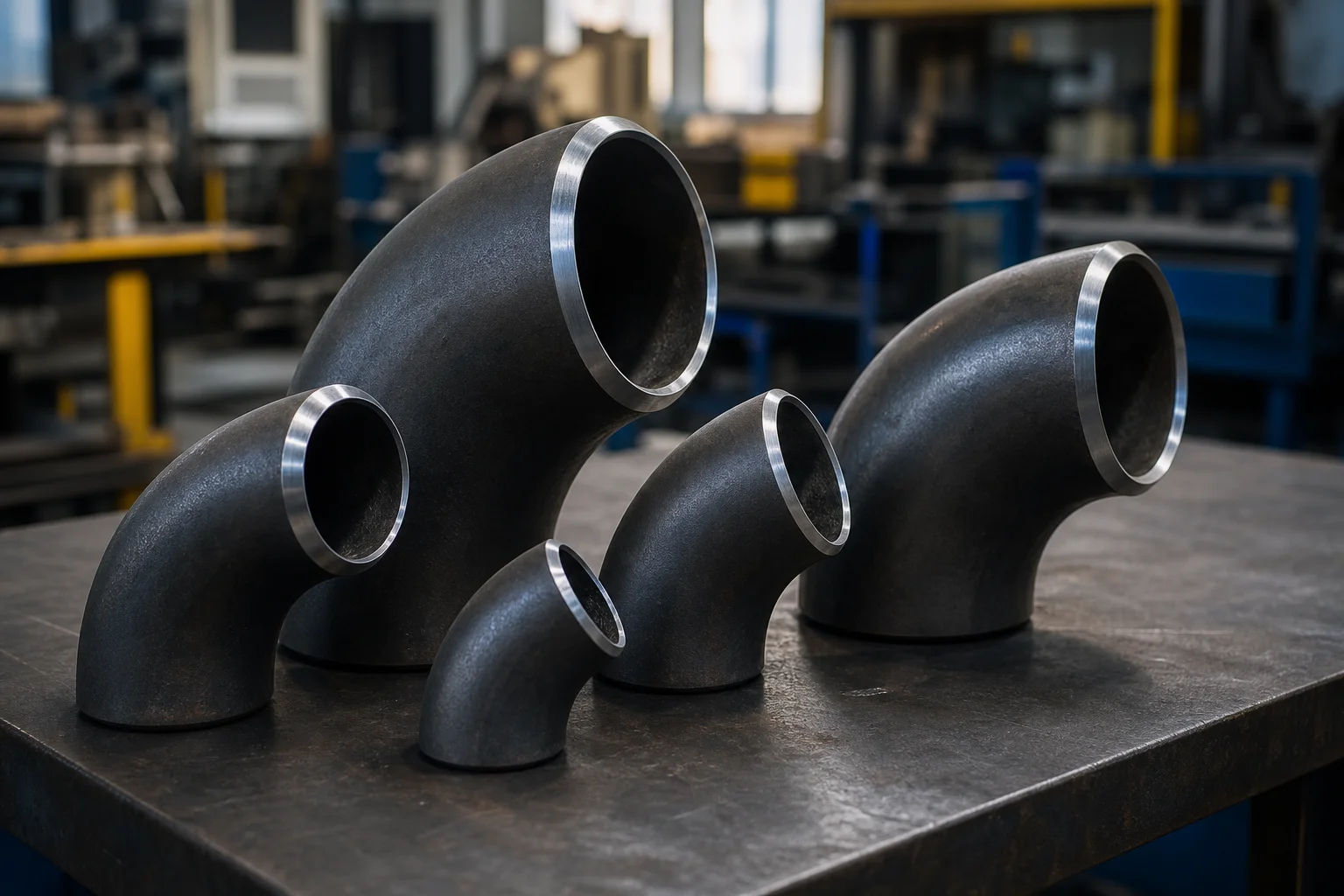
| Elbow | Changes direction | 45°, 90°, 180°, long radius, short radius |
| Tee | Creates a 90° branch | Equal tee, reducing tee |
| Cross | Creates two opposite branches | Equal cross, reducing cross |
| Reducer | Changes pipe size | Concentric, eccentric |
| Cap | Closes a pipe end | Butt-weld cap, threaded cap |
| Plug | Closes a threaded opening | Square head, hex head, round head |
| Coupling | Joins two sections | Full coupling, half coupling, reducing coupling |
| Union | Joins with removable connection | Threaded, socket-weld |
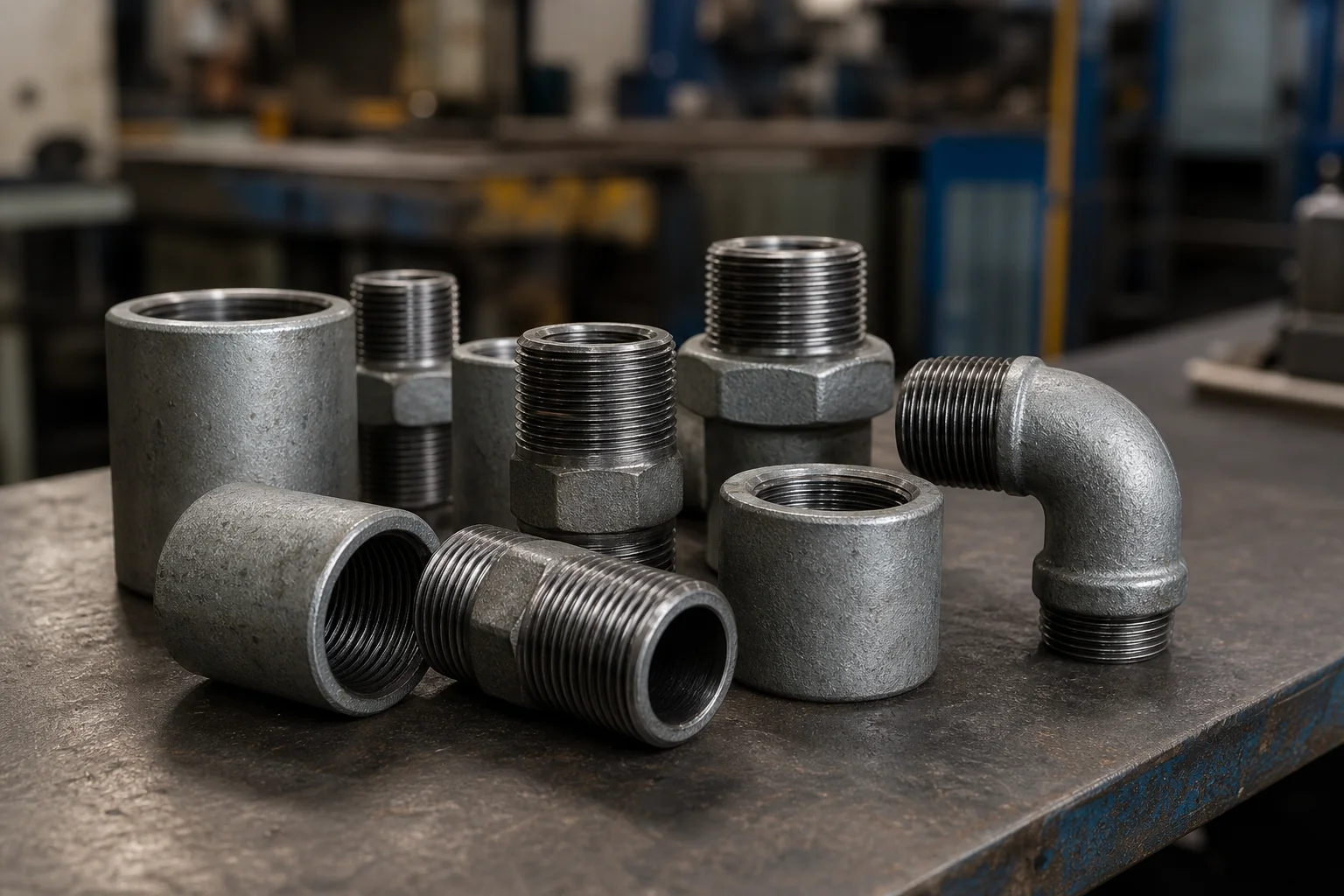
| Nipple | Short pipe connection | Close, hex, swage |
| Olet | Reinforced branch connection | Weldolet, sockolet, threadolet |
| Flanged fitting | Connects with bolts and gasket | Flanged elbow, tee, reducer |
They can also be grouped by connection method:
- Butt-weld fittings are welded directly to matching pipe ends and are common in process piping.
- Socket-weld fittings receive the pipe into a recessed socket before fillet welding.
- Threaded fittings use internal or external threads and allow assembly without butt welding.
- Compression fittings seal by compressing ferrules, rings, or gaskets around the tube or pipe.
- Flanged fittings are bolted and can be dismantled.
- Grooved and mechanical fittings use shaped ends and mechanical couplings.
Selection should begin with the piping class, then confirm material, nominal size, wall thickness or pressure class, standard, end connection, and inspection requirements.
Supplier and Inspection Checklist
- Use standardized fitting names on the RFQ and purchase order.
- State equal or reducing configuration for tees and crosses.
- Define elbow angle and radius.
- Define reducer type and installation orientation where relevant.
- Confirm connection method and thread form.
- Match fitting schedule or bore to the connected pipe.
- Check center-to-end and end-to-end dimensions.
- Verify material grade and heat-number traceability.
- Confirm whether the product is seamless, welded, forged, cast, or fabricated.
- Request drawings for nonstandard dimensions or special branch geometry.
- Inspect marking, end preparation, surface condition, and protective packaging.
Application to Pipe Fittings, Valves, and Flanges
Fitting selection affects the arrangement of valves and flanges. Elbows influence valve access and actuator clearance. Reducers near pumps and control valves affect flow profile. Unions or flanges may be added where equipment needs maintenance. Branch fittings are frequently used for drains, vents, instruments, and bypass lines.
A coordinated piping layout considers the function of each fitting together with valve orientation, flange face-to-face dimensions, gasket access, welding space, and future maintenance.
FAQ
What is a pipe fitting?
A pipe fitting is a component used to connect pipe, change direction, create a branch, change size, terminate a line, or connect piping to equipment.
What are the most common pipe fitting names?
Common names include elbow, tee, reducer, coupling, union, cap, plug, cross, nipple, and branch outlet fitting.
What is the difference between an elbow and a bend?
An elbow is normally manufactured to standardized fitting dimensions. A pipe bend is formed from pipe and may use a larger or project-specific bend radius.
Which fitting is used to reduce pipe size?
A reducer is used in butt-weld piping, while reducing couplings, reducing bushings, or reducing adapters may be used in threaded, socket, compression, or mechanical systems.
Which fitting is easiest to remove?
Flanges and unions are commonly used where dismantling is required. The best choice depends on size, pressure, service, and maintenance frequency.
Next Steps
Create a fitting schedule that lists item number, fitting type, size, material, standard, connection, wall or class, quantity, and inspection requirement. Use drawings for any configuration that cannot be described unambiguously with standard terminology.
Request a Quote