
Overview
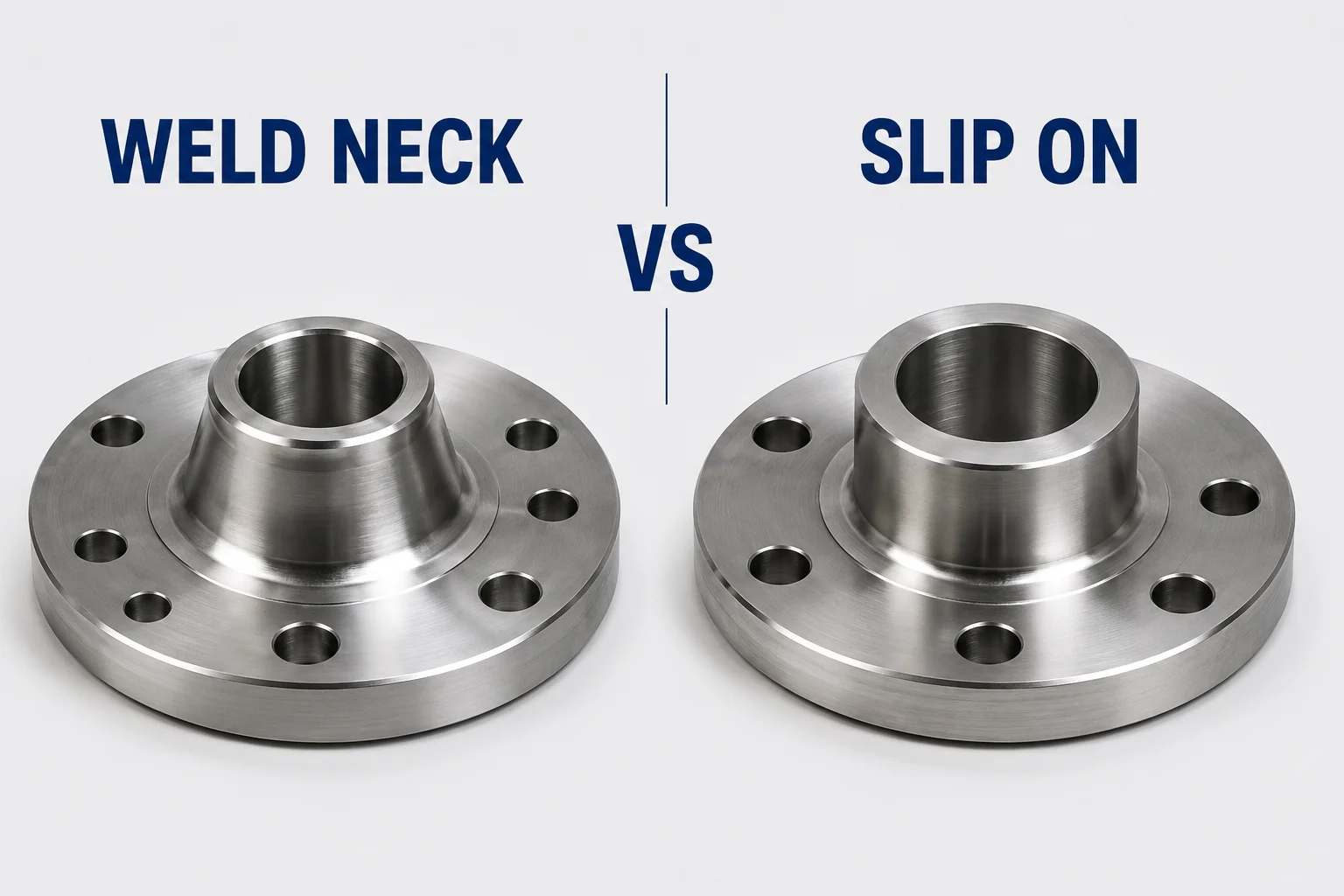
The choice in weld neck flange vs slip-on flange selection is mainly a choice between a butt-welded tapered hub and a flange that slides over the pipe and is fillet welded. Neither type is universally correct. The approved piping class, service, loads, fabrication plan, inspection level, and lifecycle cost control the decision.
Why It Matters for Pipe Components
The connection changes stress transfer, internal geometry, welding access, alignment method, and inspection approach. Weld neck flanges require accurate end preparation and bore matching. Slip-on flanges can simplify initial positioning but need controlled pipe insertion, fillet welds, and post-weld alignment checks.
Price comparison should include fabrication and inspection, not only the flange unit price.
Methods, Parameters, or Process
Compare the two types against project needs.
| Factor | Weld neck flange | Slip-on flange |
|---|---|---|
| Pipe connection | Butt weld at the neck | Flange slides over pipe and is fillet welded |
| Bore transition | Can be matched closely to pipe wall | Depends on flange bore and pipe insertion |
| Fit-up | Requires bevel and root alignment | Allows axial positioning before welding |
| Weld inspection | Butt-weld examination as specified | Fillet-weld examination as specified |
| Distortion control | Hub and weld sequence matter | Internal/external weld sequence and face alignment matter |
| Material use | Heavier hub geometry | Often simpler geometry |
| Service selection | Commonly chosen for demanding duties | Common in approved general-service classes |
| Cost basis | Higher component and butt-weld fabrication cost may apply | Lower component cost may be offset by two weld areas and fit-up controls |
The table is a selection guide, not a code rule. The piping design code and project specification may restrict one type for particular fluids, temperatures, cyclic conditions, or hazard categories.
Verification note: compare pressure-temperature ratings and exact dimensions only within the same standard, material group, size, and rating.
Supplier and Inspection Checklist
- Confirm both alternatives are permitted by the line class.
- Compare total installed cost, including welding, NDE, and alignment.
- Check pipe wall and bore requirements.
- Review fatigue, external loads, and thermal cycles.
- Assess corrosion and crevice concerns.
- Confirm field versus shop fabrication constraints.
- Evaluate future maintenance and replacement.
- Document the engineering basis for substitution.
Application to Pipe Fittings, Valves, and Flanges
Weld neck flanges are often selected on process lines, equipment nozzles, and services with significant pressure, temperature, or cyclic loads. Slip-on flanges are common in utility and general process systems where the piping class accepts them.
For valves and pumps, either flange type may connect to the same mating end if the facing, rating, and joint design match. The difference is on the pipe side.
FAQ
Which flange has better alignment?
They use different alignment methods. Slip-on flanges can be positioned before welding, while weld neck flanges provide a defined butt-weld transition. Fabrication quality controls the final result.
Which one costs less?
Slip-on flanges often have a lower component cost, but installed cost depends on weld labor, NDE, rework, and project requirements.
Can a slip-on flange replace a weld neck flange?
Only after engineering approval confirms code, line-class, service, rating, facing, material, and load suitability.
Which is better for high-cycle service?
The designer must evaluate fatigue using the applicable code and loads. Do not choose from a general article alone.
Next Steps
Ask engineering to compare the two options on the same line-class basis. Send suppliers identical size, rating, material, facing, quantity, inspection, and coating requirements so cost comparisons are meaningful.
Request a Quote