
Overview: What is a welding neck pipe flange?
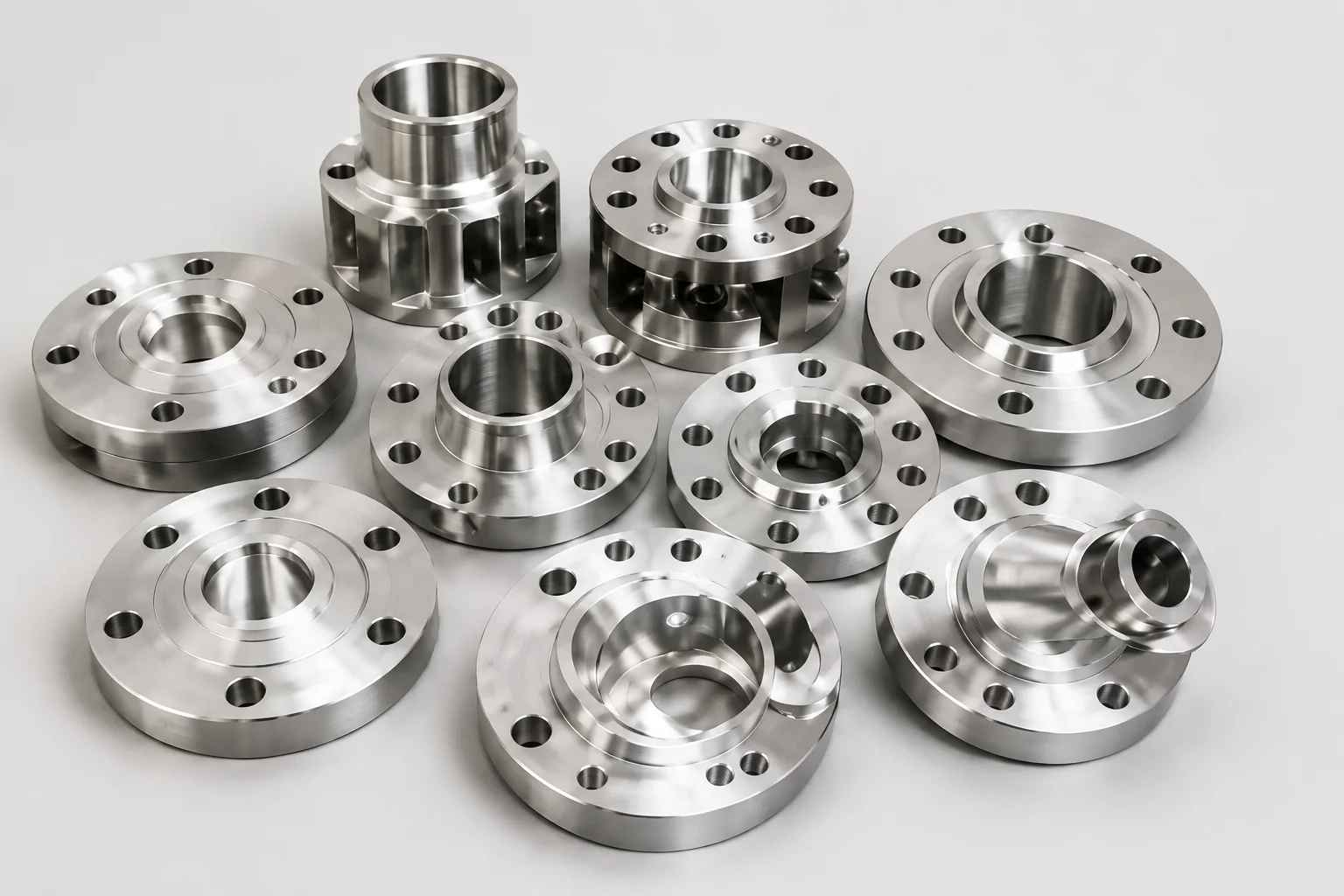
A welding neck pipe flange is a flange with a long tapered hub that is butt welded to the pipe. The bore of the flange can be matched to the pipe bore to support smoother flow and stronger stress distribution at the joint.
Welding neck flanges are commonly used in pressure piping where the connection must handle higher pressure, higher temperature, vibration, cyclic loading, or critical service.
Why do buyers search for welding neck pipe flanges?
Buyers usually search this keyword when they already know they need a welded flange connection. This makes the keyword valuable for product category pages and quotation-driven content.
Common buyers include:
- EPC contractors
- pressure vessel and skid manufacturers
- oil and gas companies
- water treatment contractors
- power plant maintenance teams
- industrial distributors
When should a welding neck flange be selected?
A welding neck flange is often selected when the project requires:
- stronger welded connection
- better stress distribution
- high-pressure service
- high-temperature service
- repeated thermal cycling
- critical inspection requirements
- compatibility with butt welded piping systems
It is not automatically required for every pipeline. Slip-on flanges, socket weld flanges, threaded flanges, or blind flanges may be more practical depending on pressure, pipe size, installation method, and cost target.
What standards are commonly used?
Welding neck flanges may be supplied under different dimensional standards, such as ASME or EN systems. The standard must be stated clearly in the RFQ.
| Standard system | Common examples | Buyer note |
|---|---|---|
| ASME / ANSI | ASME B16.5, ASME B16.47 | Common in Class-rated flanges |
| EN | EN 1092-1 | Common in PN-rated European projects |
| Project-specific | Client specification | Always follow project drawing first |
Do not assume that a Class flange and a PN flange are interchangeable. Dimensions, bolt holes, pressure-temperature ratings, and facing details can differ.
What materials are common?
Common materials include:
- ASTM A105 carbon steel
- ASTM A350 LF2 low-temperature carbon steel
- ASTM A182 F304 / F316 stainless steel
- project-specific alloy steel or stainless grades
Material selection should be based on service fluid, temperature, pressure, corrosion risk, and project specification.
RFQ checklist for welding neck flanges
A complete RFQ should include:
| Required detail | Example |
|---|---|
| Size | NPS 4 or DN100 |
| Rating | Class 150 / Class 300 / PN16 |
| Standard | ASME B16.5 / EN 1092-1 |
| Material | ASTM A105 / SS304 / SS316 |
| Facing | RF / FF / RTJ |
| Bore | Sch 40 / Sch 80 / project bore |
| Quantity | 20 pcs |
| Certificate | MTC / EN 10204 3.1 if required |
| Inspection | dimensional, PMI, NDT if required |
FAQ
Are welding neck flanges better than slip-on flanges?
They are generally stronger for critical service, but also cost more and require butt welding. The correct choice depends on project conditions.
Can welding neck flanges be used with stainless steel pipe?
Yes, if the material, dimensions, and welding procedure are suitable for the project.
Do welding neck flanges need bore matching?
For many projects, the bore should match the pipe schedule or project requirement. Confirm before manufacturing.
Internal links
- Welding Neck Flange Product Page
- Slip On Flange vs Weld Neck Flange
- Carbon Steel Weld Neck Flanges
- ASME B16.5 Flange Guide
Conversion block for Hebei Nuoan
Add an RFQ form specifically for welding neck flanges. Required fields should include standard, pressure class, material, facing, bore/schedule, quantity, and certificate requirements. This reduces back-and-forth and improves quotation speed.