Overview
Carbon steel weld neck flanges have a tapered hub and a butt-weld connection to the pipe. The hub provides a gradual transition from the flange body to the pipe wall, which makes the design widely used in process, power, oil and gas, and utility piping when the project specification calls for a welded forged flange.
A complete specification should not stop at “carbon steel WN flange.” Procurement normally needs the dimensional standard, nominal size, pressure class or PN, facing, material specification and grade, bore or connected pipe wall, heat treatment if applicable, testing/documentation, and any supplementary project requirements.
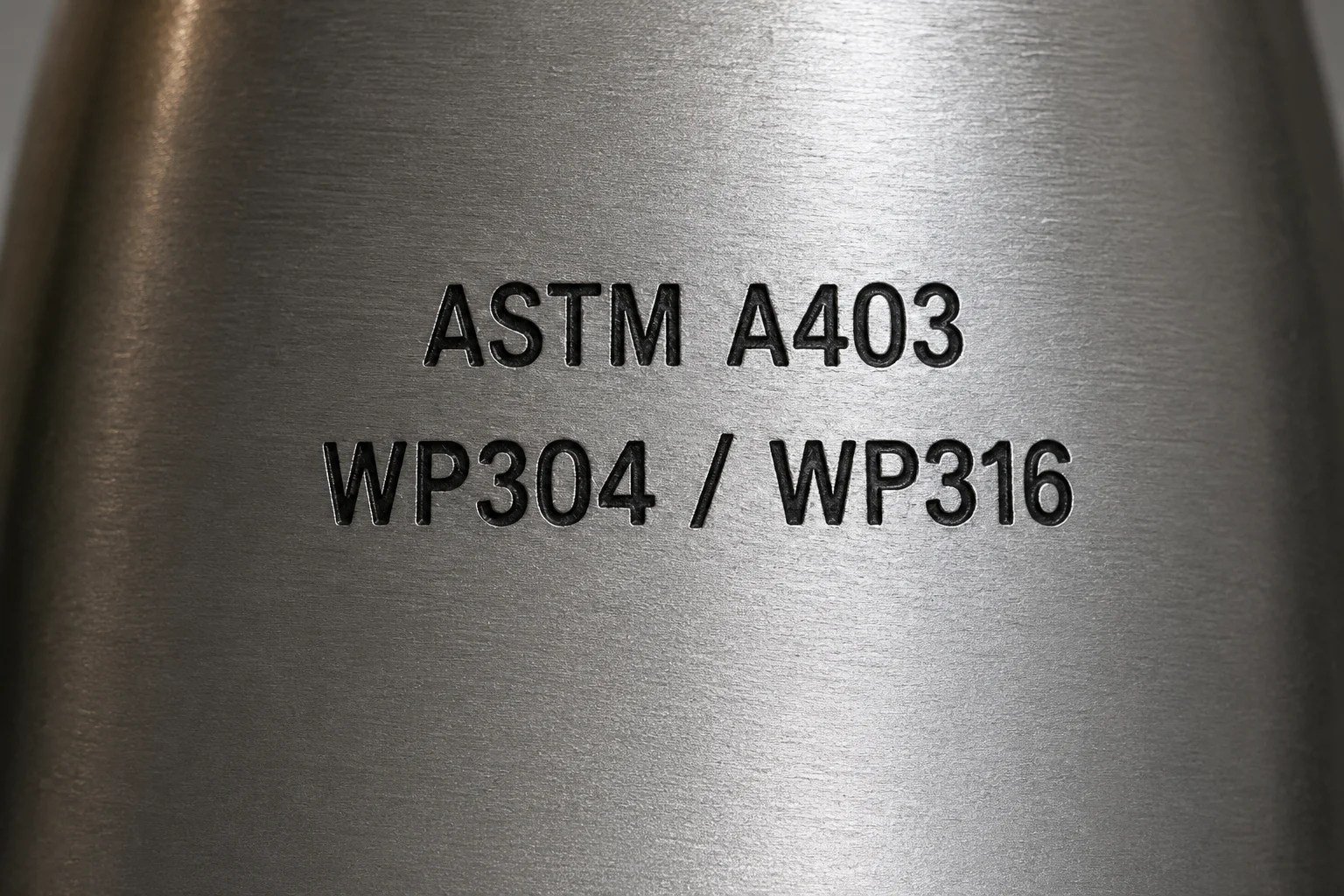
ASTM A105/A105M is a common material specification for forged carbon steel piping components for ambient- and higher-temperature pressure systems. Low-temperature projects may specify other materials such as ASTM A350 grades. Material selection must follow the project design basis rather than being inferred from flange type.
Why It Matters for Pipe Components
The weld neck is part of the pressure boundary and the pipe-to-flange weld is a critical field or shop joint. Bore mismatch, incorrect end preparation, wrong material, poor alignment, or an incompatible pressure class can create rework or increase stress at the connection.
Weld-neck flanges also interact directly with pipe wall thickness. Two flanges with the same NPS and class can be supplied with different bores for different pipe walls or project requirements. A purchase order that does not state the connected pipe schedule or wall thickness can leave room for a mismatch.
The flange facing and bolting must also match the mating component. A correct weld end does not compensate for the wrong RF, FF, RTJ, drilling pattern, or flange series.
Methods, Parameters, or Process
Key specification points include:
| Parameter | What to confirm |
|---|---|
| Standard | ASME B16.5, ASME B16.47, EN 1092-1, or project-specific drawing as applicable |
| Size | NPS or DN, not only a measured OD |
| Pressure designation | ASME class or PN system |
| Facing | RF, FF, RTJ, or specified special facing |
| Material | Exact ASTM/ASME/EN grade required by design |
| Bore | Match to connected pipe wall and approved transition |
| Weld end | Bevel geometry per project/piping specification |
| Heat treatment | As required by material specification or project |
| NDE/testing | Only as required by the governing documents and ITP |
| Documentation | MTC, dimensional report, NDE reports, PMI, coating report, etc. as contractually required |
For ASME-based carbon steel flange packages, ASME B16.5 is commonly used for NPS 1/2 through NPS 24. Larger steel flanges may fall under ASME B16.47. Material and pressure-temperature rules are not determined by dimensions alone. The project’s material specification, piping code, design conditions, and flange standard must be read together.
The butt-weld joint should be prepared and welded under an approved welding procedure. Do not use a generic article to set bevel angle, root face, preheat, PWHT, or acceptance criteria; those values depend on the governing code, material thickness, procedure qualification, and project requirements.
Supplier and Inspection Checklist
- State exact material specification and grade.
- Identify NPS/DN, pressure class/PN, facing, and dimensional standard.
- Provide connected pipe OD and wall thickness or schedule.
- Require the correct bore and weld-end preparation for the pipe.
- Check hub profile, neck thickness, and transition dimensions.
- Inspect RF/FF/RTJ surfaces for damage and machining quality.
- Verify bolt-hole count, diameter, and bolt-circle dimensions.
- Review flange markings against the purchase order and MTC.
- Confirm heat/lot traceability when required.
- Specify NDE, PMI, mechanical tests, impact tests, or hardness tests only when required by the governing specification or project.
- Protect machined faces and weld ends during packing.
- For sour, low-temperature, or cyclic service, obtain project-specific material and welding requirements before quotation.
Application to Pipe Fittings, Valves, and Flanges
A weld neck flange is often installed next to butt-weld elbows, reducers, or straight pipe. Wall-thickness transitions may therefore involve both the flange bore and adjacent fitting ends. Fabrication drawings should show how the parts are intended to align before welding.
At valves and equipment nozzles, the mating flange must have compatible drilling, facing, class/PN, and nominal size. The gasket must suit both the facing and service. Bolting is selected separately according to the project specification; it should not be inferred from the carbon steel flange material alone.
For prefabricated spools, dimensional control should include flange orientation and bolt-hole clocking as well as weld-neck fit-up. These checks reduce field alignment problems.
FAQ
Are all carbon steel weld neck flanges ASTM A105?
No. ASTM A105 is common, but other material grades may be required for low-temperature, high-temperature, sour, or project-specific service. Follow the material specification and design basis.
Does weld neck flange bore have to match pipe ID exactly?
The bore and transition should be compatible with the connected pipe and approved design. Exact requirements depend on the flange design, pipe wall, welding details, and project specification.
Is a weld neck flange stronger than a slip-on flange?
The designs distribute load differently, and weld neck flanges are often selected for demanding services. However, suitability should be determined by the piping design code, service conditions, flange standard, joint design, and project requirements rather than a blanket strength statement.
What should be checked before welding?
Confirm material traceability, flange size/class/facing, bore, pipe wall, bevel condition, alignment, approved WPS, consumables, and any required pre-weld inspection.
Next Steps
Send the supplier the line class or flange datasheet with the RFQ. Include pipe wall thickness and facing, not only NPS and class. Before production, approve the dimensional drawing and documentation list so the delivered weld-neck flanges are compatible with the connected pipe and the project inspection plan.
Request a Quote