Overview
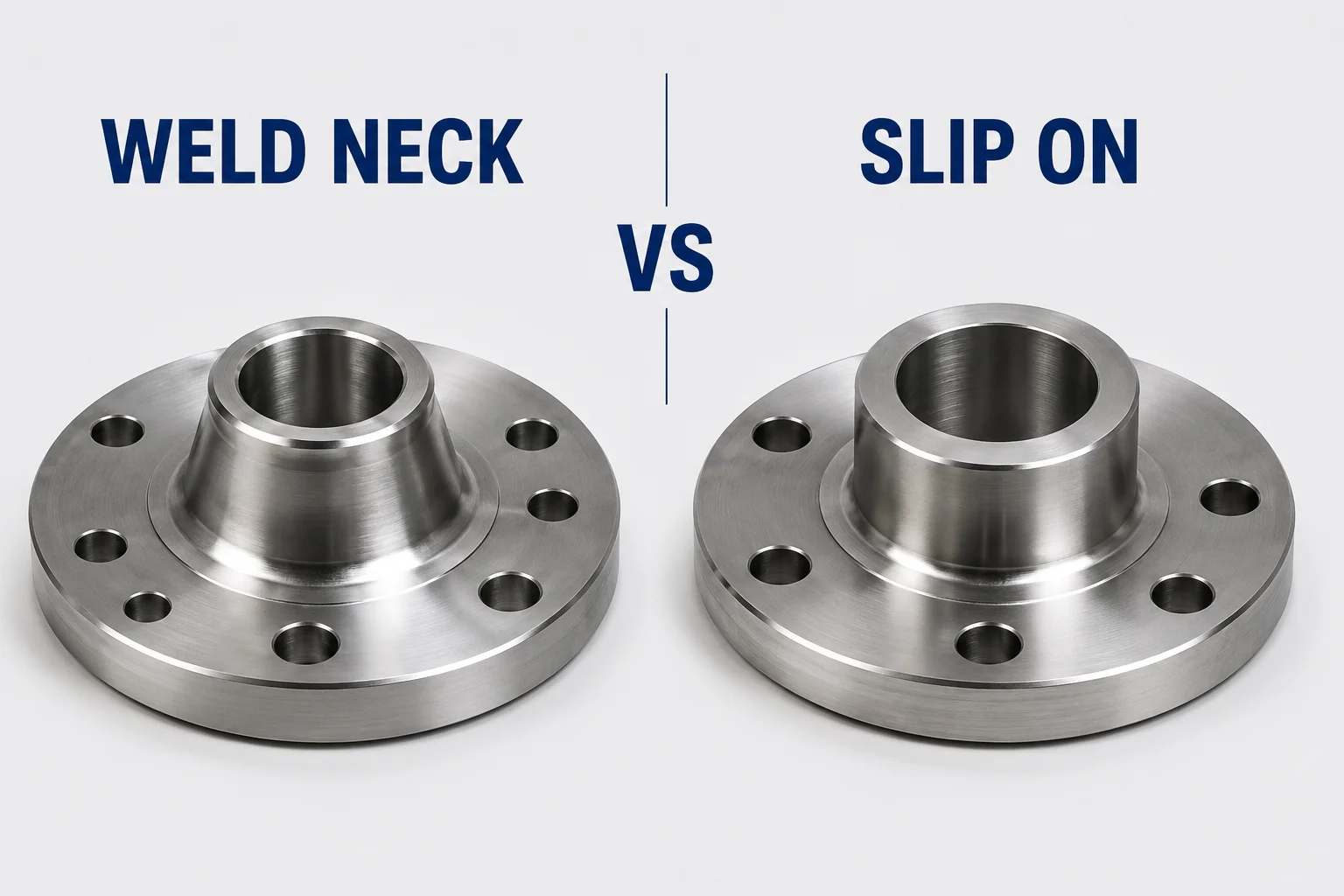
The difference in raised face vs flat face flange joints is the gasket seating geometry. A raised face has a defined raised contact area. A flat face is substantially flat across the flange face. The correct choice depends on the flange standard, equipment design, gasket system, bolting, and project specification.
Why It Matters for Pipe Components
Facing geometry changes how bolt load is transferred through the gasket and flange. An unreviewed RF-to-FF connection can create bending or overstress concerns, especially with some cast equipment. Matching bolt holes do not prove compatibility.
Facing selection should be resolved before ordering valves, pumps, strainers, and fabricated spools.
Methods, Parameters, or Process
Compare the joint as a system.
| Factor | Raised face | Flat face |
|---|---|---|
| Gasket contact | Defined raised area | Broad face area according to the joint design |
| Common designation | RF | FF |
| Gasket dimensions | Must match raised seating area and standard | Must match flat-face arrangement and standard |
| Equipment interface | Common on many steel flange systems | Often specified for particular equipment or material systems |
| Assembly review | Facing height, finish, gasket, and bolt load | Flatness, gasket coverage, equipment limits, and bolt load |
| Mixed joint | Requires engineering review | Requires engineering review |
Do not grind off a raised face or add a special gasket arrangement without an approved repair or modification procedure. Machining can change thickness, geometry, rating assumptions, and marking.
Verification note: confirm exact facing dimensions and surface finish from the contract-required flange standard and equipment drawing.
Supplier and Inspection Checklist
- Verify the facing on both mating components.
- Confirm gasket type, dimensions, thickness, and material.
- Review equipment manufacturer limits.
- Inspect face flatness and surface damage.
- Confirm bolting material and tightening procedure.
- Check whether any spacer, insulating kit, or special gasket changes the joint.
- Obtain engineering approval for mixed RF/FF arrangements.
- Record any facing machining or repair.
Application to Pipe Fittings, Valves, and Flanges
Raised face joints are common on many steel piping systems. Flat face joints are used in specific flange systems and on some equipment. The correct arrangement is defined by the plant piping class and equipment specification.
For valves and pumps, the purchase order should state the required facing explicitly. Do not accept “standard face” when the supplier uses a different standard system.
FAQ
Can an RF flange bolt directly to an FF flange?
Only after engineering review confirms the joint is acceptable for the materials, gasket, equipment, loads, and applicable code.
Is a full-face gasket always used on FF flanges?
The gasket arrangement must follow the joint design and project specification. Avoid universal assumptions.
Can the raised face be machined off?
Only under an approved engineering and repair procedure that confirms remaining dimensions and suitability.
Which facing seals better?
Sealing performance depends on the complete joint: flange stiffness, surface finish, gasket, bolting, alignment, and assembly.
Next Steps
Check the equipment nozzle and piping class before purchasing mating flanges. Issue a joint sketch whenever the two sides come from different standards or manufacturers.
Request a Quote