Overview
A socket weld flange contains a socket that receives the pipe end. The pipe is positioned to the approved insertion detail and joined by an external fillet weld. This connection is used in selected small-bore piping services where the design code and project piping class permit it.
The phrase “flange socket” is ambiguous in purchasing. A complete description should state socket weld flange, nominal size, pressure class, facing, material, pipe schedule or bore basis, standard, and inspection requirements.
Why It Matters for Pipe Components
Fit-up controls the final joint. Incorrect insertion can prevent the intended expansion allowance, change weld geometry, or create an internal crevice. The socket depth, bore, counterbore, and pipe OD must match.
Socket-weld joints are not automatically suitable for every cyclic, corrosive, hygienic, or high-temperature service. Crevice conditions, fatigue, thermal expansion, welding access, examination limitations, and project restrictions should be considered.
The flange still has all normal bolted-joint requirements: correct facing, drilling, gasket, bolting, material, rating, and surface protection.
Methods, Parameters, or Process
Review flange dimensions and the welded joint as separate but connected acceptance areas.
| Parameter | What to specify | Inspection focus |
|---|---|---|
| Standard and class | Applicable flange standard and rating | Dimensions, marking, pressure-temperature basis |
| Socket geometry | Bore, socket diameter, depth, shoulder | Pipe fit and insertion control |
| Pipe details | OD, wall or schedule, material | Compatibility and weld procedure |
| Facing | RF, FF, RTJ, or specified face | Finish and damage |
| Welding | Gap/detail, fillet size, WPS, consumables | Fit-up, contour, defects, heat input |
| Testing | Visual, dimensional, surface NDE, other project tests | Procedure and records |
Supplier and Inspection Checklist
- Confirm the piping class permits a socket-weld flange.
- State pipe size and wall or schedule.
- Measure socket bore and depth before welding.
- Use the project-approved insertion and gap detail.
- Check flange-face alignment before final welding.
- Protect the gasket face from arc strikes and spatter.
- Inspect fillet-weld size, contour, undercut, porosity, and overlap.
- Review heat treatment and hardness requirements where applicable.
- Keep the socket clean and dry before assembly.
Application to Pipe Fittings, Valves, and Flanges
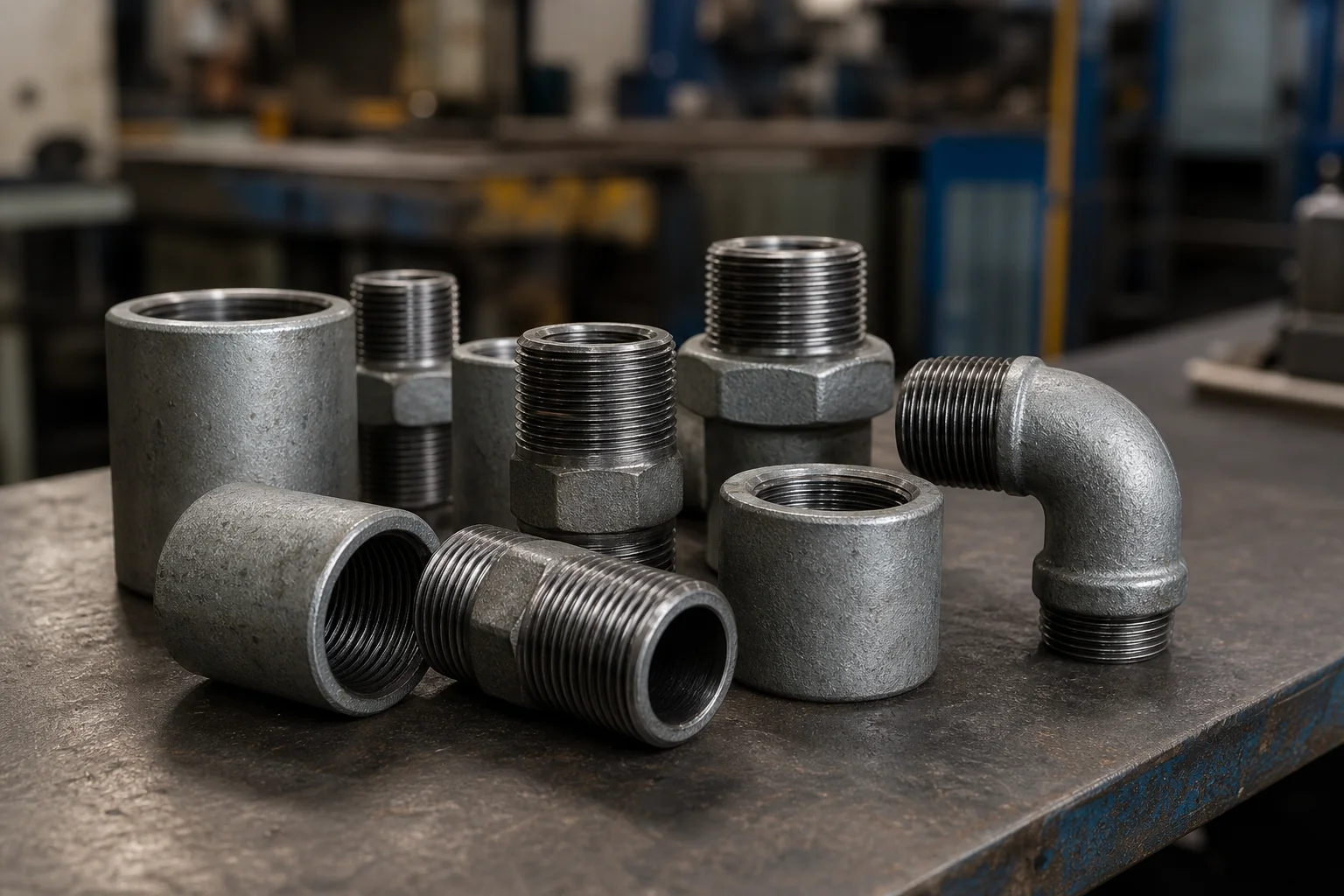
Socket weld flanges are used with small-bore pipe, drains, vents, instrument branches, and utility systems when permitted. Forged socket-weld fittings and socket-weld valves may appear in the same piping class, but each product follows its own dimensional requirements.
For corrosive or high-purity service, the internal crevice may be unacceptable. The material engineer and piping designer should approve the connection type rather than relying on availability.
FAQ
Is a socket weld flange the same as a slip-on flange?
No. A socket-weld flange has an internal shoulder and defined socket. A slip-on flange slides over the pipe and uses a different joint geometry.
Does the pipe bottom against the socket shoulder?
The approved fit-up detail normally controls insertion and allowance. Follow the project and welding procedure rather than guessing.
Can socket weld flanges be used on all pipe sizes?
No. Availability and permitted use depend on the flange standard, class, piping code, and project.
Can the weld be radiographed?
The joint geometry limits conventional volumetric examination. The project should define suitable inspection methods.
What should be on the RFQ?
Standard, size, class, facing, material, pipe wall or schedule, quantity, testing, coating, and certificates.
Next Steps
Send the pipe OD and wall, socket detail, WPS requirements, flange standard, class, facing, and material. Approve the fit-up detail before fabrication.
Request a Quote