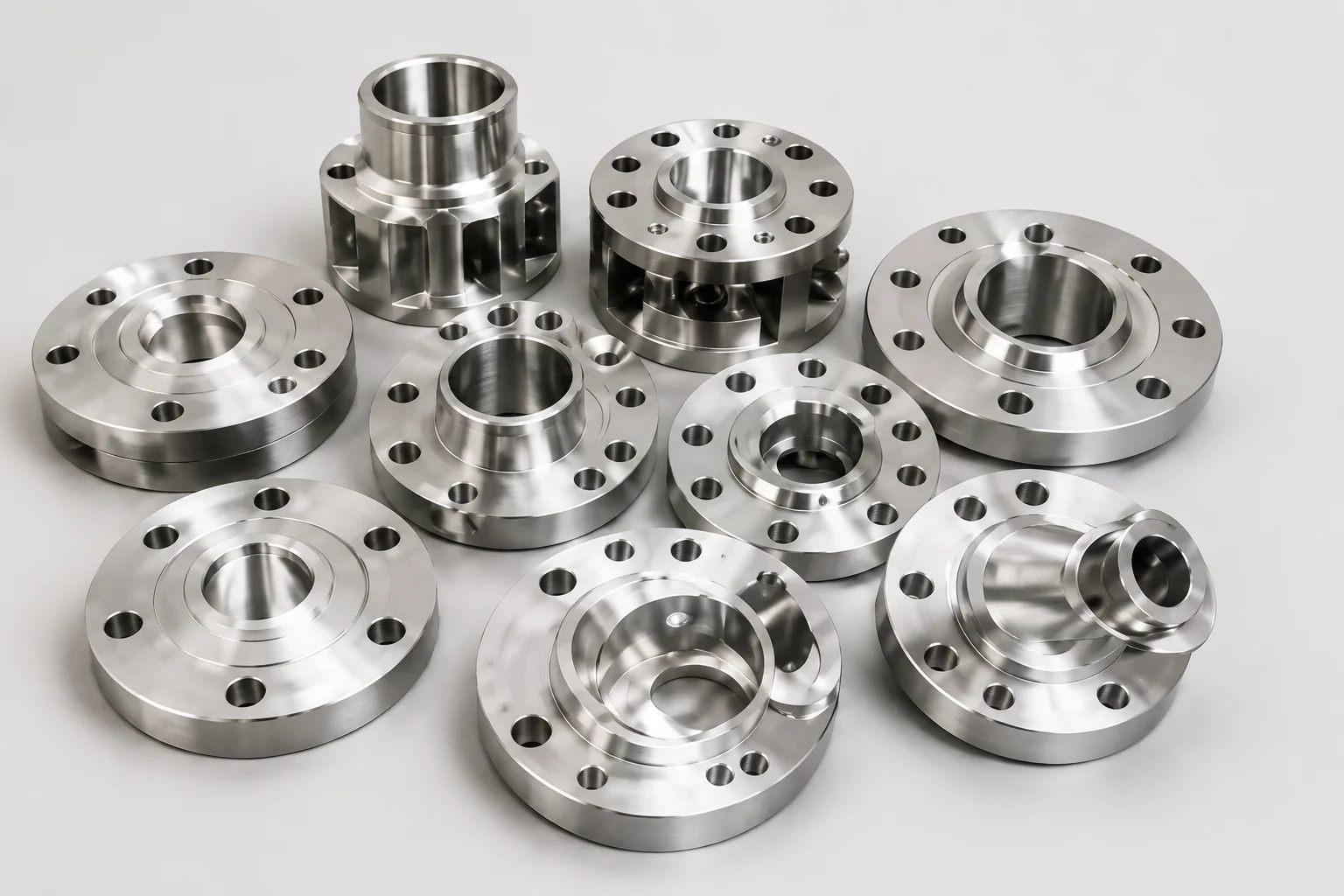

Advantages of Using Lap Joint Flanges
2026-11-21
Hebei Nuoan manufactures pipe flanges in Mengcun, China, serving EPC buyers and distributors sourcing components for project and inventory requirements. Its lap joint flanges provide an option for assemblies where bolt-hole alignment, maintenance access, and separate backing-flange material selection matter. Submit your specifications for a quotation matched to your piping requirements. (nuoanfitting.com)
Why choose lap joint flanges for your piping project?
Lap joint flanges combine a loose backing flange with a stub end welded to the pipe. The backing flange rotates before tightening, helping installers align bolt holes without rotating the welded pipe spool. Because the stub end provides the process-side gasket seat, its material can be selected separately from the backing flange. (valtronforge.com)
For EPC procurement, these features create practical selection opportunities:
- Simpler bolt alignment: Position the loose flange around the stub end during assembly rather than requiring fixed bolt-hole orientation after welding.
- Convenient maintenance access: Use a bolted connection where the piping layout requires periodic dismantling for inspection or cleaning.
- Targeted alloy expenditure: Evaluate a less expensive backing-flange material while retaining the specified corrosion-resistant stub end in contact with the process fluid. (texasflange.com)
Consider a removable stainless steel spool connected between fixed mating points. A rotating backing flange can simplify bolt-hole positioning after fabrication. This is an assembly advantage—not permission to pull misaligned piping together or use the joint as an operating swivel. (valtronforge.com)
A matched flange and stub-end assembly
The lap joint flange stub end is the short fitting that joins the pipe and presents the lap against which the backing flange bears. Bolting load passes through the backing flange to the lap, while the gasket seals against the stub-end seating surface. Treat these as coordinated components rather than interchangeable items selected only by nominal diameter. (valtronforge.com)
Specify the stub-end length, wall thickness, lap dimensions, corner geometry, and facing finish alongside the backing flange. Check bore clearance and contact-radius compatibility before purchasing. A flange that clears the pipe may still interfere with the stub-end corner, preventing correct seating and load transfer. (valtronforge.com)
ASME B16.5 specification and purchasing controls
ASME B16.5 covers pressure-temperature ratings, materials, dimensions, tolerances, marking, testing, and related requirements for pipe flanges and flanged fittings. Its flange scope includes NPS 1/2 through NPS 24 for several pressure classes, with Class 2500 limited to NPS 12. The standard's overall scope should not be mistaken for a supplier's available product range. (asme.org)
For each purchase order, identify the required standard edition, nominal size, pressure class, and material specification. A class designation is not a universal allowable pressure: verify the applicable material-dependent pressure-temperature rating against design conditions. Review the complete joint, including gasket and bolting requirements, under the governing piping specification. (asme.org)
Material selection: A105, SS304, and SS316
A105 carbon steel: ASTM A105 covers forged carbon steel piping components, including flanges, for ambient- and higher-temperature pressure service. Consider it only where the design specification permits carbon steel; the material designation alone does not establish suitability for every service condition. (store.astm.org)
SS304 stainless steel: SS304 is a commonly used austenitic stainless steel. When preparing an RFQ, do not leave “SS304” as the only material requirement: identify the applicable product specification and grade for each component. ASTM A182 addresses forged or rolled alloy and stainless steel flanges and related components. (outokumpu.com)
SS316 stainless steel: Compared with 304, 316 contains molybdenum, supporting improved resistance to certain forms of localized corrosion. Actual selection still depends on the chemical environment and operating conditions; it is not a blanket guarantee against chloride attack. Provide fluid composition and temperature for materials review. (imoa.info)
For mixed-material assemblies, request separate material identification for the backing flange and stub end. Require the specified chemistry, mechanical properties, and relevant documentation rather than relying on broad labels such as “carbon steel” or “stainless steel.” (store.astm.org)
Lap joint flange vs slip on flange and weld neck options
Among flange types, the principal distinction is how the flange connects to the pipe and transfers load. Use the following comparison as an initial screening tool, then apply the project's engineering requirements. (texasflange.com)
Flange type | Connection arrangement | Selection priority |
|---|---|---|
Lap joint | Loose backing flange with welded stub end | Bolt alignment, maintenance access, and separate material selection |
Slip-on | Flange slides over pipe and is fillet welded in place | Projects permitting a fixed, fillet-welded flange arrangement |
Weld neck | Tapered hub butt welded to pipe | Demanding pressure, temperature, or cyclic-loading requirements |
Lap joint arrangements are worth evaluating when assembly flexibility and material economics outweigh the additional component interface. Weld neck designs provide a gradual hub transition for stress distribution and are generally preferred for demanding cyclic or high-temperature duties. Do not substitute one flange connection for another solely on purchase price. (texasflange.com)
Request project-specific pricing from Hebei Nuoan
Send a complete purchasing package so the quotation can distinguish flange-only supply from matched assemblies:
- Nominal sizes, quantities, pressure classes, and required standard edition.
- Backing-flange and stub-end material specifications.
- Pipe schedule, stub-end dimensions, and approved drawings.
- Gasket interface, inspection, testing, and documentation requirements.
- Delivery destination, required schedule, packing, and marking instructions.
Ask for itemized pricing, confirmed supply scope, and proposed delivery terms before placing your order. Contact Hebei Nuoan through nuoanfitting.com to request a direct supply RFQ for your lap joint flanges. Share your EPC material requisition or distributor stock list to begin the purchasing discussion.