

Raised Face vs Flat Face Flange: How to Choose
2026-11-20
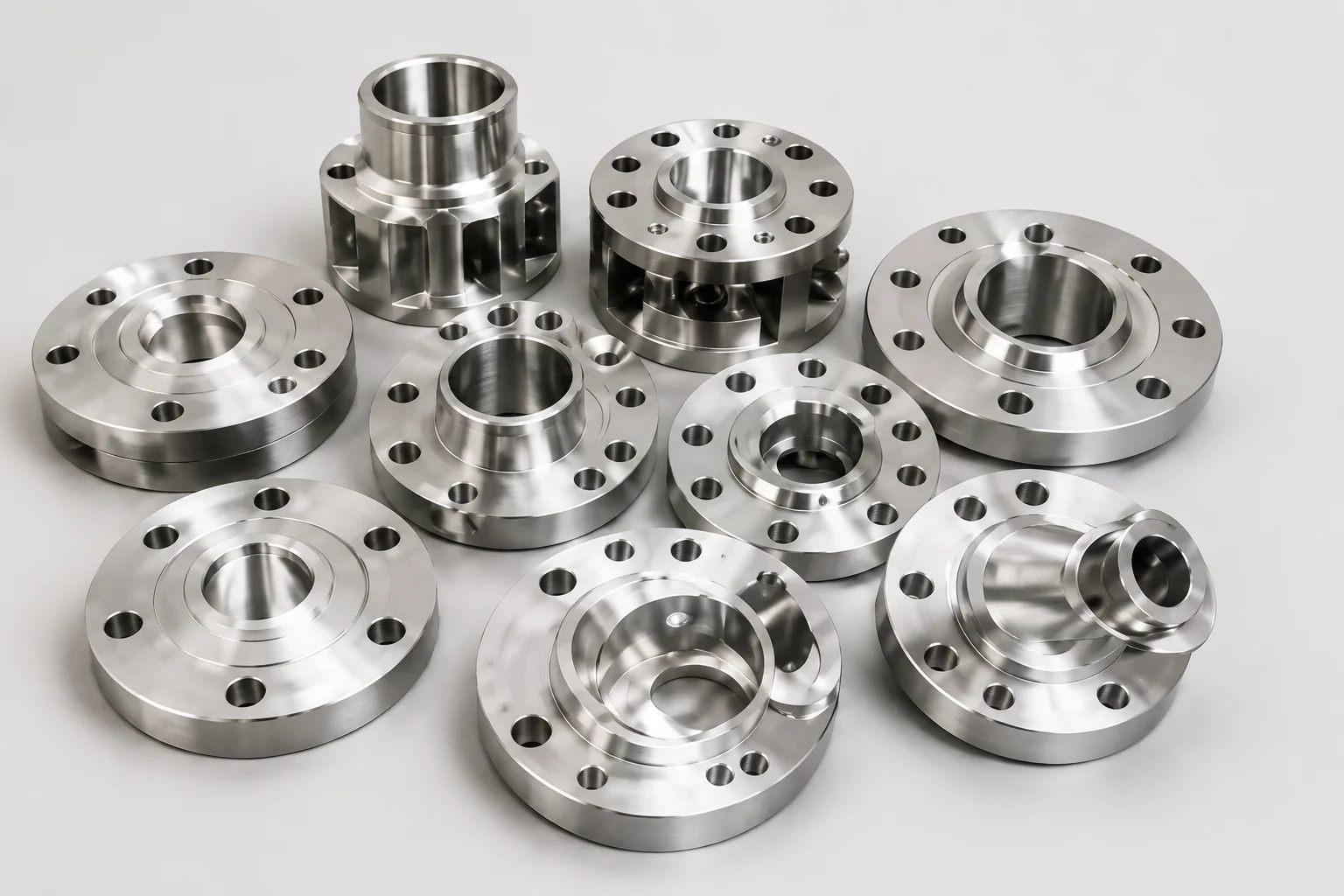
A raised face flange concentrates gasket compression on a smaller sealing area; a flat face flange provides a continuous face, commonly paired with a full-face gasket. Choose RF for compatible joints designed around concentrated gasket loading, and FF when the mating equipment requires broader gasket support, particularly with brittle flange materials. The right choice depends on the complete joint—not face shape alone. (garlock.com)
Which flange face suits your connection?
Choose a raised face flange when the mating flange, gasket, and available bolt load are designed for RF service. Choose a flat face flange when the equipment specification calls for FF construction or a full-face gasket is needed to avoid damaging bending loads. Neither option is universally better: matching the connection matters more than choosing a supposedly stronger face. (garlock.com)
The practical raised face flange vs flat face flange comparison starts with how each face supports its gasket:
Selection criterion | Raised face flange: RF | Flat face flange: FF |
|---|---|---|
Face geometry | Elevated sealing land around the bore | Continuous flat face without a raised sealing land |
Typical gasket shape | Ring gasket within the bolt circle | Often full-face gasket with bolt holes |
Gasket loading | Smaller contact area concentrates seating stress | Full-face gasket spreads load over a larger area |
Main selection advantage | Supports gaskets requiring concentrated compression | Provides broader support for compatible flange designs |
Critical compatibility check | Mating face and gasket seating requirements | Flange material, gasket support, and allowable bolt load |
Main caution | Can impose damaging bending loads on brittle FF flanges | Larger gasket area can reduce available seating stress |
These are selection principles, not permission to interchange the two faces. Gasket suppliers distinguish between flange materials as well as geometry because identical-looking connections may tolerate very different assembly loads. (garlock.com)
Which gasket works with RF and FF flanges?
RF flanges typically use ring-shaped gaskets, while FF flanges often use full-face gaskets extending beyond the bolt circle. Material selection still depends on fluid compatibility, temperature, and achievable compression. A gasket that fits dimensionally is not automatically suitable mechanically or chemically. (legacy.garlock.com)
Gasket consideration | RF connection | FF connection |
|---|---|---|
Nonmetallic sheet gaskets | Compressed fiber and suitable PTFE-based products are common options | Suitable sheet materials require verification of available seating stress |
Elastomeric gaskets | May be crushed if the design applies excessive compression | Often appropriate for compatible low-load, nonmetallic flange designs |
Spiral-wound gaskets | An option where the joint supplies the required seating load | Not automatically excluded, but flange strength and gasket loading require review |
Full-face coverage | Not the usual gasket arrangement | Common where broader support protects the flange |
Selection documents | Gasket data plus applicable dimensional standards | The same documents, with particular attention to equipment limits |
Garlock cautions that some flat-faced connections cannot generate enough compressive stress for relatively firm gasket materials. Conversely, soft rubber can be overcompressed in raised-face joints. The useful question is therefore not simply whether a material withstands the fluid, but whether the assembled connection can compress it sufficiently without damaging either component. (garlock.com)
For standards-based purchasing, ASME B16.21 covers nonmetallic flat gasket types, materials, dimensions, tolerances, and markings. ASME B16.20 covers metallic gasket constructions, including spiral-wound and metal-jacketed gaskets for RF and FF applications. Those scopes do not replace application-specific compatibility checks. (asme.org)
Does a raised face flange have a higher pressure rating?
Not inherently. Face style alone does not establish allowable pressure; the applicable standard, material, pressure class, and temperature must be considered together. ASME B16.5 covers pressure–temperature ratings and permits flat face flanges in all its classes, so “RF means high pressure, FF means low pressure” is an unreliable selection rule. (asme.org)
Rating question | RF flange | FF flange |
|---|---|---|
Does the face designation state allowable pressure? | No | No |
What establishes the flange rating? | Applicable material, class, temperature, and standard | Applicable material, class, temperature, and standard |
What must also be checked? | Gasket and bolting suitability for the joint | Gasket and bolting suitability for the joint |
Can appearance replace a rating check? | No; verify specifications and markings | No; verify specifications and markings |
ASME B16.5 addresses ratings, materials, dimensions, and other requirements for the components within its scope. Gray iron flanges have a separate standard, ASME B16.1, which includes their pressure–temperature ratings, bolting, and gasket provisions. Check the applicable document rather than transferring assumptions from one material or standard to another. (asme.org)
Treat gasket limits separately, too. A gasket’s published pressure and temperature capabilities do not mean those extremes can necessarily be applied simultaneously. Confirm the supplier’s combined service limits and required assembly conditions before accepting the joint design. (garlock.com)
Cast iron requires particular caution
Do not treat a raised-face steel flange as a direct substitute for a flat-face connection on gray cast iron equipment. The raised land can create bending moments that damage the brittle mating flange during tightening. A full-face gasket alone should not be assumed to eliminate that mismatch. (dqiz9ty3090k2.cloudfront.net)
ASME B16.5 addresses bolting to gray cast iron in paragraph 5.3.5. Its recommendations recognize gray iron’s low ductility and emphasize face alignment, controlled assembly torque, and control of transmitted piping loads. Verify the detailed requirements in the edition governing the project. (alekvs.com)
Use these checks before approving an equipment connection:
- Identify the material precisely. Do not apply gray iron assumptions to every casting; ASME lists separate flange standards for gray and ductile iron. (asme.org)
- Confirm the mating-face requirement. For brittle or nonmetallic FF equipment, have any proposed RF connection reviewed rather than relying on matching bolt holes. (dqiz9ty3090k2.cloudfront.net)
- Obtain an approved assembly load. Do not copy a steel RF torque table onto a connection with lower allowable flange loads. (garlock.com)
- Escalate mismatches. Use an equipment- and gasket-supplier-approved arrangement; do not improvise a spacer or gasket stack in the field. (dqiz9ty3090k2.cloudfront.net)
Relevant ASME standards and conversion notes
Use the project’s governing standards and specified editions when reviewing flange types. The flange standard, gasket standard, and assembly guidance answer different questions; none should be treated as a complete joint specification by itself. The following documents provide the relevant starting points. (asme.org)
Standard | Relevance to RF versus FF selection |
|---|---|
ASME B16.5 | Flange ratings, materials, dimensions, facings, and related requirements within its scope |
ASME B16.1 | Gray iron flange ratings, dimensions, bolting, and gaskets |
ASME B16.20 | Metallic gasket requirements, including applicable RF and FF gasket constructions |
ASME B16.21 | Nonmetallic flat gasket requirements |
ASME PCC-1 | Assembly guidance for joints within its stated scope |
The scopes above come from ASME’s standard descriptions. Notably, PCC-1’s stated scope concerns ring-type gaskets entirely inside the bolt-hole circle, with no contact outside that circle; do not apply its procedures indiscriminately to full-face joints. (asme.org)
ASME B16.5 paragraph 6.3.2 permits removal of a raised face to produce a flat face only while maintaining the required flange thickness. This is a controlled dimensional requirement, not blanket permission for field grinding. Obtain engineering approval and verify thickness and facing requirements before modifying a component. (alekvs.com)
Make the choice from the complete joint specification
For a raised face vs flat face flange decision, start with the mating equipment rather than a preferred gasket or stockroom availability. Then document the material, applicable standard, pressure class, design conditions, gasket construction, and approved assembly procedure. Resolve any conflict before purchasing or installation. (asme.org)
Choose RF when the specified connection supports concentrated gasket loading. Choose FF when the equipment and gasket arrangement require a flat mating face and broader support. Before ordering either option, ask the supplier to confirm the complete flange-and-gasket combination—not merely the nominal size and bolt pattern. (garlock.com)
