
Understanding the Uses of Blind Flanges
2026-11-20
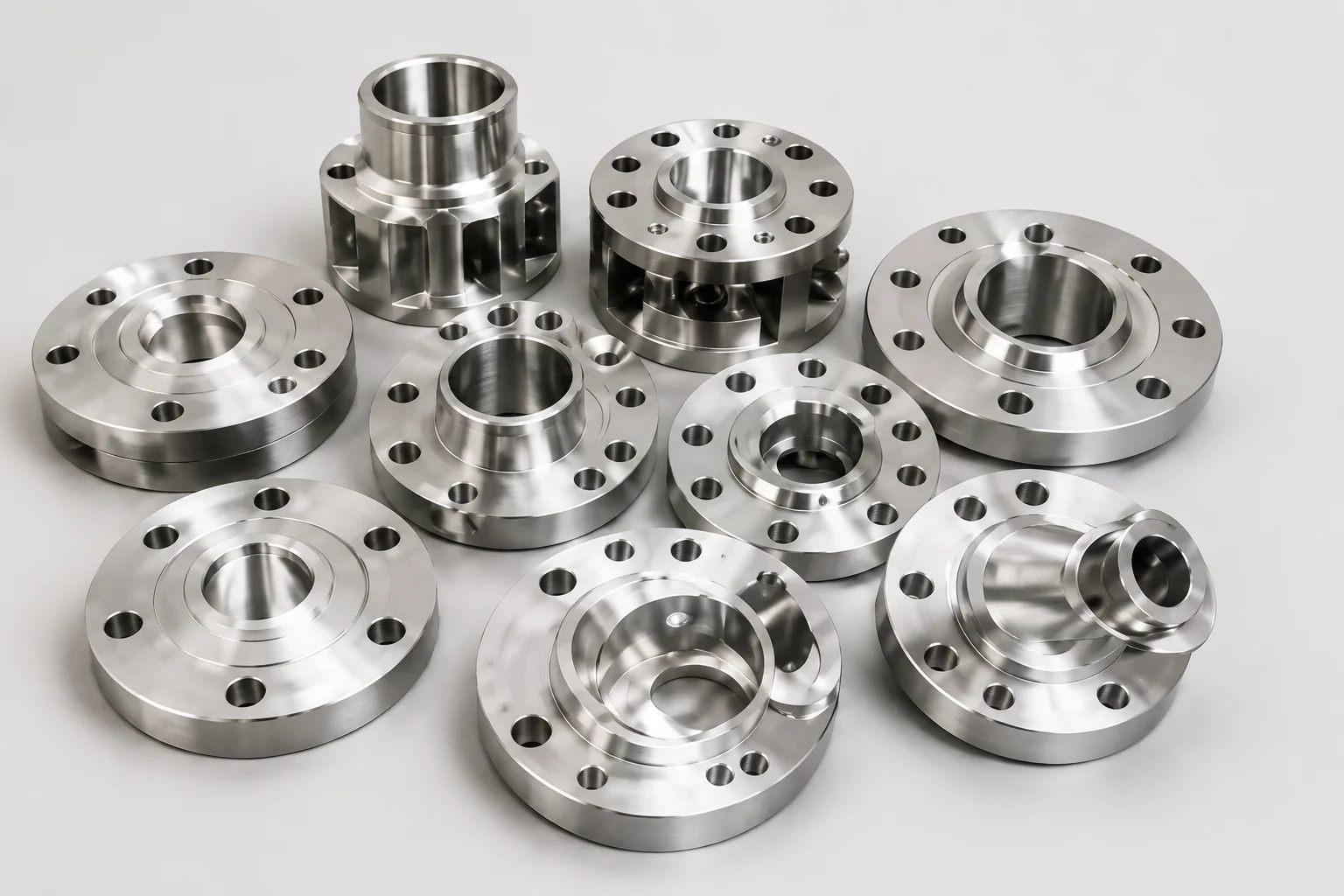
A blind flange is a solid, bolted closure used to seal a pipe end, valve outlet, or equipment nozzle without a flow opening. It provides a removable termination for maintenance, testing, or future expansion. This guide explains facing options, materials, dimensions, and purchasing considerations for business buyers preparing a flange RFQ for Hebei Nuoan. (texasflange.com)
What is a blind flange used for?
A blind flange closes an otherwise open flanged connection, creating a pressure-containing barrier when correctly specified and assembled. Unlike a welded cap, it can be unbolted when access or a future connection is needed. Typical uses include terminating pipelines, closing spare vessel nozzles, and isolating sections for maintenance or hydrostatic testing. (texasflange.com)
For example, a planned branch connection can remain closed until equipment is installed. The blind is then removed to accommodate the new connection rather than cutting away a welded closure. Selection must still account for the complete joint: mating flange, gasket, bolting, material, pressure, and temperature. (texasflange.com)
Blind flange types: RF and RTJ
Among blind flange types, facing geometry determines how the gasket seals against the mating flange. Raised Face (RF) and Ring Type Joint (RTJ) designs use different sealing arrangements, so they are not interchangeable simply because their bolt holes align. Match the facing to the piping specification and mating connection. (texasflange.com)
Raised Face (RF) blind flanges
An RF blind flange has a raised gasket-contact area inside the bolt circle. This concentrates gasket compression over the sealing region rather than across the entire flange face. Suitable gasket options include spiral-wound designs, selected according to operating conditions and joint requirements. (lamons.com)
RF connections are widely used in industrial process piping. For general plant closures, they offer a familiar sealing arrangement with multiple gasket choices. A purchase description written as “blind flange RF” identifies the facing only; size, pressure class, and material remain essential. (lamons.com)
Ring Type Joint (RTJ) blind flanges
An RTJ blind flange has a precision-machined groove that accepts a compatible metallic ring gasket. Bolt loading deforms the ring against the groove surfaces to establish the seal. This arrangement is commonly selected for demanding high-pressure duties, including oil and gas service. (lamons.com)
Specify the correct ring designation and material, not merely “RTJ.” Groove condition and gasket compatibility matter because sealing depends on their controlled contact. Do not substitute an RF blind for an RTJ connection without an engineered assessment. (lamons.com)
Carbon steel versus stainless steel
Material selection should follow the process medium and environment, not appearance alone. Carbon steel and stainless steel are both used for flanges, but corrosion behavior can change maintenance needs and service life. Stainless steel gains corrosion resistance from a chromium-rich passive film; it is not immune to chemical attack. (texasflange.com)
Selection factor | Carbon steel | Stainless steel |
|---|---|---|
Main advantage | Economical choice where corrosion conditions permit | Greater corrosion resistance when the grade suits the environment |
Typical application | Compatible utility and hydrocarbon duties | Corrosive process and water-related duties requiring suitable alloy resistance |
Protection needs | May require coatings or other corrosion controls | Depends on maintaining suitable conditions for passivity |
Purchasing focus | Verify grade, temperature suitability, and corrosion allowance | Verify grade against chemicals, concentration, temperature, and contaminants |
A stainless steel blind flange is not automatically the best choice for every corrosive fluid. Chlorides and other aggressive conditions can cause localized corrosion in unsuitable grades. Compare the actual service environment with material compatibility data before choosing either material, and evaluate maintenance costs alongside purchase price. (www-sc10.outokumpu.com)
How are blind flange dimensions and pressure classes specified?
Blind flange dimensions are specified using nominal pipe size, pressure class, facing, and the applicable manufacturing standard. ASME B16.5 covers pressure-temperature ratings, materials, dimensions, tolerances, marking, and testing for pipe flanges within its scope. It also addresses bolting, gaskets, and flange joints. (asme.org)
For flanges, B16.5 includes Classes 150, 300, 400, 600, 900, and 1500 from NPS ½ through NPS 24; Class 2500 extends through NPS 12. A class designation is not a fixed pressure limit in psi: allowable pressure depends on material and temperature. (asme.org)
An “8 blind flange” inquiry should therefore identify NPS 8 plus the required class, facing, and grade. Nominal size alone does not establish outside diameter, thickness, or bolt pattern. Verify the relevant dimensional table and tolerances against the project’s specified standard edition before ordering. (asme.org)
Blind flanges versus spectacle blinds
A blind flange bolts onto an open flanged end. A spectacle blind instead sits between two mating flanges and combines a solid disc with an open ring in a figure-eight shape. Repositioning it places either the solid barrier or open passage in the flow path. (latinamerica.chevronlubricants.com)
Choose a blind flange for an endpoint or spare nozzle. Consider a spectacle blind where an existing line needs planned changes between flow and isolation. ASME B16.48 covers operational line blanks within its stated scope; changing isolation arrangements remains subject to approved site procedures. (texasflange.com)
Request a flange quote from Hebei Nuoan
Business buyers: submit your B2B RFQ for flanges to Hebei Nuoan. Include:
- Nominal size, quantity, pressure class, and RF or RTJ facing.
- Material specification and grade.
- Applicable standard, edition, and approved drawings.
- Design pressure, temperature, and process medium.
- Required documentation, inspection, delivery destination, and schedule.
Ask the quotation to identify any deviations or missing information before purchase. A complete RFQ gives your procurement and engineering teams a clearer basis for reviewing technical suitability and comparing offers.